






 Portuguese
  Spanish


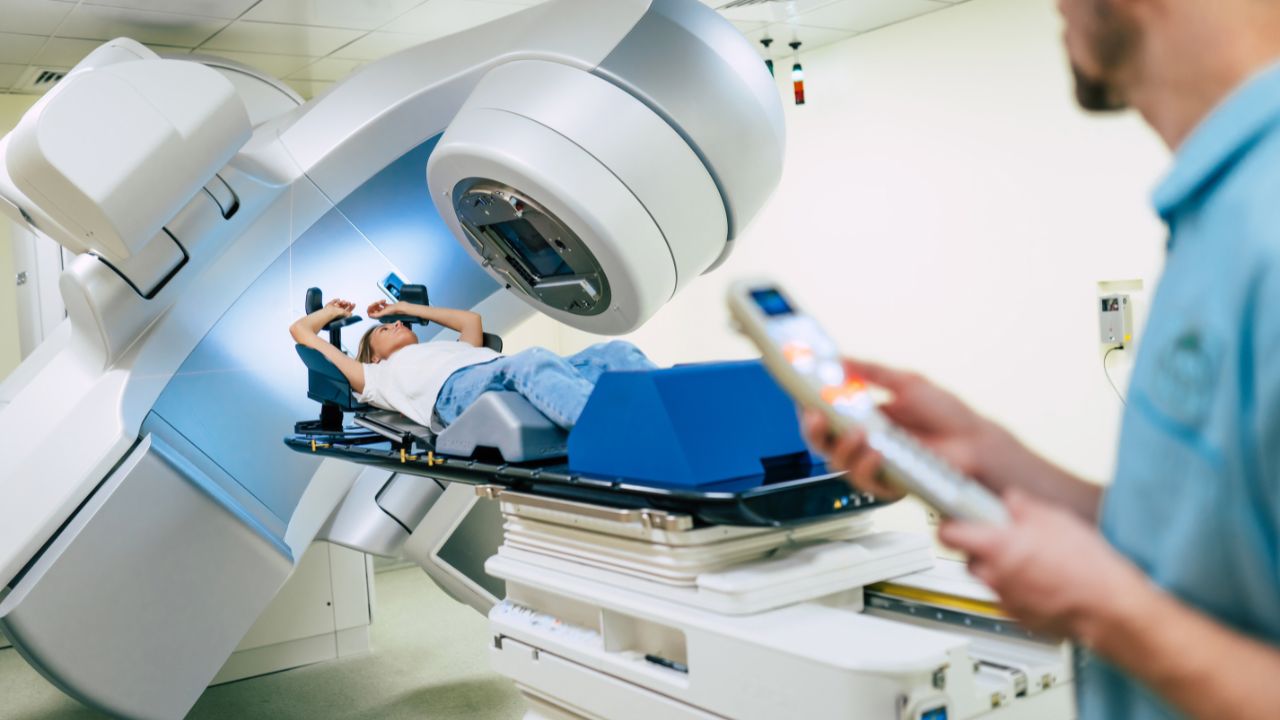

The Government Launches New Aid for Patients Undergoing Radiotherapy, Covering Transportation, Food, and Accommodation to Ensure Access to Treatment. Find Out How It Works.
The Ministry of Health creates a new aid for patients who need radiotherapy, covering transportation, food, and accommodation. The beneficiaries will be patients of the Unified Health System (SUS) and their companions.
At the national level, for attending to patients who need to travel to radiotherapy units.
Each patient and companion may receive R$ 150 for transportation and R$ 150 for food/accommodation per day.
-
Unusual Traffic Signs in Brazil: Wheelbarrow Ban, Crosswind Warning, and Customs Stop

-
Are Companies Required to Release Employees During Brazil’s World Cup Matches? Understanding Workers’ Rights

-
Brazilian Family’s Homeschooling Success Sparks International Debate: Daughters Read 30 Books Annually and Speak Multiple Languages
-
Piauí Governor Enacts Law Requiring State Contractors to Reserve Jobs for Former Inmates with Minimum Wage and Verification Before Payment


To reduce geographic barriers, prevent treatment abandonment, and ensure that the procedure is accessible even for those living far from specialized centers.
Key Points of the New Aid for Patients Undergoing Radiotherapy
The new government aid for patients undergoing radiotherapy arises in a context where nearly 40% of SUS patients seek care outside their health region, with average displacements of about 145 km.
In addition to the amounts for transportation and food/accommodation, the aid is part of a larger package of measures aimed at expanding radiotherapy services and integrating new technologies in oncological care.
For example, units that serve more patients by linear accelerator may receive bonuses of 10% to 30% on the reimbursements per procedure.
How Does the Government Aid for Patients Undergoing Radiotherapy Work?
For the patient needing radiotherapy, the aid can be requested when there is a need to travel to another municipality or state.
The expected amount is R$ 150 per trip and R$ 150 per day for food and accommodation — both for the patient and for a companion.
This will reduce the so-called abandonment of treatment: due to lack of resources or infrastructure to travel, many patients give up or delay essential sessions. The measure seeks to prevent this problem.
Additionally, the government has changed the funding of radiotherapy services so that it is based on productivity — that is, the more patients treated per equipment, the more resources are allocated.
Why the New Aid for Patients Undergoing Radiotherapy Is Important
In many regions of Brazil, the availability of radiotherapy is limited and centralized in large urban centers.
Thus, patients from remote areas face long travels, accommodation, and food costs — factors that hinder treatment.
With the new government aid for patients undergoing radiotherapy, the aim is to eliminate these barriers and ensure that treatment can take place regardless of the patient’s location.
Moreover, the measure strengthens the public oncological network, encouraging the expansion of services.
The aspect of equity is also highlighted: according to the government, the benefit “reduces geographic barriers, decreases abandonment and delays in treatment, and ensures better access conditions for patients living in rural areas.”
Challenges and Next Steps in Oncological Care
Although the aid marks a relevant advancement, there are still challenges ahead.
For example, ensuring that radiotherapy services meet the demand and that the infrastructure supports this increase in care.
The government estimates that each linear accelerator can perform about 60 new treatments per month.
Another challenge is the coordination between transportation, accommodation, and care logistics — the patient needs support from travel until the return.
Finally, the measure also depends on regional structure and the dissemination of specialized equipment and professionals, actions included in the program Now There Are Specialists.
What Changes for Those Who Need Radiotherapy
For the patient who needs radiotherapy, the new government aid represents a concrete change: less worry about indirect costs, greater access, and broader support.
Meanwhile, for health services, there is an incentive to increase care and improve productivity.
In summary, the measure reinforces that the focus is not only on technical treatment but also on the conditions that allow it to happen — which can make the difference between starting or abandoning radiotherapy.
The new government aid for patients undergoing radiotherapy reflects an important advancement in Brazilian public oncological care.
With information from Revista Galileu.


