






 Portuguese
  Spanish


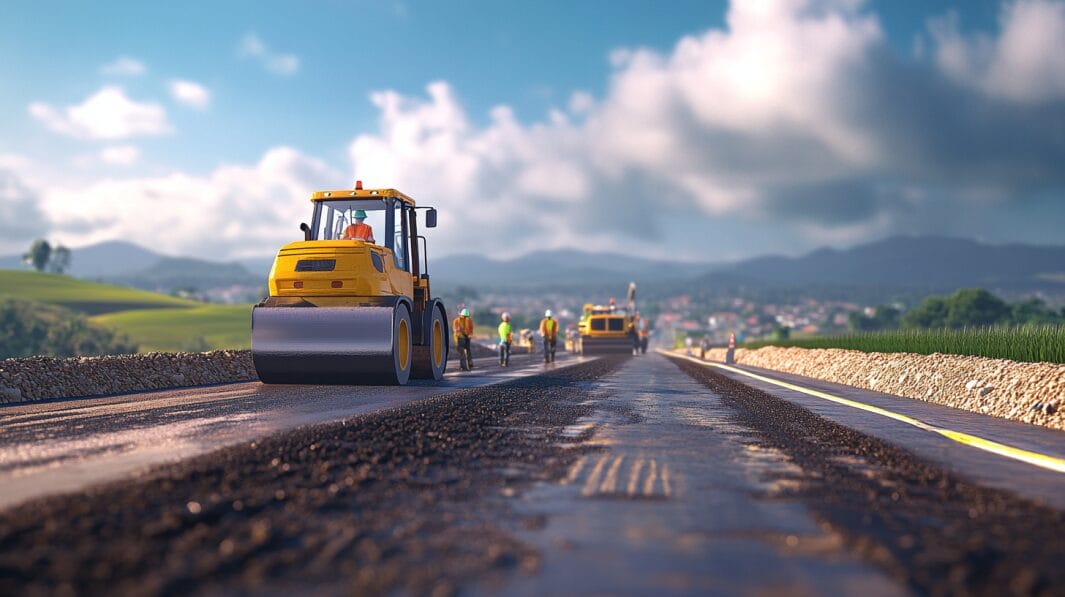
An investment of R$ 5.1 billion promises to transform the roads of this Brazilian state. PE on the Road, launched by Governor Raquel Lyra, will bring improvements for 3.5 thousand kilometers of highways. Will the ambitious project face environmental and political barriers, or will it remain on paper?
Get ready for a radical change on the roads of Pernambuco, though still unaware of all the details.
The state government has just announced a billion-dollar program that promises to improve the lives of drivers, bringing hope for those who face deteriorated highways daily.
This large project is already mobilizing the population and the authorities, but the challenges are as numerous as the promises.
-
Coca-Cola Shuts Down 100-Year-Old Factory in the U.S., Impacting 85 Workers and Shaking Local Community with Historic Consequences

-
Bianca Andrade Invests $30 Million of Her Own Money in Boca Rosa, Launches Over 100 Products in a Year, Aiming for $400 Million by 2026
-
Belo Horizonte Becomes First Brazilian City to Fund Housing, Utilities for 100 Homeless Families with $900,000 Initiative
-
Brazilian Joins Homeownership Consortium, Faces Decade of Dual Payments Totaling $141,000, Surpassing Traditional Mortgage


The PE on the Road program was officially launched on October 23, 2024, by Governor Raquel Lyra (PSDB).
The objective is to recover the road network of Pernambuco, one of the most problematic in the country, with an impressive investment of R$ 5.1 billion, which includes both state and federal resources.
The plan is to requalify and build 3.5 thousand kilometers of roads, spanning from the coast to the hinterlands of Pernambuco.
The government’s promise is that, over the next few years, the roads will be passable again, offering more safety and fluidity for traffic.
Notably, there will be the implementation of the Southern section of the Metropolitan Arc, also known as Lot 2, located in Greater Recife.
Additionally, the program provides for the requalification of the 120 kilometers of BR-232, an important route connecting the capital, Recife, to São Caetano, in the Agreste region.
The government has also indicated future duplications of BR-232, which will extend from São Caetano to Arcoverde, reaching Serra Talhada, in the state’s hinterland.
Investments Greater Than Previous Projects
Compared to previous programs, the PE on the Road presents a significantly higher investment.
According to the governor, the allocated resources exceed the R$ 4 billion designated for “Caminhos de Pernambuco” and “Caminhos da Integração,” launched during the four previous state administrations of PSB.
This new project not only surpasses the funding amounts but is also seen as a necessary and urgent restructuring, given the precariousness of the roads.
According to experts, the requalification of BR-232 is essential for the state’s economic development, as this highway is one of the main connections between the capital and the interior of Pernambuco.
With full duplication, the capacity for transporting goods and passengers will be increased, benefiting both the productive sector and tourism.
Lot 2 of the Metropolitan Arc: Less Controversial but Crucial
The Metropolitan Arc is one of the most important and controversial points of this project.
Lot 2, in the South, is expected to be the first to be implemented, as it does not face as many environmental and legal barriers.
This part of the arc is crucial to relieve traffic in Greater Recife, being a long-awaited project for many years.
However, Lot 1, which connects Paudalho to Goiana and crosses the Aldeia-Beberibe Environmental Protection Area (APA), still lacks a start date.
The project for this section faces intense debates due to the potential environmental impact.
The launch event for the PE on the Road program included the participation of mayors, state and federal deputies, bolstering Governor Raquel Lyra’s political standing.
She took the opportunity to emphasize the importance of the project and assure that resources are guaranteed.
“We are not just signing papers here. These resources are guaranteed,” stated the governor, demonstrating confidence in the project’s execution.
Priority Works and the Population’s Reaction
The governor highlighted that 88 works are already underway or in the project phase.
The population, having lived with pothole-filled and precarious roads for some time, awaits the promised improvements with anticipation.
Despite the confidence shown by Raquel Lyra, some critics are cautious regarding the fulfillment of deadlines and the proper allocation of resources.
The truth is that, although the program brings ambitious promises, challenges abound.
The recovery of the roads in Pernambuco will require rigorous planning, efficient execution, and oversight to ensure that the works are completed on time and with the expected quality.
However, the governor remains optimistic and confident in the initiative’s success.
The Economic Impact Expected by the Government
The requalification of the roads in Pernambuco is expected to generate positive impacts on the local economy, facilitating the transportation of products, especially agricultural ones, and increasing the flow of tourists to the interior cities.
With roads in better condition, the state can expect a reduction in transportation costs and an increase in the competitiveness of local companies, besides encouraging tourism in previously inaccessible destinations due to road conditions.
However, the governor still needs to resolve the environmental imbroglio involving Lot 1 of the Metropolitan Arc, whose importance is vital for easing traffic in the metropolitan area of Recife.
The environmental protection area is a significant obstacle, and any progress in this regard will require complex negotiations between authorities and environmentalists.
The future of the roads in Pernambuco is at stake, and the success of the PE on the Road program could be a watershed moment for Governor Raquel Lyra’s administration.
The expectation of improvement in the roads heightens the pressure on the government, which will have to show concrete results in the coming years.
Will the project manage to overcome political, environmental, and technical barriers? Time will tell.




Be the first to react!