





 Portuguese
  English
  Spanish
  3 min of reading
  0 comments


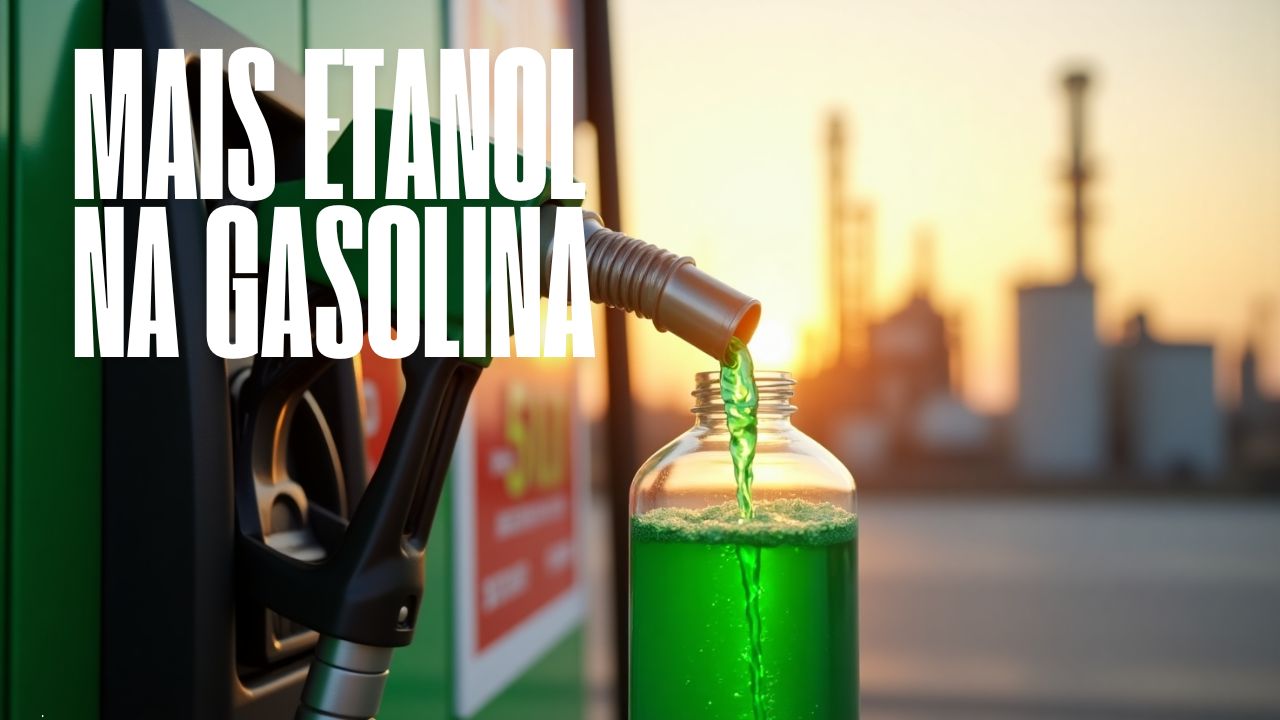
Measure Could Reduce Gasoline Prices by Up to R$ 0.13 Per Liter, Decrease Imports by 760 Million Liters, and Boost the Biofuel Sector with Investments of R$ 9 Billion
The federal government announced a plan to increase the anhydrous ethanol blend in gasoline from the current 27.5% to 30% by 2025. The measure aims to reduce fuel prices, strengthen the national biofuel industry, and decrease dependence on imports. According to the Ministry of Mines and Energy (MME), the impact could result in a drop of up to R$ 0.13 per liter at the pumps, as well as stimulate investments in the sector. The increase of ethanol in gasoline is seen as a strategic step for the economy and for sustainability in the country.
Technical Viability of Increasing Ethanol in Gasoline
The project was based on studies conducted by the Mauá Institute of Technology (IMT), which confirmed that the new blend, known as E30, is viable and does not harm vehicle performance. The analysis was accompanied by automotive sector entities, such as the National Association of Motor Vehicle Manufacturers (Anfavea), Sindipeças, Abraciclo, and Abeifa. The studies indicate that flex-fuel engines are already adapted for this change and that older vehicles should not experience operational failures with the increased ethanol in gasoline.
Impact on the Market and the Economy
The government’s expectation is that the increase of ethanol in gasoline will help stabilize fuel prices and reduce the need for importing 760 million liters of gasoline per year. This would also boost national ethanol production, with an estimated growth of 1.5 billion liters per year, generating investments around R$ 9 billion to expand the biofuel sector’s infrastructure.
-
Old chargers forgotten in the drawer may hide copper, reusable parts, and a simple chance to save before they become electronic waste.

-
The country’s primary deficits are expected to continue indefinitely, the same applies to the public debt, which will continue on an upward trajectory until it reaches the level of 90% of GDP (R$ 10.53 trillion) in the coming years.

-
Gas stations will sell gasoline at R$ 4.24 for a limited time, and the campaign with 50,000 liters promises to attract drivers looking for savings.
-
Behind a simple payment via Pix, Brazil is building a layer of financial sovereignty to reduce exposure to the dollar, foreign brands, and U.S. economic sanction instruments.




For ethanol producers, the measure is seen as a growth opportunity for the sugar-alcohol sector, while for consumers, the possibility of more affordable prices becomes a positive factor amid fuel market fluctuations.
Emission Reductions and Sustainability
Ethanol is a renewable fuel and the partial replacement of gasoline with a higher percentage of this biofuel could result in a reduction of up to 1.7 million tons of CO₂ per year. This volume of emissions would be equivalent to removing 720,000 vehicles from the roads, contributing to Brazil’s environmental goals and reinforcing its commitment to international pollution reduction agreements. The increase of ethanol in gasoline also strengthens the transition to a more sustainable energy matrix.
The government also emphasizes that legislation already allows for an expansion of the blend to up to 35%, provided there is technical evidence. Should the tests yield even more positive results, further changes could be considered in the future.
Next Steps and Approval of the Measure
The National Energy Policy Council (CNPE) will be the body responsible for evaluating and approving the change in the ethanol percentage in gasoline. The final decision is expected in March or April 2025, allowing for a gradual implementation throughout the year. If approved, the measure could generate a positive impact for both consumers and the industry, consolidating Brazil as a reference in biofuel production.








-

1 person reacted to this.