Portuguese
  Spanish


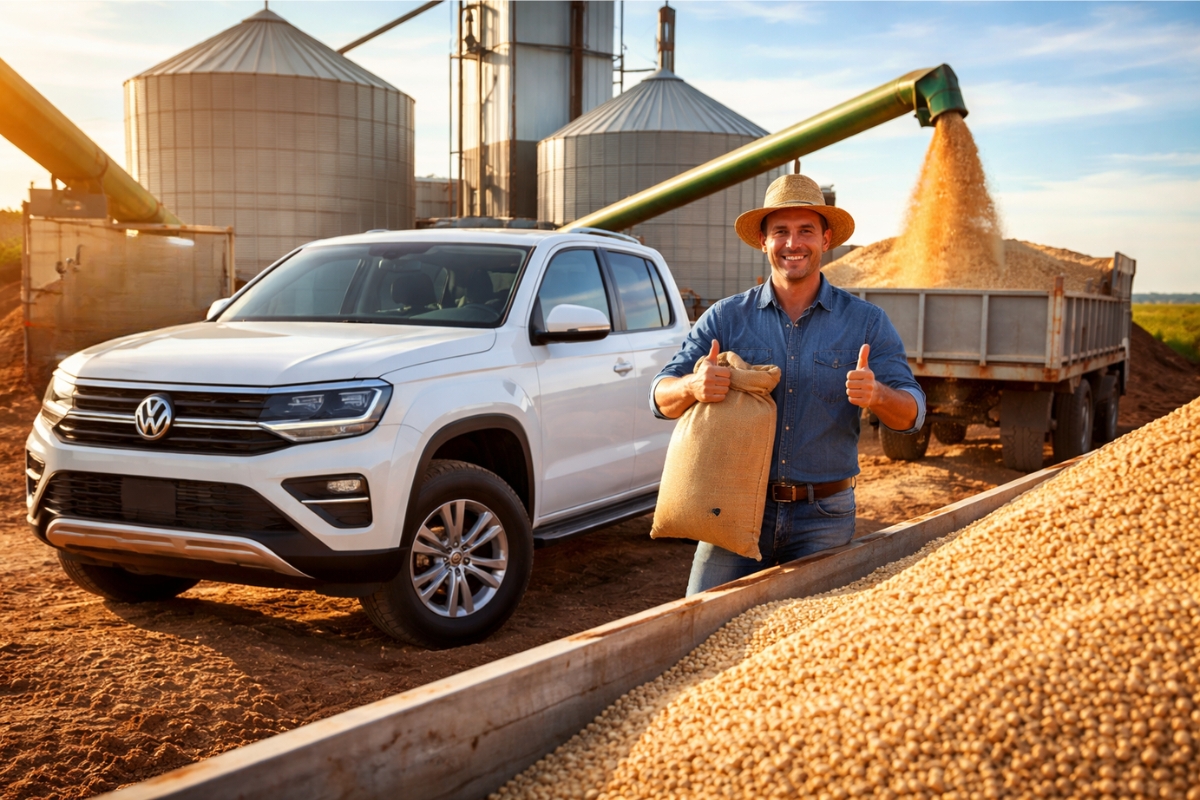


Partnership Enables Vehicle Purchase with Grain Payment and Connects Negotiation to the Harvest Cycle, with Updated Prices and Real-Time Evaluation.
The purchase of Volkswagen vehicles with grain payment has caught the agro sector’s attention with the arrival of Barter Fácil, a digital solution created from the partnership between Volkswagen and Grão Direto.
In practice, the rural producer uses their own production as a medium of exchange to acquire vehicles geared towards their daily activities in the field, with online negotiations and parameters adjusted to the harvest cycle.
The proposal expands the use of barter, a model that was already common for facilitating inputs and services, and now gains space for vehicle purchases as well.
-
Brazil’s Lula Government Allocates $463 Million Quota for Electric Car Parts, Waives Import Tax Until December, Sparking Competition Among BYD, Automakers, and Unions as Consumers Question Impact on Prices and Local Industry

-
Thinking of Installing LED Headlights? Why Replacing Halogen Bulbs is Still Banned, the Glare Risks Authorities Worry About, and How a New Proposal Could Allow Certified, Safe Installations

-
2027 Toyota Corolla Cross Unveiled: New Design, Enhanced Fuel Efficiency, Reduced Maintenance Costs, Advanced Technology, Connected Services, and Up to 10-Year Warranty
-
Fiat Cronos Precision 2018: Affordable Sedan with Spacious Trunk and Reliable Maintenance



What Happened and Why It Caught Attention
The partnership between Volkswagen and Grão Direto paved the way for a new type of negotiation in the agro sector, focusing on transforming grains into a payment method for vehicles.
Barter had already been part of many operations in the field, but the introduction of vehicles into this model stands out as it connects mobility investment to the harvest itself.
The change also reinforces a trend in the sector: the digitization of stages that previously depended on slower processes with less price visibility.
How Barter Fácil Enters the Grain-to-Vehicle Negotiation

The negotiation occurs through Barter Fácil, identified as the largest digital grain trading platform in Latin America.
The tool is integrated into Clicou Fechou, a Grão Direto system that provides updated prices for grains and derivatives such as meal, oil, and soybean husks.
Thus, the evaluation of trade conditions can be done in real-time, allowing for variable comparisons and closing deals with greater accuracy.
What Changes Practically for the Rural Producer
The producer gains a purchase alternative aligned with the flow of the field, using production as a central part of the strategy to acquire a vehicle.
The proposal aims to increase the speed of the process and reduce uncertainties when converting grains into a durable good, with a digital operation and updated exchange criteria.
The initiative also expands support for the producer within the barter system, while Volkswagen incorporates a new way of marketing vehicles connected to the harvest calendar.
Benefits for Companies and Advancement of Digital Barter
The solution strengthens the advancement of digital barter by expanding the reach of a model already used in the field to new purchase categories.
The declared vision is for the evolution of negotiation with technology and greater decision-making security. José Carlos Mazetto, head of sales and corporate solutions at Grão Direto, stated: “We are taking barter negotiation to a new level. Technology allows for fast and secure decisions, bringing benefits to all involved.”
The promise of fast decisions relies on system integration and continuous price and exchange reference updates.
Where the Project Begins and What Can Happen From Now On
The initial implementation occurs in five pilot dealerships: Fancar Toledo (PR), Trescinco (Cuiabá MT), Norpave (Londrina PR), Santa Emília, and Itacua, the latter two in Ribeirão Preto (SP).
There are expansion plans for all of Brazil, indicating that the solution may reach new regions as the model advances beyond the pilot phase.
With the expansion, the trend is for more producers to find a structured path to negotiate grains and vehicles within the same digital ecosystem.
The partnership between Volkswagen and Grão Direto places vehicle purchasing within barter and reinforces the digitalization movement in agriculture.
For the producer, the practical impact lies in being able to use the harvest as a payment base and negotiate with updated real-time prices, starting in five pilot dealerships with a prospect of national expansion.