Portuguese
  Spanish


Far From Hospitals and Urban Life, a Pregnant Woman Faces Daily Work, Childbirth, and the Birth of Her Baby Following Ancient Beliefs and Resisting the Climate Conditions of the Russian Arctic
The day barely begins when routine already imposes itself in the Yamal Peninsula, in the far north of Russia. In the depths of the Arctic winter, with constant sub-zero temperatures, Vera, then nearly nine months pregnant, wakes up before everyone else. First, she lights the fire. Then, she melts snow to obtain water. Only after that does she prepare food for her husband and children. Even pregnant, the journey does not end there.
Throughout the following hours, Vera continues to work outside, despite the strong wind and snow. This is the reality for nomadic women of the tundra, who maintain their activities until the moment of childbirth. Records show that, for these families, pregnancy does not alter the rigid division of tasks. While her husband tends to the herd of reindeer, she sustains the household.
Childbirth Outside the Chum and the Beliefs That Shape Life in the Tundra
Among the nomads of the tundra, giving birth inside the chum, the traditional tent, is forbidden. According to local belief, childbirth makes the space unsuitable for immediate use. Therefore, women move to a small, cold, external annex separate from the main dwelling, where the birth takes place away from the rest of the family.
-
21-Year-Old Brazilian Student Turns Homemade Popsicle Hobby into $100,000-a-Month Business

-
Australia Dumps Hundreds of Thousands of Tons of Gravel into Rivers to Restore Natural Barriers and Reverse 150 Years of Erosion

-
Bird-Inspired Robot Glides on Air Currents up to 10 m/s, Balances Itself, and Aims to Save Energy in Industrial Inspections and Meteorological Balloons
-
Eight Artists Secretly Lived in a Hidden 70m² Apartment Inside a Shopping Mall in Brazil for Four Years



Vera had already gone through this experience. She had two children, and the first was born right there, in the tundra. Still, each pregnancy requires great physical resilience. Even close to giving birth, she continued to work intensely, as all nomadic wives do.
Nutrition also follows its own patterns. There are no specific restrictions for pregnant women. Vera continued to consume frozen raw fish and raw reindeer meat, traditional foods of the region. She was unaware of common medical recommendations in urban areas, such as avoiding undercooked meat during pregnancy.

Attempted Medical Evacuation Delayed by Weather Conditions
As the time for childbirth approached, her husband managed to contact a doctor from the nearest town. The forecast was clear: the next day, a helicopter would take Vera to the hospital. However, the weather conditions changed rapidly.
The next morning, a strong snowstorm hit the area. Although the team was ready to fly, the operation was postponed. Weather conditions prevented air travel for several days. Local routines had to adjust to the force of nature.
That same night, Vera began to feel contractions. Labor began right there, following the family’s traditional customs.
A Silent Birth, Assisted by Family and Faith
During the birth, an aunt was called to help. She heated water to wash the baby after the birth and stayed by Vera’s side for hours. The process was long and required much endurance. Still, there were no screams or displays of pain.
In tundra culture, women do not express pain during childbirth. Screaming is seen as a sign of weakness. Amidst the difficulties, the aunt collected straw placed under Vera, intended for the community shaman, as they believe he can provide spiritual assistance during the birth.
After many hours, a girl was born. Small, healthy, and calm, she marked the end of an intense night in the snow-covered tundra.
The Arrival of Doctors and the Contrast Between Tradition and Medicine
The next morning, the family awaited the arrival of healthcare professionals. When they arrived, they confirmed the birth of the child. It was a girl, weighing about three kilograms. In light of this, the guidance was direct: mother and daughter should be taken to the hospital.
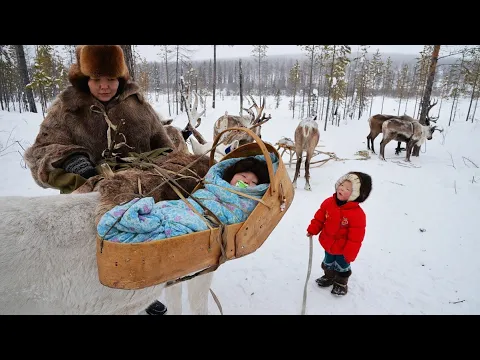
Before leaving, however, the baby was wrapped in reindeer skin. This traditional practice helps to preserve body heat in the intense cold. At that moment, a nurse summed up the observed situation. According to her, the lives of nomadic women in the tundra are extremely demanding.
Even during pregnancy, they continue working until the end. Moreover, they rarely seek hospitals when they fall ill. Thus, they follow their daily routines guided by tradition, physical resilience, and continuous adaptation to the environment.
In light of this scenario, to what extent do these practices reflect a conscious cultural choice, and when do they simply represent the only way to live according to the rules of the tundra?