





 Portuguese
  English
  Spanish
  5 min of reading
  0 comments


In Greece, forest fires have begun to expose a risk that many people only realize when the fire has already started: old wires, strong winds, dry brush, and difficult maintenance in rural areas can turn the electrical grid into a target for investigation.
The old electrical grid in Greece came under suspicion after 15 major fires investigated in 2025, amidst low cables, poles scattered across rural areas, and dry vegetation on windy days.
This information was published by Reuters, an international news agency, on September 24, 2025. The survey shows that failures in the electrical grid appeared as a probable cause in 15 of the 41 major fires investigated in the country.
The impact was enormous. These fires burned 51 thousand acres, equivalent to about 206 km², in a scenario where residents report cables so low they seem like clotheslines crossing the dry field.
-
Indigenous teenagers paddled nearly 500 km by kayak along the Klamath River after 4 dams were removed, salmon returned to ascend the waters, and the United States celebrated the largest removal of this kind in its history.

-
Sewage returns into homes in a poor city in the USA, residents lose furniture and live in fear of rain while a $30 million repair attempts to contain old network failures.
-
Luxembourg wants to transform areas near its highways into a new front for solar generation, using road edges, noise barriers, parking lots, and side strips as surfaces for installing photovoltaic panels.

-
Workers were digging a coal mine in Serbia when the excavator hit wood at a depth of 8 meters and revealed a Roman ship over 1,500 years old, a rare remnant of a river fleet that served an imperial city buried next to the mining site.




Low wires over dry brush have become a sign of fear in Greek villages
In rural areas of Greece, the risk can start simply. A low cable, worn by time and exposed to the wind, passes over the dry brush. If a spark appears, the fire can quickly spread through the vegetation.
This type of scene is frightening because it doesn’t seem like a major failure at first. To the resident, it’s just an old wire crossing the landscape. But on hot and dry days, a small problem in the electrical grid can become a real threat.
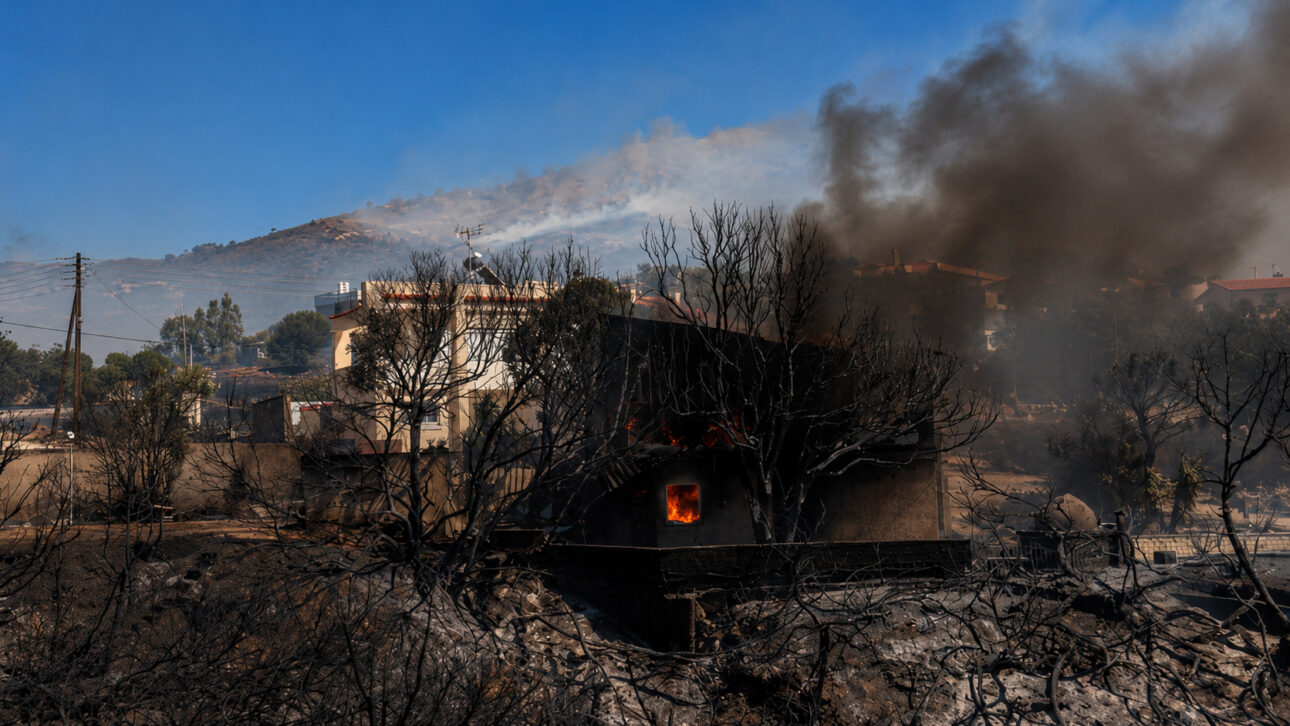
In Keratea, south of Athens, residents describe cables hanging so low they look like clotheslines. The image helps to understand the danger without difficult language: old wire, strong wind, and dry grass form a dangerous combination.
Fires in Greece can also start due to electrical failure, not just negligence or crime
Many people associate forest fires with cigarettes thrown on the ground, illegal burnings, or criminal actions. These factors exist, but the electrical grid can also be investigated when there is suspicion of sparks.
In the case of Greece, data from 2025 identified electrical failures as an important suspect in major fires. This does not mean final blame in all episodes, because investigations need to carefully separate each cause.
The difference is essential. Suspicion is not condemnation. It shows that the electrical grid has come under scrutiny and that cables, poles, and dry areas need to be analyzed before any definitive conclusion.
In 2025, 15 of 41 major fires investigated had the electrical grid as a probable cause
Reuters, an international news agency, detailed that 15 of the 41 major fires investigated in Greece in 2025 had the electrical grid as a probable cause. The area burned in these cases reached 51 thousand acres.
For the Brazilian reader, the conversion helps visualize the extent of the destruction. It’s about 206 km² consumed by fire, an area large enough to show that the problem was not limited to small isolated outbreaks.
This data draws attention because it turns a technical issue into a safety problem. The maintenance of cables and poles is no longer just a task for the electric company and starts to involve homes, farms, roads, and residents.
Keratea became an example of how a suspicious spark can end in death and destruction
The case near Keratea, south of Athens, is one of the most significant in the investigation. In August 2025, a fire killed one person and burned 16 km² near tourist areas south of the Greek capital.
The investigation found a loose cable with signs of oxidation and inadequate maintenance. The suspicion is that sparks were carried by the wind over a field of dry grass.
Even so, the public distributor HEDNO declared that it performs regular maintenance and stated that it found no connection between the August fire and the electrical grid. Therefore, the case needs to be treated as an investigated suspicion, not as final blame.
The country has 4.5 million poles and part of the grid crosses rural and forest areas
Greece has 4.5 million poles, and some of them are located in rural and forest areas. These locations are more exposed to dry vegetation, wind, and heat, factors that increase the risk of fire spreading.
The challenge is significant because the network reaches small villages and sparsely populated regions. Even where there are almost no residents, the wires continue to cross fields and areas of vegetation.
In practice, this means that maintenance needs to reach difficult places. When the cable becomes old, low, or surrounded by dry vegetation, the danger ceases to be distant and becomes part of the routine for those living in the countryside.
Burying cables can reduce exposure, but the change progresses slowly
One way to reduce the risk is to place part of the cables underground. In simple terms, this means removing the wire from above and running the network underground, when the location allows for this type of work.
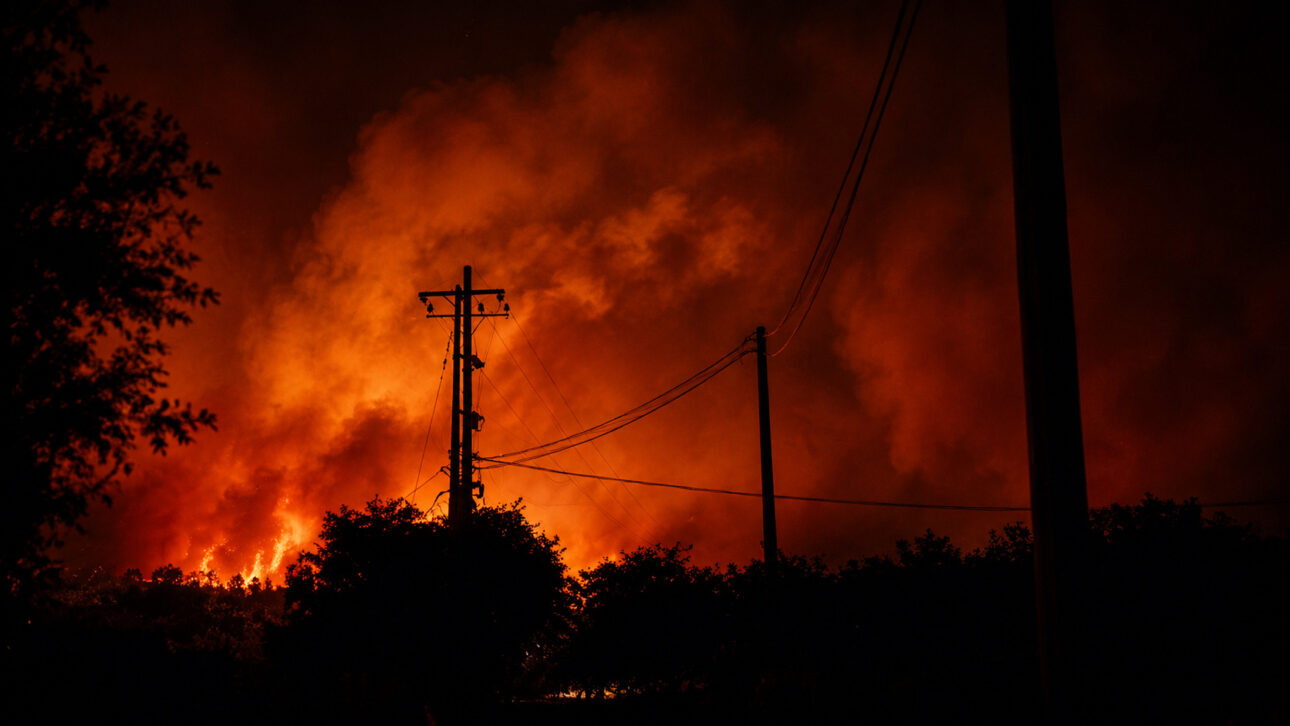
This solution reduces exposure to wind, branches, and dry grass. However, changing such a large network requires time, work, and money. In a country with 4.5 million poles, the replacement does not happen all at once.
Meanwhile, many cables continue to cross dry areas above. For residents, the concern remains visible every day: old wires swaying over dry fields in regions where fire can spread quickly.
The situation in Greece shows how aging infrastructure can become a risk during periods of heat, wind, and drought. The most important data is straightforward: 15 major fires investigated in 2025 had the power grid as a probable cause.
The case also teaches that forest fires do not always start in an obvious way. Sometimes, the danger lies in a low cable, an old pole, or a spark too small to be seen before the tragedy.
If old wires over dry areas can be on the list of suspects for major fires, should cities and companies treat electrical maintenance as disaster prevention before the next summer? Share your opinion and share this publication.





Be the first to react!