Portuguese
  Spanish


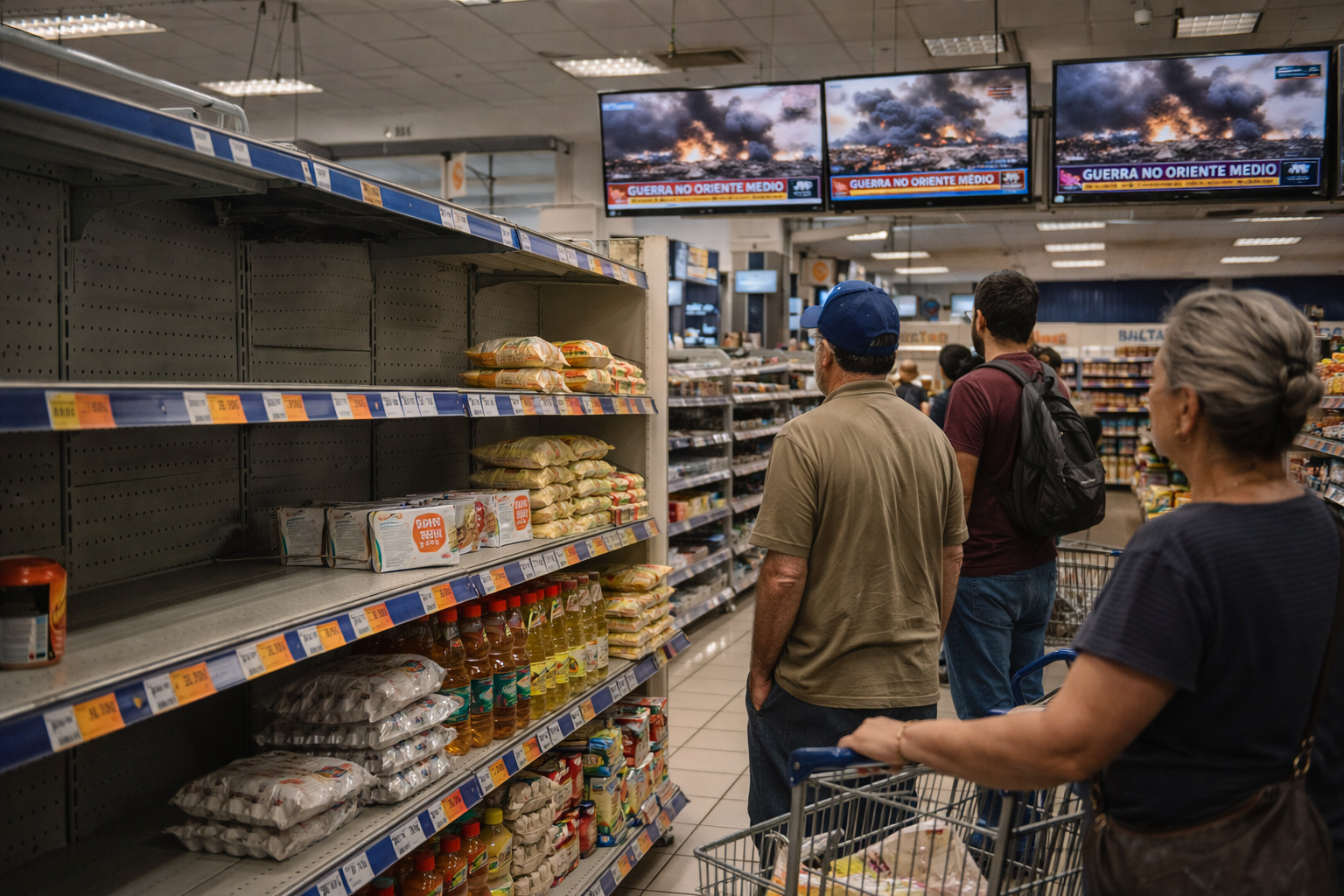

Conflict Involving Iran, United States, and Israel Affects Global Fertilizer Chain and May Impact Food Prices in Brazil in the Upcoming Harvests
The war in the Middle East involving Iran, the United States, and Israel is already causing economic impacts that extend beyond oil. Currently, the conflict marks 12 days on Wednesday, the 11th, and experts are beginning to observe indirect effects on strategic production chains. Among the most sensitive sectors is agriculture, which heavily depends on the international fertilizer market.
In this context, the price of various foods sold in Brazilian supermarkets may rise, depending on the evolution of the war. Fertilizers are essential for agricultural production, and any instability in global supply tends to pressure costs in the field. As a consequence, this movement may reflect in the final price paid by consumers.
Impact of the Conflict on Fertilizers
The conflict has harmed the production and export of fertilizers in the Middle East, reducing the availability of these inputs in the international market. When supply decreases, prices usually rise and pressure the cost of agricultural production in various countries. As a result, farmers face a scenario of greater uncertainty in purchasing inputs.
-
Entrepreneur Sells Car to Launch Healthy Meal Business, Now Runs Mr. Fit with 880 Stores in 3 Countries and $40 Million Annual Revenue

-
End of an Era: Renault Plans Major Overhaul, Cutting Jobs to Compete with Chinese Rivals and Transform Engineering by 2027
-
Brazil’s Largest Grain Port Faces Delays in the Hinterlands, Missing Rail Link Costs Agribusiness Billions

-
Egg Prices Drop Due to Weak Demand as Poultry Producers Increase Purchasing Power


Moreover, the closure of the Strait of Hormuz increases the logistical cost of transporting these products, further amplifying pressure on fertilizers. According to data from the Confederation of Agriculture and Livestock of Brazil (CNA), about 30% of the fertilizers traded worldwide come from the Middle East. This figure underscores the strategic importance of the region for global supply.
Brazilian Dependency Amplifies Impact
Although Brazil is one of the largest agricultural powers in the world, the country still heavily relies on importing fertilizers. A survey by the National Association for the Diffusion of Fertilizers (ANDA) indicates that approximately 85.7% of the fertilizers used in Brazilian agriculture come from abroad. This dependency makes the national agricultural sector more sensitive to fluctuations in the international market.
Against this backdrop, any increase in the international price of these inputs has the potential to directly impact agricultural production costs in the country. An analysis published by the newspaper O Globo indicates that the rising cost of fertilizers may lead to price hikes in key crops such as corn and soybeans. These grains play a fundamental role in the food system and livestock chain.
Corn and Soybeans May Be the First Affected
Corn and soybeans require intensive use of fertilizers and, therefore, tend to be the first to reflect changes in agricultural costs. If inputs become more expensive, part of this increase may reach the final price of these grains. This change is likely to impact the entire food production chain.
Furthermore, corn and soybeans are the basis of animal feed used in livestock, which broadens the economic impact. If the prices of these grains rise, products like meat and eggs may also see price increases. In this way, the effect may directly reach the consumer.
The lawyer Marcos Pelozato, a specialist in business restructuring with a focus on agribusiness, stated to the newspaper O Globo that other foods may feel the effects even before the grains.
Vegetables and Fresh Produce May Feel Effects Sooner
According to Marcos Pelozato, vegetables, legumes, and part of fresh produce may see price increases rapidly. This happens because these products have shorter production cycles, which means that changes in agricultural costs appear sooner on the shelves. Thus, consumers may perceive the effects of the crisis more quickly.
Consequently, fruits, vegetables, and legumes sold in supermarkets may reflect the impacts of international instability even before major agricultural commodities. Everything will depend on the evolution of the conflict and pressure on the inputs used in the field.
Impact May Appear in the Next Harvest
Despite the concerns, some experts assess that the impact may not occur immediately. Alberto Pfeifer, a researcher at Insper Agro Global, explains that many producers still have sufficient fertilizer stocks for the current harvest. This factor helps to cushion effects in the short term.
Therefore, the impact of the conflict is likely to appear primarily in the next summer harvest, which begins planting in August, according to the Brazilian agricultural calendar. In this scenario, the real extent of the consequences will depend on the duration and intensity of the war in the Middle East.
In light of this international scenario, an important question arises for consumers and producers: to what extent will the war in the Middle East influence the price of food in Brazilian supermarkets?