





 Portuguese
  English
  Spanish
  3 min of reading
  3 comments


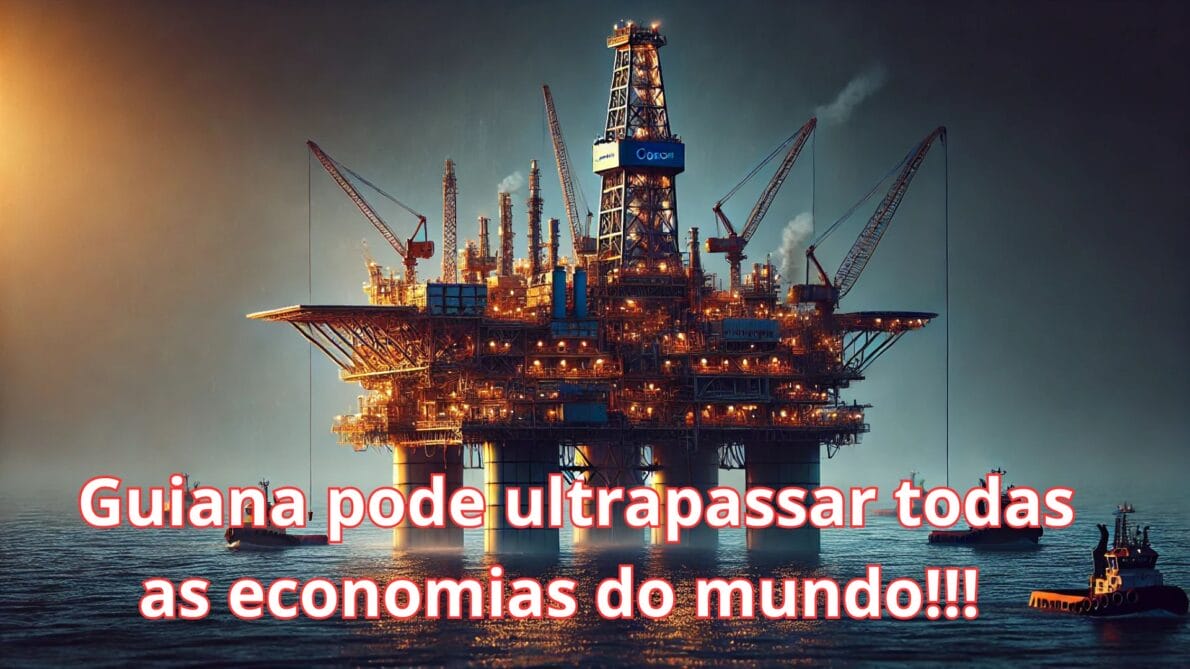


Guyana May Surpass All Nations in GDP Growth in 2024
Driven by oil, Guyana, located north of Brazil, is projected to have the highest economic growth in the world in 2024, according to the International Monetary Fund (IMF). In its recent World Economic Outlook report released on October 22, the IMF highlighted the South American country as an absolute leader in GDP growth, with an expansion expected to exceed 43.8%.
Guyana and Rapid Growth: How Oil Changed the Country’s Fate
Since Guyana began exploring new oil wells off its coast, the country has experienced a true economic revolution. In 2020, the initial oil production sparked an explosion in GDP. The impact continued in 2022, with growth of 62.3%, and in 2023, with a rate of 38%. According to the IMF, the growth projection for 2024 is even bolder and is expected to lead Guyana to surpass all other nations in economic expansion.
The Impact of Oil on Guyana’s GDP
With the exploration of oil reserves off its coast, estimated by Exxon Mobil at 11 billion barrels, Guyana has become one of the main hotspots of the offshore industry. For comparison, Brazil has 14.8 billion barrels in proven reserves, along with approximately 49 billion in probable and possible reserves, according to the National Agency of Petroleum (ANP). However, with a smaller and younger economy, the impact of the reserves in Guyana is even more profound.
-
Lock manufacturer from Rio Grande do Sul invests R$ 150 million to surpass R$ 1 billion in revenue, create 200 jobs, and double storage capacity, while choosing Santa Catarina to set up a new logistics center and speed up deliveries in Southern Brazil.

-
Neymar elevates the status of the Northeast with a billion-dollar megaproject of 28 luxury developments, 100 km of turquoise-blue beaches, 10 residential projects already under construction, multimillion-dollar beachfront mansions, an exclusive sports arena, and an expected impressive movement of R$ 7.5 billion in Pernambuco and Alagoas.

-
Luciano Hang’s cousin left Havan after nearly a decade, invested in real estate, and now manages R$ 6 billion in launches; the entrepreneur, who only gets paid when he sells, claims to have sold out an entire building in Santa Catarina in just 45 minutes.
-
Trump threatens Brazil with a 25% tariff and uses illegal deforestation as an argument to pressure exports; US report accuses environmental failures, while recent decline in the Amazon exposes a dispute that could impact Brazilian trade and politics.


- Accelerated Production: Oil production has rapidly transformed the Guyanese economy, making it one of the countries with the highest GDP growth.
- Attraction of Investments: The discovery of reserves has drawn international investments to the country, particularly from major energy companies.
- Changes in Infrastructure and Public Services: Oil revenues have allowed the government to make significant investments in health, education, housing, and transportation.
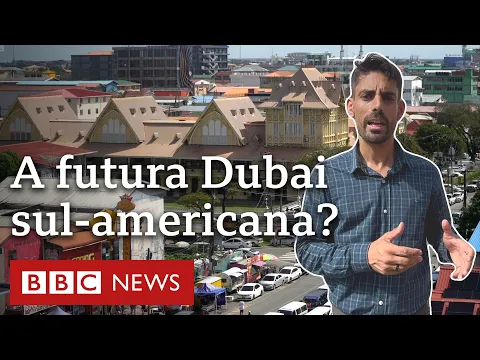

How is Guyana Capitalizing on Oil Revenues?
According to Kenji Okamura, deputy director of the IMF, the economic policies adopted by Guyana have been crucial in transforming oil income into improvements for the population. In February 2023, during a visit to the country, Okamura highlighted remarkable advancements in social areas. With the resources from oil, Guyana has invested in housing programs, modernization of the health system, education, and transportation networks, directly benefiting citizens.
Furthermore, the country has implemented strategic economic reforms, enabling sustainable use of the new revenues. This set of actions places Guyana in a favorable position among emerging economies, strengthening its infrastructure and allowing for a solid foundation for the future.
Other Growing Countries: How Does Guyana Stand Out?
In addition to Guyana, other emerging countries are expected to grow significantly in 2024. Here is the list of the highest expected growth rates:
- Guyana – 43.8%
- Niger – 9.9%
- Samoa – 9.7%
- Palau – 8.1%
- Georgia – 7.6%
- India – 7%
- Rwanda – 7%
- Tajikistan – 6.8%
Guyana leads by a wide margin, while Niger and Pacific islands like Samoa also appear with promising numbers. This elevated growth in smaller economies largely stems from the exploitation of natural resources and the development of new infrastructures.
Global Scenario and Brazil: Economic Outlooks for 2024
While emerging economies lead projections, global growth, according to the IMF, is expected to reach 3.2% in 2024, a slight decline from 3.3% in 2023. Brazil, the largest country in Latin America, is projected to grow by 3%, slightly above the 2.9% recorded the previous year.
In the United States, the largest economy in the world, the projected growth is 2.8%, while Spain is expected to grow by 2.9%, the highest rate among developed European economies. In contrast, Germany is expected to face zero growth in 2024, following a contraction of 0.3% in 2023.
Russia, impacted by economic sanctions due to the conflict with Ukraine, is expected to maintain a growth rate of 3.6%, similar to the previous year.
The Future of Guyana: Challenges and Opportunities
Guyana, with its rapidly expanding economy, faces the challenge of ensuring sustainable development that benefits the entire population. The continuation of solid economic policies and investments in infrastructure and social programs are essential to avoid transient growth. However, with strategic management of oil revenues, the country has the potential to become an example of sustainable development among emerging economies.
Guyana thus symbolizes a new phase of growth in South America and emerges as an example of how natural resources can drive development when well managed.





Muito bom a Guiana um exemplo de país emergente. bj as fãs..
A Guiana atraves de empresa americanas explora a voz do rio e ninguem fala nada de meio ambiente. Aqui no Brasil é essa frescura toda. Vamos explorar logo essa joça e subir de patamar. E investir e ferrovias em massa. Pais continental igual o Brasil não pode ter somente rodovias. Vamos para de pensar pequeno e pensar num Brasil primeiro mundo.
Enquanto isso o IBAMA nos remete a idade da pedra lascada, ou nós que estamos lancados