Portuguese
  Spanish


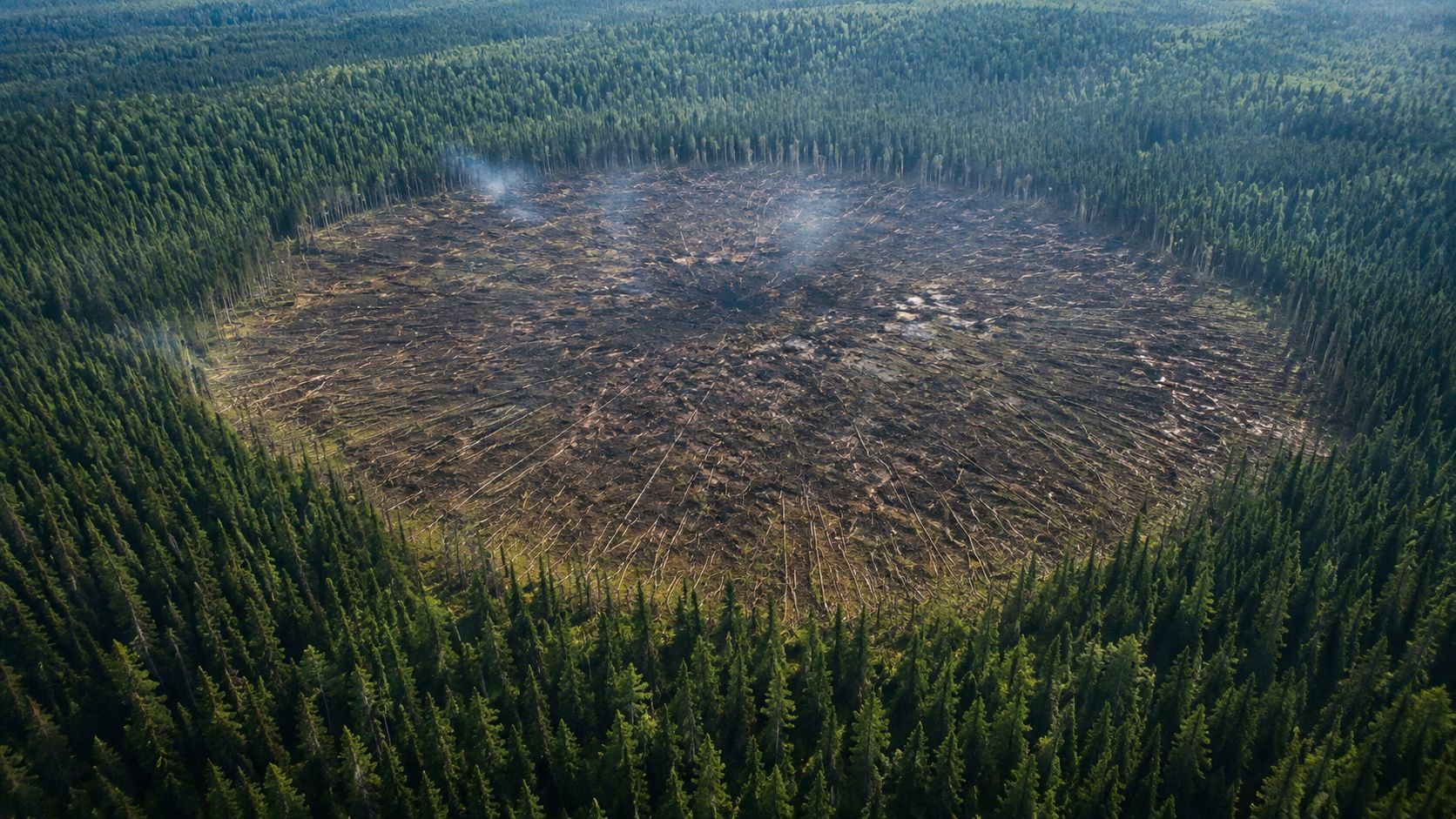

In 1908, the explosion in Siberia devastated an area larger than Greater London, knocked down about 80 million trees, and intrigued scientists by not leaving a crater, reinforcing the debate about asteroids, comets, and space risks to this day.
The explosion in Siberia released, on June 30, 1908, energy estimated between 10 and 15 megatons of TNT, devastated about 2,150 square kilometers of forest, and knocked down approximately 80 million trees without creating a crater.
The morning when the sky lit up Tunguska
The event occurred over the basin of the Podkamennaya Tunguska River, in central Siberia, in a remote area that delayed scientific verification for almost two decades. A fireball crossed the sky, followed by heat, flash, and destruction.
A witness cited by the Royal Observatory of Greenwich reported that the sky seemed to split in two, with high fire over the forest. The heat was compared to the sensation of a shirt catching fire.
-
Scientists Convert Food Waste into Aviation Fuel, Successfully Test 50% Blend with Conventional Kerosene to Cut Emissions and Promote Sustainable Flights

-
OnePlus N6 Smartphone to Launch in India with 8,000mAh Battery and 45W SuperVOOC Charging, Lasting Up to Three Days
-
Scientists Plan to Release Air Bubbles Underwater to Protect Antarctica’s “Doomsday Glacier” from Melting

-
Chinese R6000 Drone Combines Airplane and Helicopter Features, Carries Up to 12 People for Multiple Missions




Tunguska became the largest cosmic impact event ever recorded in human history. The estimated force was hundreds of times greater than the bomb dropped on Hiroshima, although the numbers depend on indirect reconstructions.
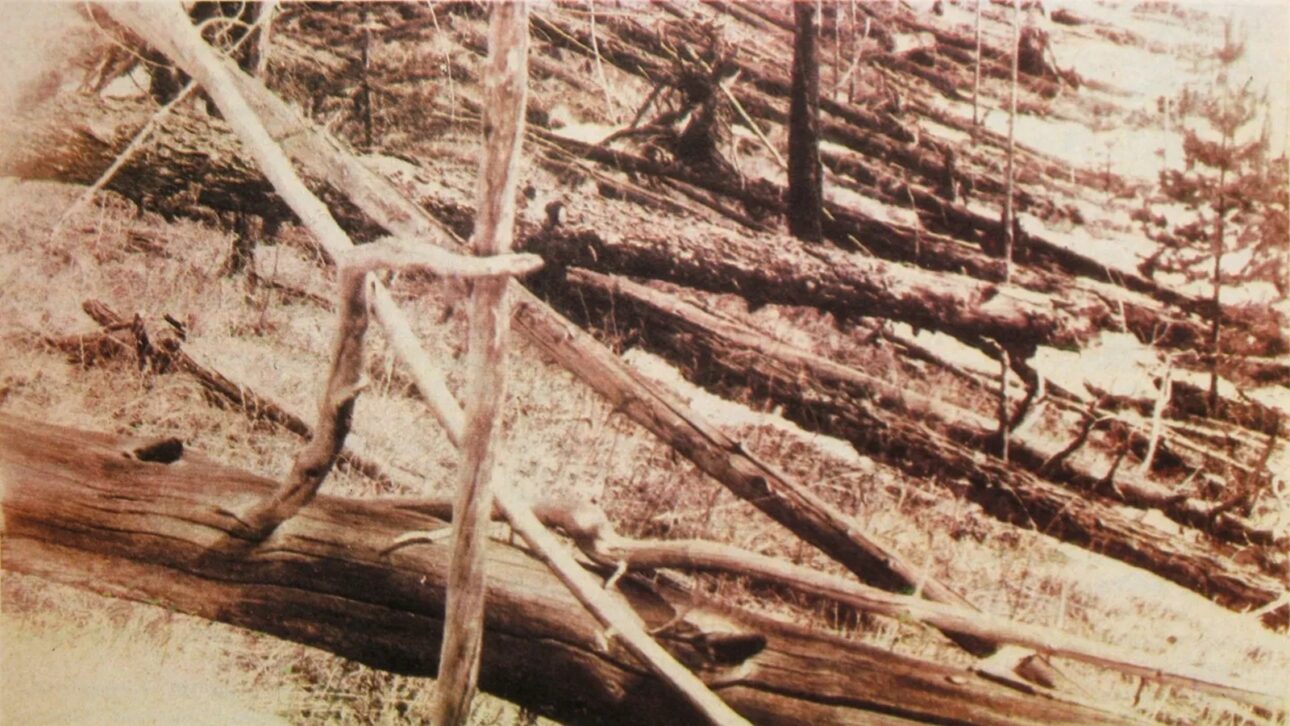
Explosion in Siberia knocked down trees in a radial pattern
The destruction affected an area larger than Greater London. About 80 million trees were knocked down or shattered in a radial pattern, an essential clue to understanding the direction of the shock wave.
The first scientific expedition arrived only in 1927. Mineralogist Leonid Kulik led the mission, delayed by the extreme distance of the region and the political turmoil experienced in Russia after 1908.
Kulik expected to find a crater and large meteorite fragments. Instead, he found burned, defoliated, and knocked-down trees for 15 to 30 kilometers, with little subsequent growth almost 20 years later.
At the epicenter, the fallen trunks pointed to a single point. However, there was only a flooded swamp. There was no impact hole, preserved meteorite, or sign that the object had hit the ground intact.
Why there was no crater in Tunguska
The absence of a crater does not eliminate the impact hypothesis. On the contrary, it is one of the main clues. Craters form when a body passes through the atmosphere and reaches the ground intact.
In Tunguska, the most accepted interpretation is that of an airburst. The object entered at high speed, compressed the air in front, underwent extreme heating, fragmented, and released kinetic energy before touching the ground.
The Royal Observatory Greenwich explains that smaller objects can burn up in the atmosphere, while larger bodies may explode. In the case of Tunguska, the disintegration is believed to have occurred at approximately 5 to 10 kilometers altitude.
The shock wave descended on the forest and produced the pattern of fallen trees. Thus, the radial center pointed to a spot in the sky, not to a crater on the ground. Therefore, the case remains classified as an impact.
Asteroid or comet is still an open discussion
The mechanism of the airburst is accepted, but the nature of the object remains in debate. One hypothesis points to a comet, partially made of ice, whose rapid vaporization could explain subsequent atmospheric signs.
Britannica records the development of noctilucent clouds over Europe after the event. The Royal Observatory Greenwich also mentions unusual brightness seen even in Northern Ireland, sufficient to allow reading after midnight.
This hypothesis is associated with the Beta Taurid meteor shower, originating from comet debris. The temporal coincidence reinforces the possibility but does not conclude the scientific discussion about the explosion in Siberia.
Another line argues for a rocky asteroid, perhaps 50 to 60 meters in diameter. The SpaceDaily report states that recent work tends to corroborate this interpretation, although no definitive conclusion has been established.
The traces attributed to the event are minimal: small fragments less than a millimeter. There is also a contested proposal that Lake Cheko, near the epicenter, is the crater of a remaining fragment.
Energy was estimated by indirect evidence
The numbers on Tunguska require caution. There were no instruments on site in 1908, and the energy of 10 to 15 megatons was calculated from the devastated forest, seismic records, and airburst models.
Seismic waves were recorded even in Western Europe, but this does not turn the estimate into an exact value. Scientific publications present larger ranges, both higher and lower. “Hundreds of times Hiroshima” better summarizes the scale.
Why Tunguska still matters
The case changed the way we think about cosmic risks. For a long time, the main concern was with large objects capable of creating craters and causing global effects. Tunguska showed that smaller bodies can also produce widespread destruction.
On February 15, 2013, another object exploded over Chelyabinsk, Russia, 2,400 kilometers from Tunguska. About 1,500 people were injured, mainly by glass shattered by the shock wave.
The anniversary of the explosion in Siberia, June 30, has come to be remembered as International Asteroid Day. The date also reinforces the importance of tracking asteroids and understanding how much warning the next similar event could offer.
Why is Siberia so large?
The region occupies most of Russia’s territory, stretching from the Ural Mountains, near Europe, to the Pacific Ocean. It is immense because the Russian Empire expanded eastward over centuries, especially from the 16th and 17th centuries, conquering and incorporating sparsely populated territories of northern Asia.
Moreover, Siberia has some characteristics that helped maintain this vast area as a single region:
Low population: The climate is very cold, with long winters, frozen soils, and large areas of taiga, tundra, and mountains. This made it difficult for many countries or large independent urban centers to form.
Russian expansion into the interior of Asia: The Russians advanced in search of furs, metals, wood, land, and trade routes. As there was low population density in many areas, territorial control advanced quickly.
Huge natural barriers: Siberia has giant rivers, immense forests, frozen areas, and isolated regions. This made external invasions difficult and favored centralized Russian control.
Economic importance: Despite the extreme climate, Siberia is rich in oil, natural gas, coal, wood, gold, diamonds, and other minerals. Therefore, Russia has always had a great interest in keeping this territory under control.
In summary: Siberia is enormous because Russia expanded over a gigantic, cold, sparsely populated region rich in natural resources, keeping this territory united throughout history.
More information at Tunguska