






 Portuguese
  Spanish


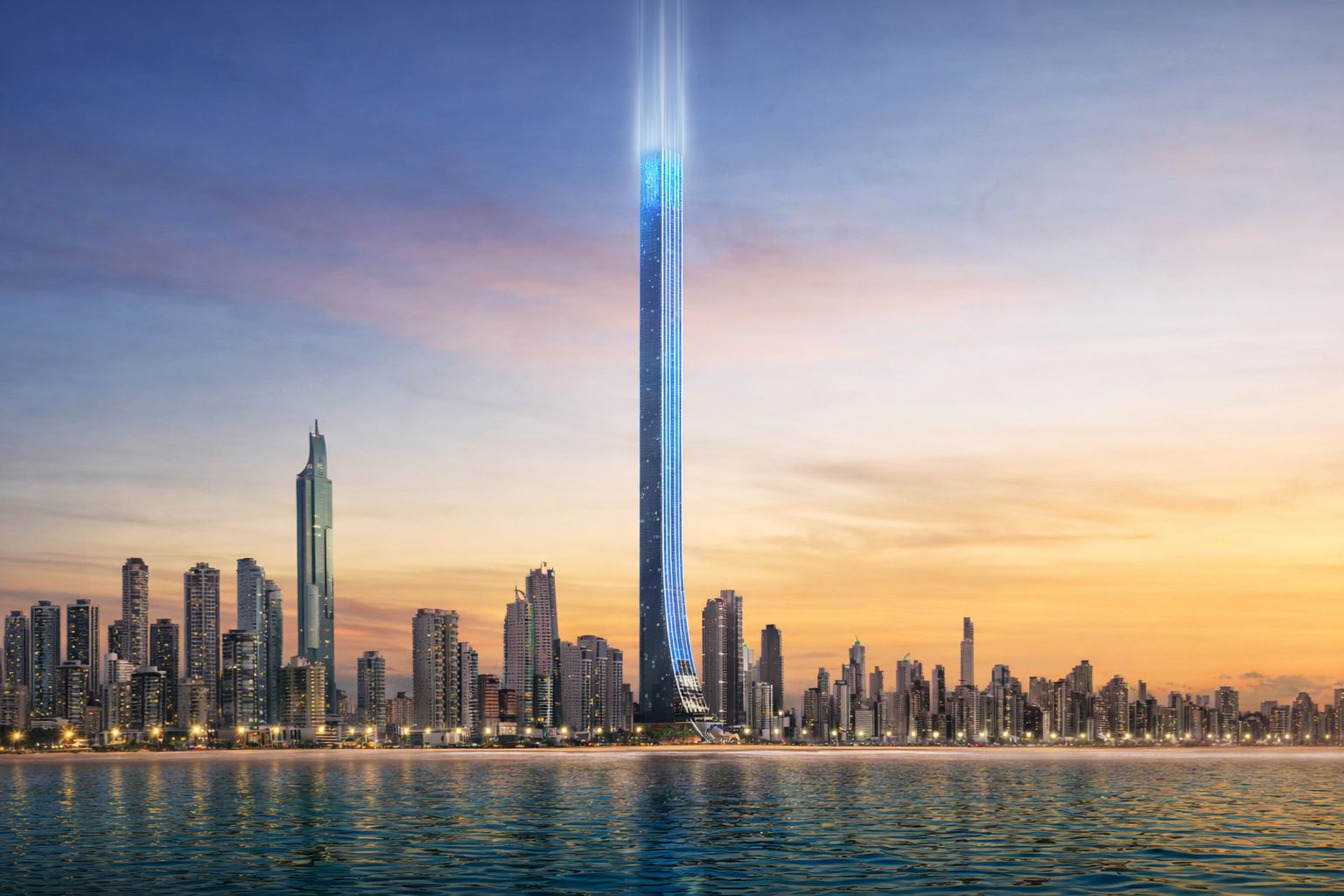

The Senna Tower, in Balneário Camboriú, will have 157 floors, 500 meters in height, and apartments that cost between R$ 30 million and R$ 60 million. The suspended mansions have up to 500 m², an elevator for cars to the living room, and are located between the 10th and 22nd floors. The building will become the tallest residential building in the world and is expected to be completed by 2035.
The Senna Tower, under construction in Balneário Camboriú, Santa Catarina, is redefining what luxury real estate means in Brazil. The residential project, which honors the driver Ayrton Senna, will have 157 floors and 500 meters in height when completed, figures that place it as the tallest residential building in the world. The standard apartments start at R$ 30 million and feature 301 square meters, five suites, and four parking spaces, according to real estate investment expert Bruno Cassola. The so-called “suspended mansions,” located between the 10th and 22nd floors, start at R$ 60 million and offer something that no other building in Brazil has: an elevator that takes the resident’s car directly into their living room.
The scale of the Senna Tower impresses in every aspect. The project by FG Empreendimentos will have 228 residential units, including 204 apartments and 18 suspended mansions, as well as 6 entire floors dedicated to the private leisure of the residents. The expected delivery is between 2033 and 2035, and the total investment for the project ranges from R$ 3 billion to R$ 8.5 billion. For those buying today, during the construction phase, market expectations are for an appreciation of up to 50% as the work progresses, potentially doubling or exceeding that level when the building is completed and consolidates its position as a global reference in residential architecture.
What the Senna Tower offers in the R$ 30 million apartments

The standard apartment in the Senna Tower is, in itself, a social status. With 301 square meters of private space, the units feature a living room in three environments, an integrated gourmet kitchen, five suites, a guest bathroom, a service bathroom, and four parking spaces, a technical specification that places these units among the most complete in the high-end market in Brazil. The panoramic view of the entire coastline of Balneário Camboriú, a direct consequence of the building’s height of 500 meters, is one of the differentiators that justifies the price of R$ 30 million.
-
Brazil to Issue “Panda Bonds” in China, Aiming to Raise Up to 5 Billion Yuan at Lower Interest Rates Than Dollar Debt
-
NATO Faces Internal Tensions as U.S. Pushes for Increased Defense Spending, Targeting 5% of GDP by 2035, with Warnings for Countries Near 2% Level

-
Brazil to Introduce B16 Diesel with Increased Soybean Oil Content for Trucks by 2026
-
Brazil’s July Bolsa Família Payments May Include Extra $150 and $50 for Families with Children, Pregnant Women, and Updated CadÚnico Registration


The price includes not only the apartment but also access to a set of common areas that rarely appear in residential developments. The Senna Tower will have a cinema, heated pools, wellness center, gym, dining areas, and even an observatory in the heights, distributed across the six floors of private leisure. Residents will have eight high-performance elevators, necessary to efficiently transport people between 157 floors, in addition to exclusive car elevators that allow vehicles to ascend to specific units.
The suspended mansions of Senna Tower that cost from R$ 60 million

According to information from the portal NSC, the suspended mansions are the pinnacle of luxury within the Senna Tower, both literally and figuratively. Located between the 10th and 22nd floors, these units range from 400 to 500 square meters of private space, almost double the size of standard apartments, starting at R$ 60 million. The most impressive technical feature is the special elevator that takes the resident’s car directly to the apartment’s living room, allowing the vehicle to be displayed as a decorative piece in the social environment.
This functionality is unique in Brazil and rare in the world. Car elevators exist in some luxury buildings in New York, Dubai, and Miami, but none combine this technology with the scale of Senna Tower, which aims to offer 18 suspended mansions with this capability. For those purchasing one of these units, the idea is not only to securely store the car but to transform the vehicle into an extension of the apartment, showcasing it as part of the interior design. It is an extreme niche, aimed at car collectors with wealth compatible with the R$ 60 million entry.
Why Senna Tower could double in value before completion
One of the most repeated arguments by experts following the project is the appreciation potential of Senna Tower. According to Bruno Cassola, the minimum expectation is that the value of the apartments will double between the launch and the delivery, and could increase even more depending on the pace of construction and the international consolidation of the project. “Senna Tower is a world-class investment with an ultra-exclusive appeal globally, attracting people from Brazil and abroad,” stated the expert.
The logic behind this appreciation is straightforward. Residential developments that break world records tend to attract international buyers who pay prices significantly above those practiced locally, and the Senna Tower is already putting Balneário Camboriú on the global radar of the luxury real estate market. When the building is inaugurated as the tallest residential building in the world, the status of ownership inside will become an asset that goes far beyond the conventional square meter. Investors who bought off-plan may see their wealth multiply without needing to sell, just through appreciation.
The technology that Senna Tower will incorporate by 2035
One of the less-discussed aspects of Senna Tower is how much the project anticipates technologies that are not yet commercially available. Since the expected delivery is between 2033 and 2035, the finishes and automation systems should include solutions that are still being developed in laboratories around the world today. Bruno Cassola stated that “these are automation technologies, electro-electronics, that probably don’t even exist yet and will be implemented in this development.”
The ten-year window between the launch and delivery is long enough for advancements in home automation, energy efficiency, construction materials, and residential security to be progressively incorporated into Senna Tower. FG Empreendimentos bets that the building will become a global showcase of residential technology, with systems that go far beyond current automation standards. For buyers paying R$ 30 million or more for an apartment, the promise of a technologically cutting-edge residence is part of what justifies the investment.
What Senna Tower represents for Balneário Camboriú and Brazil


The construction of Senna Tower moves much more than just the real estate market of Balneário Camboriú. The development puts Brazil on the global map of residential engineering by proposing a 500-meter-tall building in a tourist coastline, a technical challenge that involves complex structural calculations, deep foundations, wind protection systems, and engineering solutions that currently exist in only a few cities in the world. Dubai, New York, and Shanghai have comparable skyscrapers, but few are exclusively residential.
For Balneário Camboriú, Senna Tower consolidates an identity that the city has been building for years. The capital of skyscrapers in Santa Catarina already houses several of the tallest buildings in Latin America, but Senna Tower raises the bar to another level, attracting visitors, investors, and media interest that benefit the entire local tourism sector. With construction starting in the second half of 2025, the building has already become a landmark even before it is completed, and the coming years are expected to solidify Balneário Camboriú as a global luxury destination.
The Senna Tower will have apartments of up to R$ 60 million with a car elevator and is expected to double in value by 2035. Do you think Balneário Camboriú deserves a building of this size? Would you live in an apartment with a car elevator? Leave your opinion in the comments.







