Portuguese
  Spanish


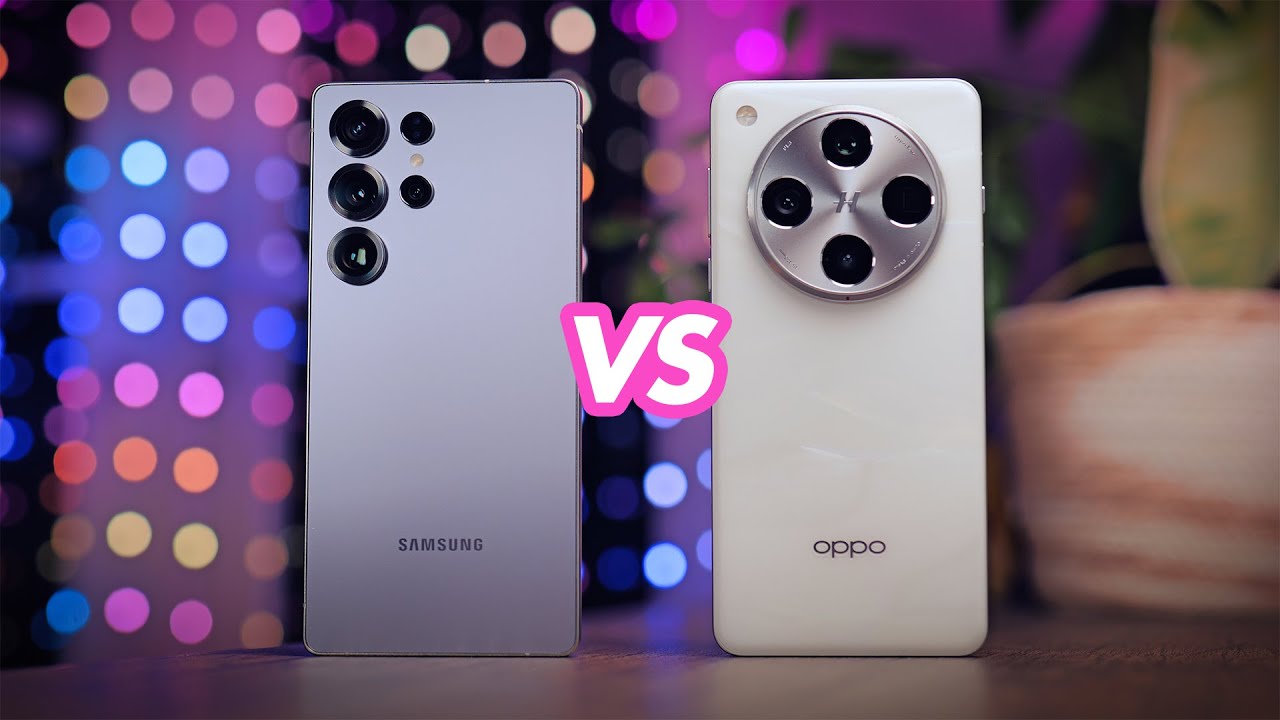

Side-by-Side Comparison Between Galaxy S25 Ultra and Oppo Find X8 Ultra Reveals Important Differences in Colors, Portraits, and Low-Light Performance.
The Samsung Galaxy S25 Ultra is one of the most complete smartphones on the market when it comes to photography. Its system features a main camera of 200 MP, two telephoto lenses, and an ultrawide sensor. This combination ensures versatility in almost any situation.
The Oppo Find X8 Ultra, however, arrives with an equally ambitious proposition.
Equipped with four rear cameras of 50 MP, all with large sensors, it also relies on a partnership with Hasselblad to deliver more natural colors and exclusive modes like XPAN.
-
Farmer’s DIY Cooling System Saves Harvests from Spoiling in 51 Countries by Tricking Standard Air Conditioners to Chill Rooms to 2°C

-
As Global Warming Melts Glaciers, Ancient Tools, Preserved Mummies, and Strategic Minerals Emerge in the Arctic and European Mountains

-
Brazil Constructs First Japanese SABO Barrier in Nova Friburgo to Prevent Landslides, a $3 Million Concrete Trap for Rocks, Logs, and Mud

-
Brazilian Navy’s Technology Plays Strategic Role in Future of Small Modular Reactors, Boosting Nuclear Energy Capacity with Innovative Solutions for Power Generation and Industrial Applications




Faced with doubts about which to take on a trip to Sweden, both devices were tested side by side, totaling 500 comparative photos.
Specifications Side by Side
On paper, the differences are clear. The Find X8 Ultra features a main sensor of 50 MP and 1 inch, which is larger than the 200 MP sensor of the Galaxy S25 Ultra.
Its telephoto cameras also stand out: the 3x periscope lens has 50 MP, compared to only 10 MP in Samsung’s model.
In the longer zoom lens, Oppo bets on 50 MP and 6x optical zoom, while Samsung offers 50 MP with 5x. As for the ultrawide, the specifications are similar, but Oppo maintains the 50 MP standard.
Photo Quality
In practice, the Oppo Find X8 Ultra delivers sharper images with better exposure in most scenarios.
In challenging lighting situations, it brightens the object, avoiding dark photos, although sometimes the result may look a bit artificial.
Samsung, on the other hand, tends to underexpose. This preserves skin tones more realistically in some cases but can sacrifice details.
In low-light environments, Oppo’s advantage increases.
Photos come out cleaner, with less noise and better definition. The 6x periscope lens shows natural bokeh and vibrant colors, outperforming the more neutral result of the Galaxy S25 Ultra.
Balanced Competition in Ultrawide
The balance appears in the ultrawide lenses. Both the Galaxy S25 Ultra and the Find X8 Ultra capture images with saturated colors and a high level of detail, even at night. Outdoors, the differences diminish, although Oppo’s more vibrant processing is visually more pleasing.
Portraits and Color Science
In portraits, Oppo stands out again. Hasselblad’s color technology creates images with smooth bokeh and tones adapted to the environment. In photos near the sea, the tone is cool; at sunset, it warms up.
Samsung maintains better color accuracy for some elements, such as clothing, but tends to apply excessive blur at the edges, which can make the image appear less natural.
Exclusive Features
The Find X8 Ultra boasts differentiators like 6x tele macro and XPAN mode. This feature, inspired by Hasselblad cameras, offers a panoramic ratio of 65:24, ideal for wide scenes and architectural details. It’s a format that enhances creativity in photography and has no direct equivalent in the Galaxy S25 Ultra.
Strengths and Necessary Adjustments
Despite Oppo’s overall victory, Samsung excels in usability aspects. The Galaxy S25 Ultra avoids elements that could hinder landscape capture, such as the Camera Control button present on the Oppo.
However, the most important thing for Samsung is to improve its color science, especially to compete with rivals that heavily invest in processing and image fidelity.
Conclusion
After days of testing and hundreds of clicks, the Oppo Find X8 Ultra proved superior in most situations.
Its larger sensors, exclusive features, and partnership with Hasselblad ensure more vibrant photos, better portraits, and consistent performance in low light.
The Galaxy S25 Ultra is still one of the best Android smartphones, but in this direct competition, it falls a step behind. For those seeking the best photographic experience, Oppo’s flagship is the safer choice at the moment.