Portuguese
  Spanish


Without money to buy a cold room, American farmer Ron Khosla created the CoolBot, a device that tricks a regular air conditioner and makes it cool a room to 2 degrees: in practice, the air conditioner becomes a cheap cold room, cuts post-harvest losses, and already saves the production of small farmers in 51 countries.
Some inventions are born in a million-dollar lab, and some are born out of necessity, on a farm. The CoolBot is the latter. Created by American farmer Ron Khosla, who didn’t have the money to buy a cold room, the device makes a brilliant hack: it tricks a regular window air conditioner and forces it to cool an entire room down to about 2 degrees, the temperature of a real cold storage. With this, the air conditioner becomes a cold room for a fraction of the price, saving harvests that previously rotted in the heat.
The story was documented by University of California (UC Davis), which studies the impact of the invention in combating post-harvest losses around the world. The CoolBot is already used in 51 countries and helps small farmers store food without needing an expensive industrial refrigerator. And the case returned to the spotlight in May 2026, when the government of the Philippines began officially testing the technology to reduce food waste in the field.
The trick that turns the air conditioner into a cold room
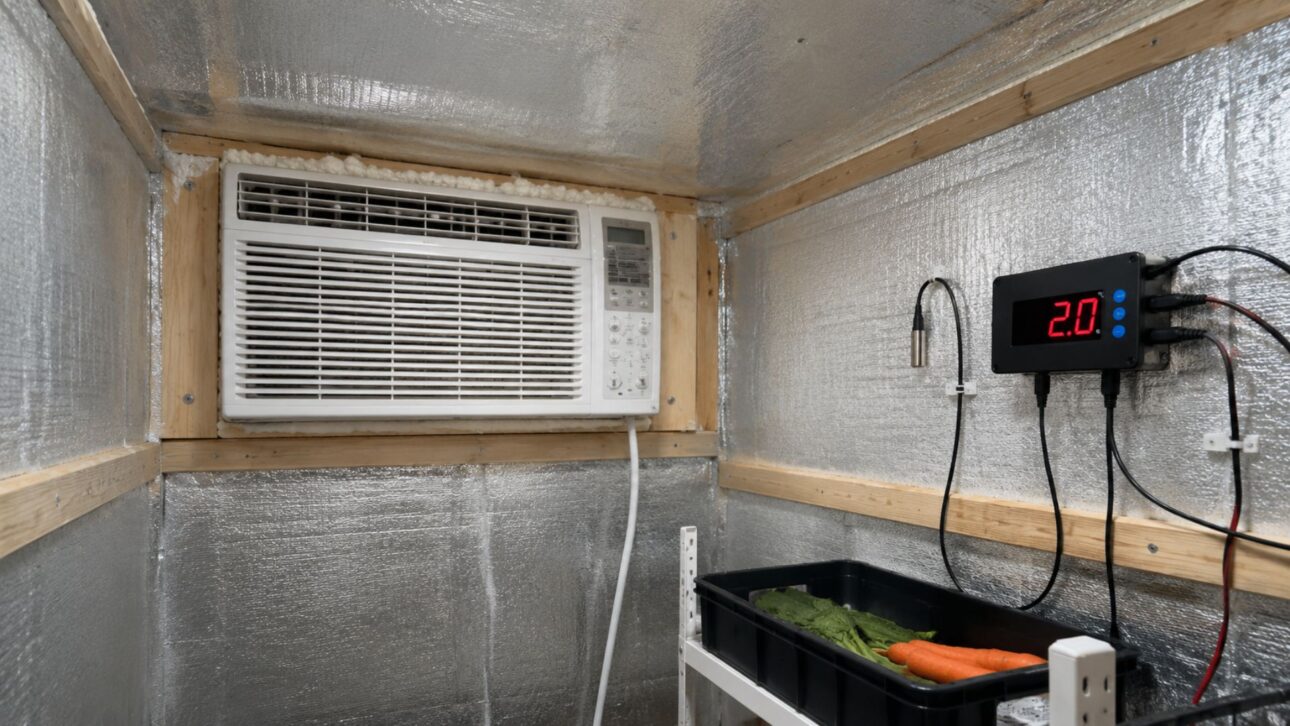
Every regular air conditioner is factory programmed to stop cooling when the environment reaches about 16 degrees, precisely to prevent freezing and burning out its own motor.
-
As Global Warming Melts Glaciers, Ancient Tools, Preserved Mummies, and Strategic Minerals Emerge in the Arctic and European Mountains

-
Brazil Constructs First Japanese SABO Barrier in Nova Friburgo to Prevent Landslides, a $3 Million Concrete Trap for Rocks, Logs, and Mud

-
Brazilian Navy’s Technology Plays Strategic Role in Future of Small Modular Reactors, Boosting Nuclear Energy Capacity with Innovative Solutions for Power Generation and Industrial Applications
-
China Surpasses U.S. and Russia Combined in Submarine Production



The CoolBot bypasses this limit with a simple trick: it slightly heats the air conditioner’s sensor, making the device “think” the room is still warm and continue cooling far beyond normal.
But there is a built-in care in this.
A second sensor keeps an eye on the device’s coil, and when ice starts to form, the CoolBot tells the air conditioner to rest to defrost, preventing the machine from freezing up.
It’s this balance that makes the magic happen without damaging the equipment.
The result is straightforward.
Connected to a well-sealed and insulated room, the air conditioner becomes a real cold chamber, keeping the temperature close to 2 degrees, the ideal point for preserving fruits, vegetables, and greens.
It’s not a new refrigerator, it’s a store-bought air conditioner with a new brain.
Without money for a cold chamber, the workaround was born
The invention of the CoolBot originates from pure necessity.
In 1999, Ron Khosla and his wife, Kate, ran the small Huguenot Street Farm in New Paltz, New York, and needed a cold place to store their produce.
The problem was the price: a used cold chamber cost 3,500 dollars, and a new one cost much more, money the farming couple simply didn’t have.
Instead of giving up, Khosla went to the workbench.
Graduated from Cornell University, he had the idea to use a shelf air conditioner as the engine of a homemade cold chamber, and began testing combinations of sensors until he got the formula right.
“It was totally out of necessity, I couldn’t afford a cold chamber,” summarized Ron Khosla.
What was a solution to his own problem ended up becoming a business.
At the request of customers who wanted to copy the idea, Ron Khosla founded the company Store It Cold and started selling the CoolBot to other small farmers.
A farm workaround became a real product.
Almost 50% cheaper and up to 42% less energy
The appeal of the CoolBot is, above all, financial.
The device itself costs around 300 dollars, and combined with a common air conditioner, it sets up a cold chamber for a fraction of the cost of an industrial unit.
Setting up the entire structure can cost less than 3,000 dollars, compared to the many thousands charged for a professional cold chamber.
And the savings don’t stop at the time of purchase.
A study by the New York State Energy Research and Development Authority, NYSERDA, measured that a system with CoolBot can be up to 42% more efficient than a conventional refrigerator, meaning it uses much less electricity at the end of the month.
For those living on tight margins, these two numbers change the game.
That is why the device has become popular among small farmers, flower shops, and even craft breweries.
Those who couldn’t even dream of refrigeration now have access to it.
Cheap to assemble and cheap to maintain, the CoolBot solves once and for all the two biggest fears of food producers.
From a farm in the USA to 51 countries
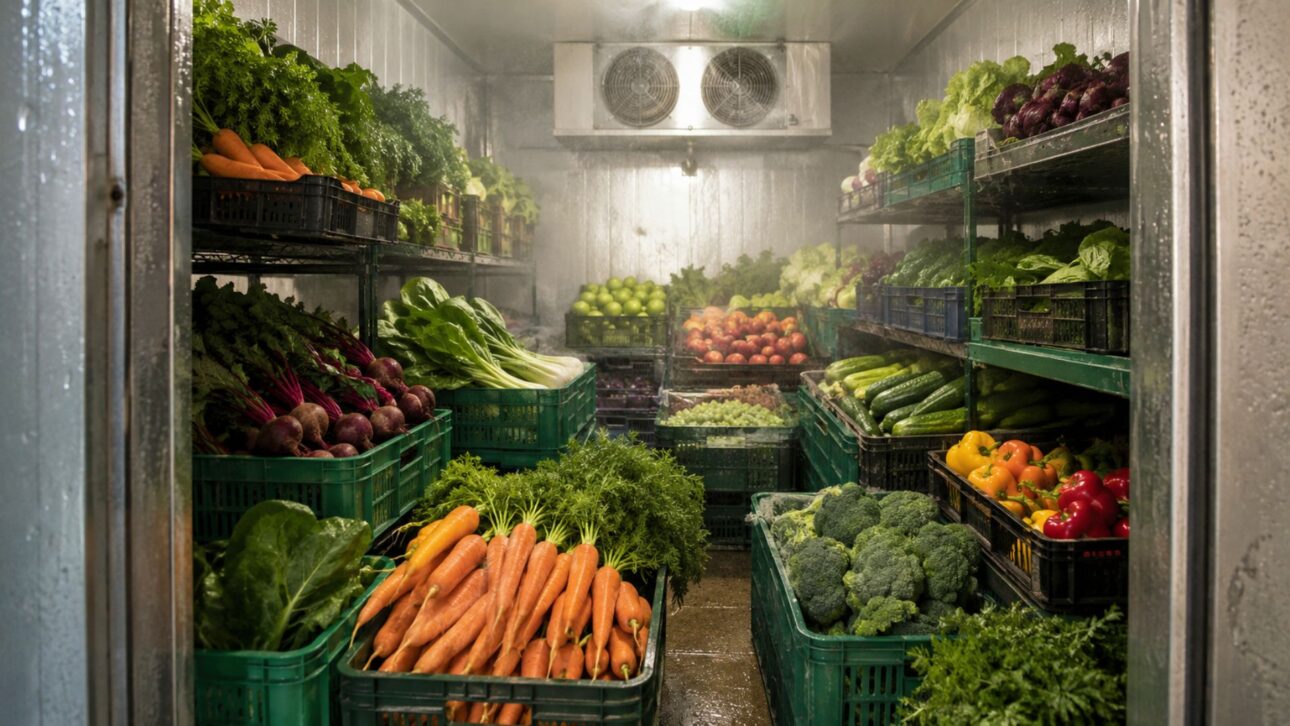
Today, the CoolBot has been sold in 51 countries and has tens of thousands of units installed worldwide, according to surveys linked to UC Davis.
The University of California embraced the technology and began taking it to small farmers in poor countries, where the lack of refrigeration causes food to spoil before reaching the table.
A name led this work.
Professor Michael Reid, from UC Davis, helped spread the invention and test it with producers in places like Tanzania, Uganda, Bangladesh, Thailand, Cambodia, and Honduras.
In each of these places, the logic is exactly the same.
Where the air conditioner becomes a cold room, the farmer can keep the harvest for more days and sell at a better price, instead of losing everything in the heat.
An idea from an American farm became a tool to combat hunger on various continents.
From Khosla’s backyard to the world, the CoolBot proved that cheap technology can have a huge reach.
The test by the Philippine government
The novelty that brought the CoolBot back into the spotlight came from Asia.
In May 2026, the Department of Science and Technology of the Philippines, the DOST, officially began testing the technology to combat the country’s post-harvest losses, according to the Radar.
The trials are taking place at the Central Luzon State University, in a chamber designed by the University of the Philippines in Los Baños, with the storage of products like eggplant and bitter melon.
The government’s goal is clear.
The technicians want to confirm if the cheap system can extend the life of fruits and vegetables enough to make it worth producing on a scale for small Filipino farmers.
There is even a cost-benefit analysis underway.
The DOST reported that it is studying the potential for mass production of the solution, which could transform a farm hack into a public food security policy.
When a government decides to test the idea, it reaches another level.
It is the recognition that reducing post-harvest losses has become a serious priority worldwide.
Why this matters for small farmers
The drama behind all this is food waste.
A good portion of the food produced in the world is lost between harvest and consumption, and the lack of refrigeration in the field is one of the biggest culprits for these post-harvest losses.
Without a cool place to store, the small producer is forced to sell everything quickly and cheaply, or watch the goods rot in a few days.
This is where the equation balances.
By putting an affordable cold room within reach of those who earn little, the CoolBot tackles exactly this bottleneck and gives small farmers time and bargaining power.
The message also applies to Brazil.
In a country of continental dimensions and strong in agribusiness, bringing affordable refrigeration to small producers could reduce post-harvest losses and improve income in the field, especially in family farming.
Where the air conditioner turns into a cold room, there is more food and more money in the hands of those who plant.
Less waste is, in the end, more food security for everyone.
What the CoolBot case shows
The biggest lesson from the CoolBot is about ingenuity with purpose.
Ron Khosla proved that it’s possible to solve an expensive problem with a cheap solution, and that a good farm idea can travel the world and help millions.
Where the air conditioner turns into a cold room, a farmer who would lose the entire harvest now has an ace up their sleeve.
Of course, it’s important to stay grounded.
The CoolBot does not replace a large-scale industrial chamber and depends on a well-insulated room and a good quality air conditioner to work properly, so it’s not magic, it’s well-applied simple engineering.
Even so, the impact is real.
From a small farm in New York to government tests in the Philippines, through the work of UC Davis in 51 countries, Ron Khosla’s invention continues to cut post-harvest losses and give small farmers a boost.
It is proof that not every revolution needs to be expensive to change the lives of many people.
And you, would you be willing to transform a regular air conditioner into a homemade cold chamber to avoid losing food in the heat? Tell us in the comments if you had heard about this CoolBot hack and what you think about bringing this idea to the small Brazilian producer.