Portuguese
  Spanish


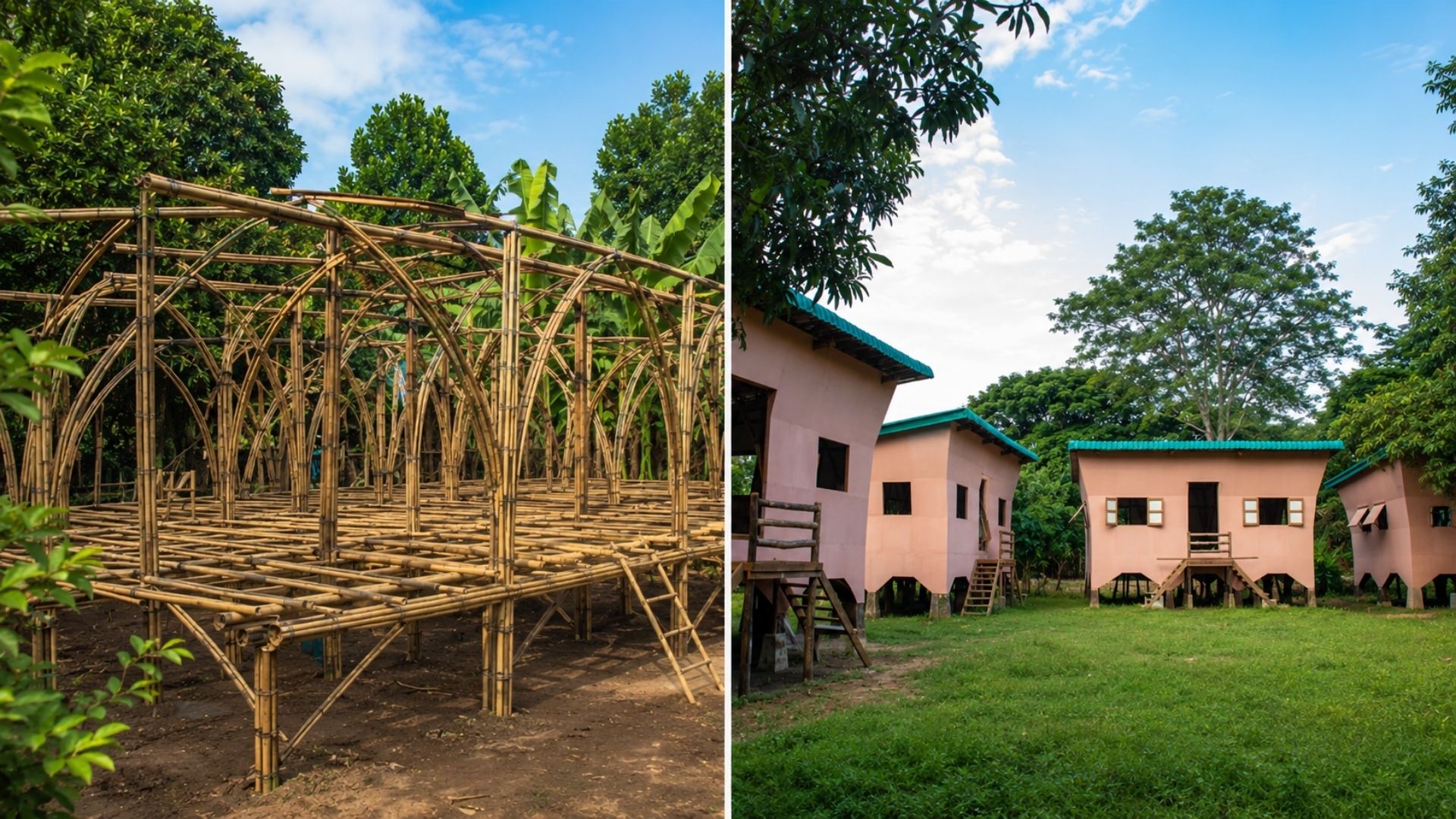

Designed by the Blue Temple studio in Myanmar, the bamboo house of the Housing NOW project is assembled in about a week and costs from US$ 1,000 to US$ 1,300, the price of a cell phone. When the 7.7 earthquake hit Mandalay in 2025, 26 of these homes remained standing, intact.
Imagine a house that costs the price of a cell phone, goes up in a week, and still withstands one of the world’s most violent earthquakes without falling. It’s not an optimistic projection, it’s a fact proven in the field. In March 2025, a magnitude 7.7 earthquake devastated the Mandalay region in central Myanmar, and amidst the destruction, a group of bamboo houses simply remained standing. There were 26 of these homes resisting intact, without any collapsing. The story was reported by New Atlas.
The feat has a name and author. The bamboo house is part of the Housing NOW project, created by the Blue Temple architecture studio, based in Yangon, Myanmar. The proposal is simple and bold at the same time: to offer a dignified, quick-to-assemble, and resistant social housing, at a cost affordable to those who have lost everything. The Mandalay earthquake inadvertently became the toughest possible test for this idea.
The house that passed the 7.7 earthquake test
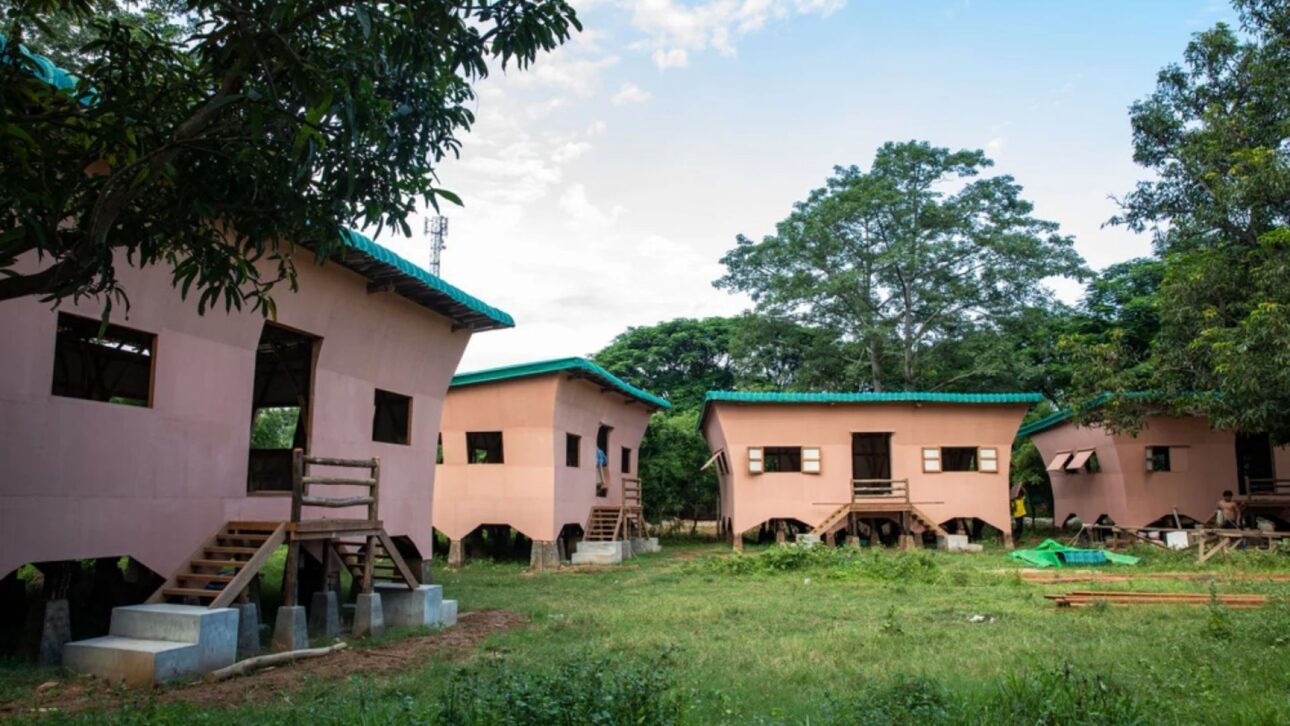
image: Aung Htay Hlaing, Raphael Ascoli
The context makes the feat even more impressive. The earthquake that hit central Myanmar in March 2025 was one of the deadliest in the region in years, with a magnitude of 7.7, leaving thousands dead and concrete buildings reduced to rubble in Mandalay and surrounding areas.
-
Prefabricated Home Assembled in Days Offers Cleaner, More Efficient Construction with Factory-Made Panels, Requires Technical Design to Prevent Moisture Issues

-
Single Mother Working Three Jobs Receives 111 m² 3D-Printed Home with Concrete Walls Built in 12 Hours, Featuring 3 Bedrooms, 2 Bathrooms, and a Printer for Replacement Parts

-
Simple Technique to Restore Rusty Metal Window Grilles Gains Attention for Revitalizing Old Structures Without Full Replacement

-
Couple Transforms Suffolk’s Last 1891 Windmill into Luxurious Four-Story Home with Zinc Observation Room in England



It was in this collapse scenario that the bamboo houses showed their worth.
While heavy structures crumbled, the Housing NOW homes remained intact. According to New Atlas, 26 of these bamboo houses, installed in the Mandalay area, withstood the tremor without structural damage, none of them collapsed.
For such a cheap and lightweight construction to emerge unscathed from an earthquake of this strength is a result that draws the attention of engineers worldwide.
This is the type of test that no laboratory can replace. Many materials promise seismic resistance in theory, but few go through a real 7.7 earthquake and come out intact.
The bamboo house in Mandalay did exactly that, and thus ceased to be an experiment to become a housing system tested in extreme conditions.
7 days and the price of a cellphone
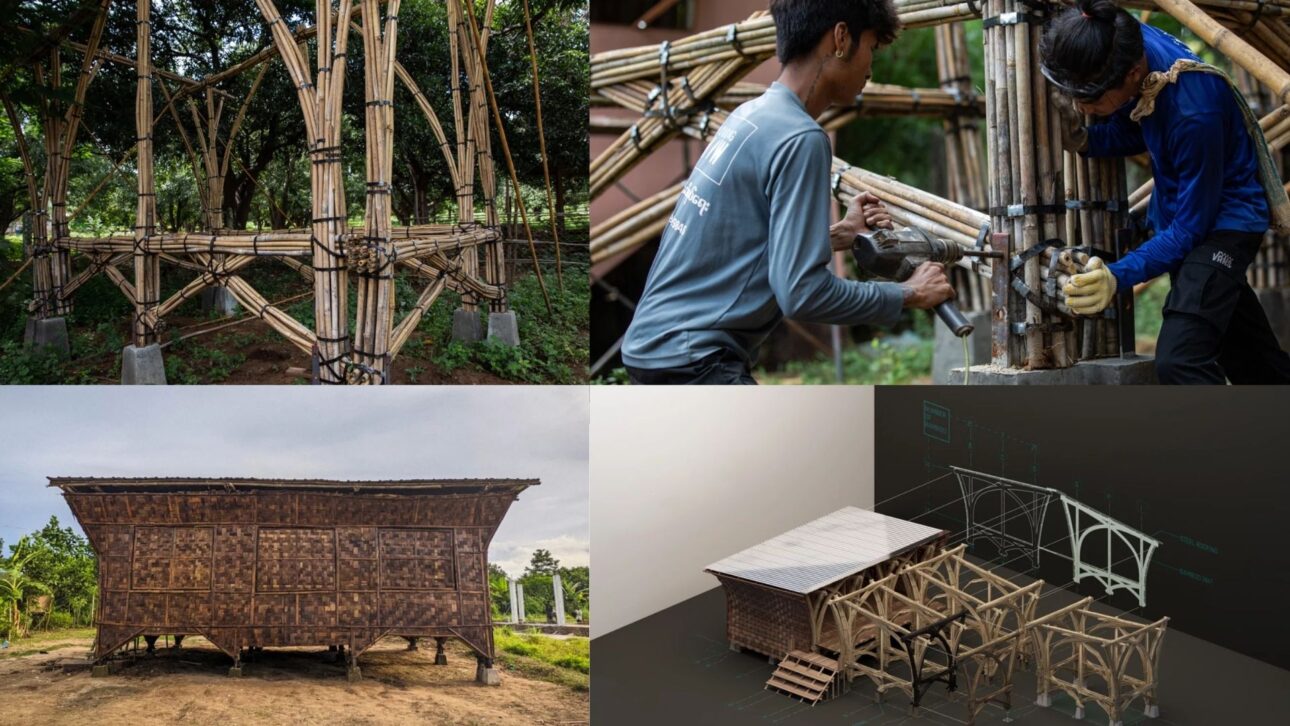
image: Aung Htay Hlaing, Raphael Ascoli
The second advantage of the project is accessibility. Each bamboo house from Housing NOW costs between $1,000 and $1,300, equivalent to the price of a good cellphone.
For families who lost everything in a disaster, this amount makes the difference between remaining homeless and having a safe home again. It is social housing in the most direct sense of the word.
Speed is another highlight. The quick construction allows the structure to be erected in about seven days, using a modular system of small-diameter bamboo bundles.
No construction company or heavy machinery is needed: each house comes with a step-by-step manual, and the resident, with the help of the community, can assemble the home with simple tools.
This combination of cheap and fast is what makes the idea replicable. A quick construction that dispenses with expensive labor and industrialized materials can be repeated on a scale, exactly where the disaster has just passed.
The bamboo house simultaneously solves the cost, time, and urgency, three bottlenecks that usually hinder reconstruction.
Why bamboo can take the strain
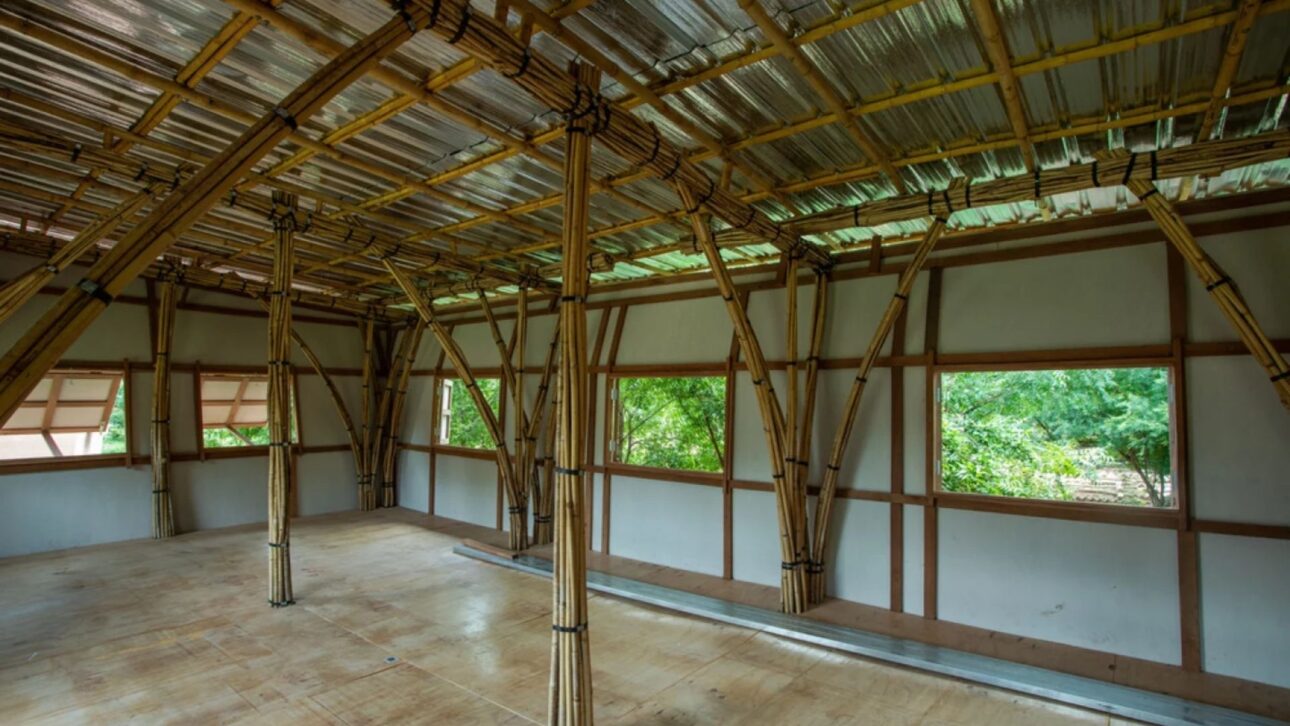
image: Aung Htay Hlaing, Raphael Ascoli
The resistance is not luck, it’s engineering. The secret lies in how the bamboo was worked. The Blue Temple team used small-diameter bamboo bundles, tied and interwoven tightly, creating a structure that distributes the earthquake’s load evenly across the walls and roof, instead of concentrating it at a point that would break.
The material greatly helps in this regard. Bamboo is light and flexible, and flexibility is exactly what you want in an earthquake: instead of cracking like rigid concrete, the bamboo structure sways and absorbs the ground movement.
The Housing NOW bamboo house was designed to flex during the tremor and return to its place, rather than resist stubbornly and give way.
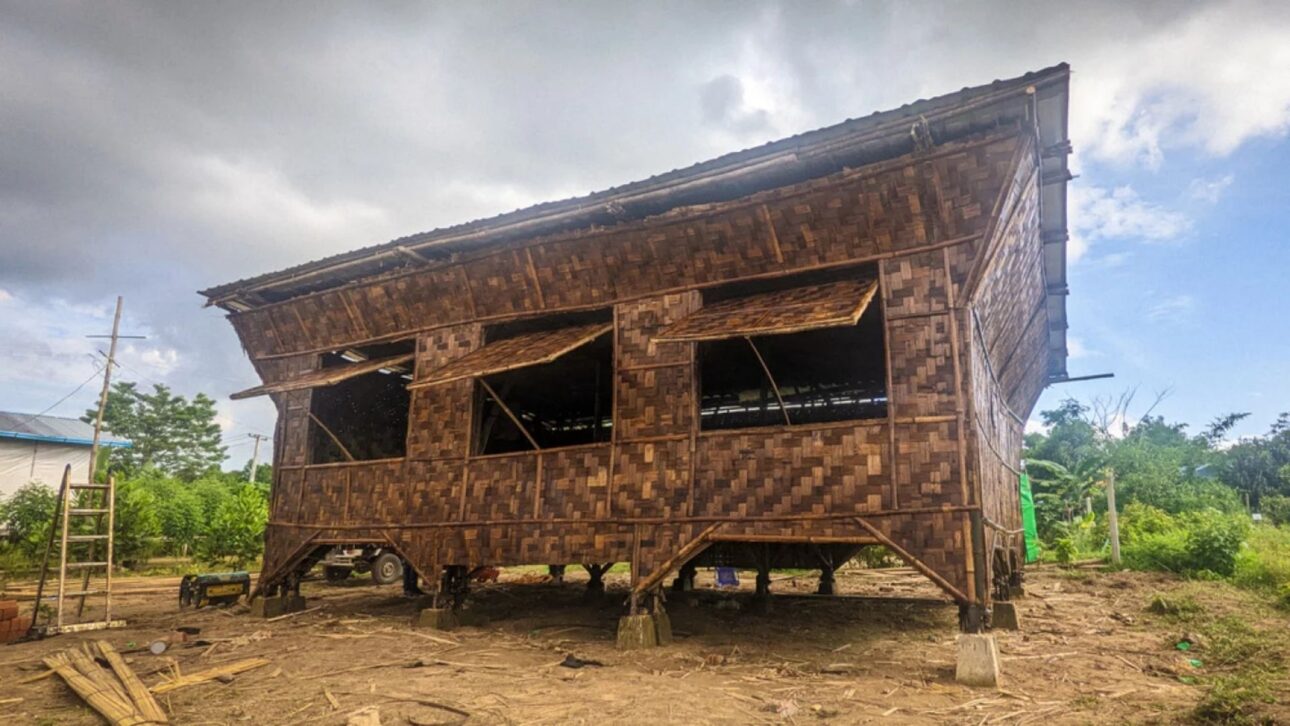
image: Aung Htay Hlaing, Raphael Ascoli
There is also a marriage between tradition and technology. The project combines local artisanal knowledge of working with bamboo with modern digital design, calibrating the structure for optimal performance.
It is this fusion that transforms a humble plant, which grows quickly and abundantly in Asia, into a material capable of withstanding a 7.7 earthquake.
79 houses and 500 manuals: the Housing NOW project
The case of Mandalay is the most famous part, but not the only one. In total, Blue Temple has already built 79 of these bamboo houses throughout the country, spreading the solution across different communities in Myanmar.
The 26 that withstood the earthquake are those that were in the affected zone, and not the total of the project, an important distinction to understand the scale.
The strategy goes beyond erecting ready-made houses. The studio distributed about 500 bamboo assembly manuals throughout the country, teaching communities to build safe homes on their own with local tools and materials.
Instead of relying solely on a central team, knowledge is spread, multiplying the reach of social housing far beyond what 79 houses could achieve alone.
This model of empowering people is what gives the project momentum. Each manual in the right hands can become another standing bamboo house, made by those who need it most.
Rapid construction ceases to be the exclusive domain of architects and becomes a community tool, precisely in regions where official aid is delayed or does not arrive.
Dignified housing for a country in crisis
The backdrop to all this is harsh. Myanmar is experiencing a prolonged crisis, with internal conflict and thousands of families displaced from their homes, and the 2025 earthquake only worsened an already difficult situation.
It is for this audience, people who have lost their homes and have very few resources, that the bamboo house was designed.
In this context, offering cheap and resilient social housing is not a luxury, it is a basic necessity. When the State cannot reach everyone, a solution that costs the price of a cellphone and goes up in a week becomes a realistic path to restore dignity.
Rapid construction becomes a concrete answer for those who cannot wait years for reconstruction.
The merit of Housing NOW is to unite both ends: cheap enough to reach those with little, and strong enough to protect that same person in the next tremor.
In a country so exposed to disasters and instability, a bamboo house that withstands earthquakes and fits the budget is more than architecture, it is security.
What Brazil can learn
The experience of Myanmar echoes here more than it seems. Brazil has an abundance of bamboo, a huge housing deficit, and areas that suffer from floods and landslides, from the South to the Serra fluminense.
The logic of cheap, fast, and resilient social housing is as useful here as it is there.
The open manual model also inspires. Instead of waiting for large projects, empowering communities to build their own bamboo house, with local materials and low cost, is a possible response to climate emergencies that are already part of Brazilian daily life.
After a flood, for example, fast and cheap construction can greatly accelerate the restart.
In the end, the message from Mandalay is universal. Expensive concrete and years of construction are not necessary to provide a safe roof for those in need.
Sometimes, all it takes is a fast-growing plant, good engineering, and the decision to treat social housing as a right. The bamboo house that withstood the earthquake proved that dignity and low cost can indeed live together.
And you, would you live in a house like this?
The bamboo house from Housing NOW shows that it is possible to combine low price, fast construction, and earthquake resistance in a single social housing unit.
Twenty-six of them remained intact in the chaos of Mandalay, and the project already totals 79 houses and hundreds of manuals spread across Myanmar, bringing security to those who need it most.
And you, would you trust a bamboo house to live in, knowing it withstood a 7.7 earthquake? Share in the comments if you think this type of social housing could help Brazil in risk areas and what would still make you hesitate.