






 Portuguese
  Spanish


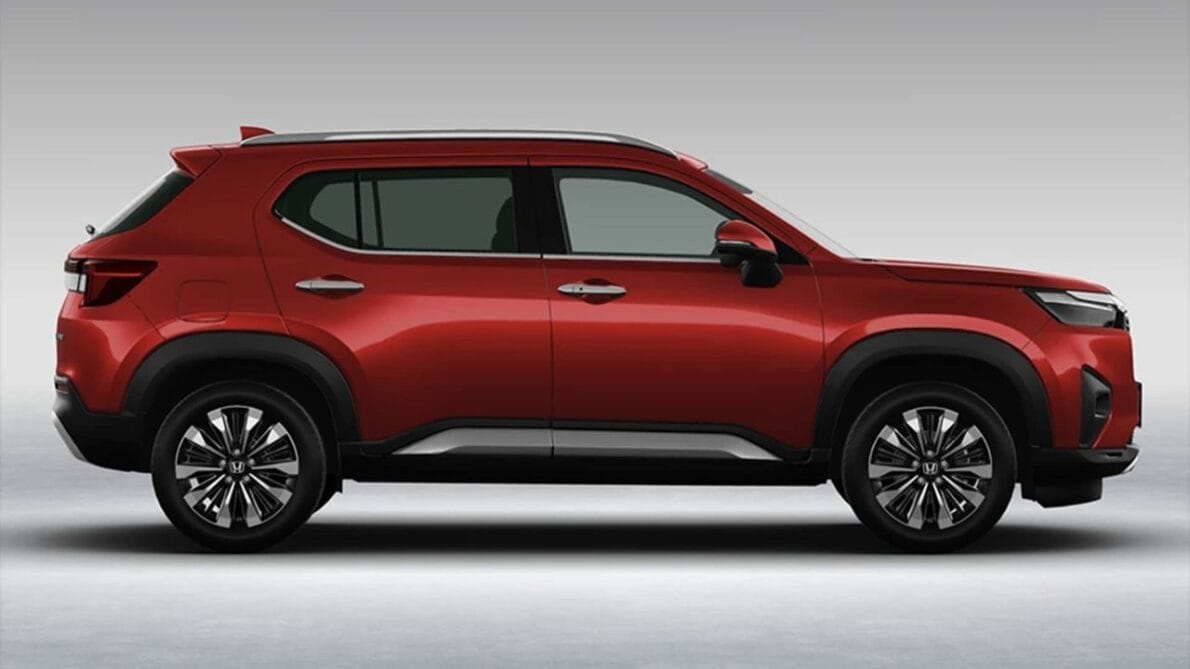

Honda Intends To Launch New WR-V In Brazil, Aiming To Lead The Compact SUV Segment With Renewed Design, Efficient Powertrain, And Competitive Pricing, Threatening Rivals Like Creta And Renegade.
In a bold move, Honda has officially announced the launch of the new WR-V in the Brazilian market, promising not only to compete but to lead the compact SUV segment. Registered in Brazil since 2022, the WR-V, which has grown in size and features, is the Japanese automaker’s new bet to dominate a sector currently led by names like Creta and Renegade. The new Honda SUV will have national production at Honda’s factory in Itirapina, São Paulo’s interior.
The WR-V, now in its new generation, surprises with its size and specifications. With dimensions close to its larger sibling, the HR-V, the WR-V boasts a length of 4.32 m, a wheelbase of 2.65 m, a width of 1.79 m, a height of 1.65 m, and a weight of only 1213 kg. The trunk capacity is also impressive, with 311 liters available.
Engine Of The Honda WR-V In Brazil


The new Honda WR-V is powered by a 1.5 four-cylinder aspirated engine that stands out for both fuel efficiency and performance. This engine, already known to users of the Honda City and HR-V in their more affordable configurations, delivers a power of 126 horsepower and a torque of 15.8 kgfm, providing an agile and responsive driving experience.
-
End of an era in Brazil: beloved sedan by Brazilians is discontinued despite having a 2.0 engine with 151 hp, CVT transmission, 466-liter trunk, and up to 650 km of range.

-
New Law Proposal in Brazil Could Heavily Penalize Drivers: Dangerous Overtaking May Become a Serious Offense with Fines Increased Tenfold and a 12-Month License Suspension; Update on 2026 Progress

-
Electric Revolution: Watts W125 Motorcycle Offers 160 km Range, 90 km/h Speed, and Affordable Price Starting at $3,000
-
General Motors Replaces Over a Thousand Workers with 50 Cobots at Electric Vehicle Plant, UAW Union Criticizes Move Amid Industry’s Automation Push


The WR-V’s 1.5 engine is designed to operate flexibly, accepting both ethanol and gasoline, which gives it an adaptive advantage in the Brazilian market, known for the prevalence of flex fuels. The automatic CVT transmission that accompanies this engine simulates up to seven gears, ensuring smooth shifts and efficient power utilization, contributing to a more enjoyable and economical driving experience.
Design And Interior
Aesthetically, the WR-V impresses with its chrome front grille, Black Piano fog light frames, full LED headlights, and two-tone paint options. The similarities to the Indian BR-V are evident, especially at the rear, which features an integrated spoiler and taillights with LED position lights.
The interior, while simpler compared to the HR-V and City, does not compromise on quality, with well-fitted hard plastic finishes. In terms of equipment, the WR-V brings the essentials for the segment, including digital climate control, electrically folding mirrors, multifunction steering wheel, keyless entry, wireless charging, and an 8-inch multimedia system.
Regarding safety, Honda’s new SUV is better equipped, featuring traction and stability controls, disc brakes with ABS at the front and drums at the rear, along with six airbags as standard. The more complete versions, RS and Turin, add collision warning, autonomous emergency braking, and the Lane Watch system.
Honda WR-V Will Have National Production
Manufactured in the interior of São Paulo, the WR-V will hit the market in the second half of 2024, with prices ranging from R$ 110,000 to R$ 150,000, positioning itself below the HR-V, offering a more accessible option for consumers seeking Honda’s quality and reliability. With a competitive value proposition and robust features, the WR-V is poised to become one of the most impactful launches of the year in Brazil.
According to information from the Autos Segredos portal, which anticipated the return of the WR-V to the Brazilian market, it is expected that the launch of this SUV will occur by 2026. On the other hand, the Autoesporte magazine indicates that the car’s arrival at dealerships is more likely in 2025. Despite these differing forecasts, both sources agree that the official announcement of the WR-V’s return and its presentation will take place during the next Auto Show, scheduled for November.








Na minha opinião, estragou o WR-V. Uma das coisas boas do crossover original era ter apenas 4 metros de comprimento, o que facilitava para estacioná-lo.
Eu só gostaria de saber, por favor, por
que estes SUVs já não fabricam com o motor turbo? Assim como o HRV, que algumas versões também vem com o motor aspirado. Deveriam abandonar estes motores aspirados! Já passou da ora.
Bolso meu amigo, bolso. O turbo é ótimo, porem de manutenção cara.
Obrigado Silvio pelo esclarecimento! Eu não tinha me atentado a isto!
Se a diferença do meu Hrv 2018 não for grande eu espero trocar.