






 Portuguese
  Spanish


Honda Hybrid Vehicle Combines Pedal Assist With Removable Battery, Promises To Revolutionize Urban Deliveries And Will Be Showcased As A Prototype At Eurobike 2025, Catching The Attention Of The Logistics Sector For Its Versatility, Sustainability And Integrated Remote Connectivity Solutions.
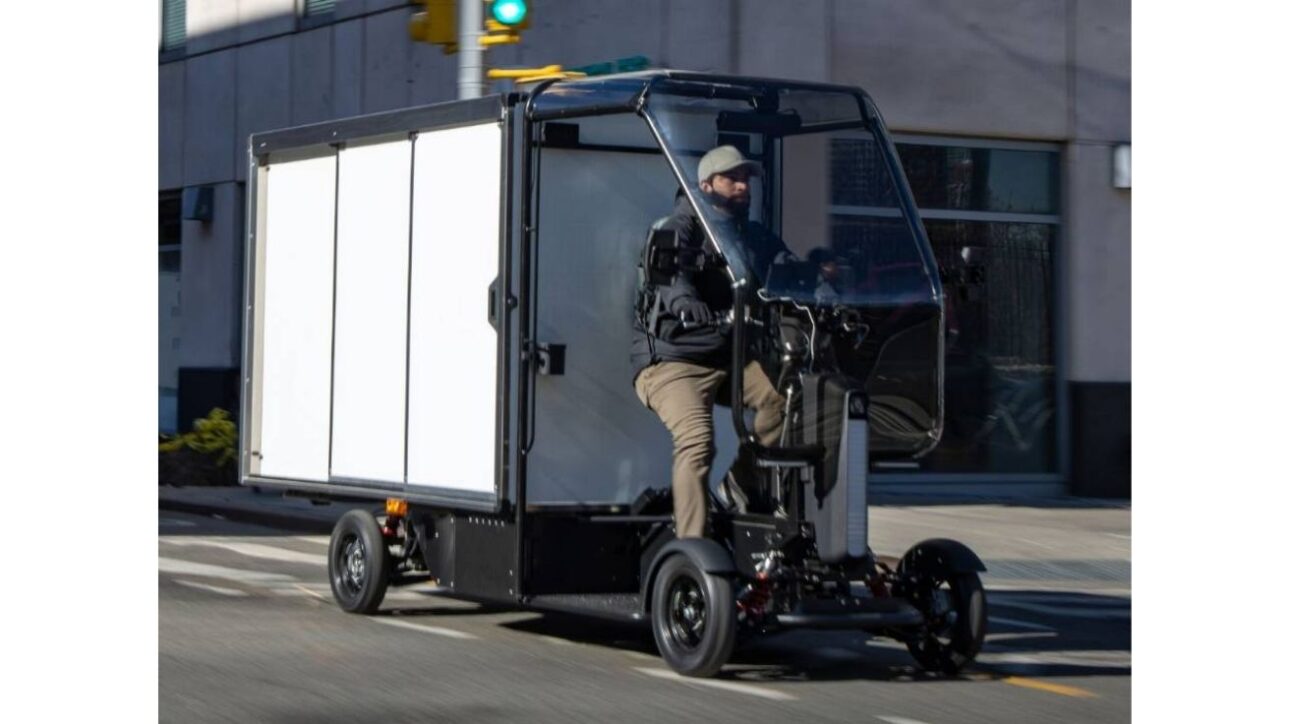
Honda has revealed a new lightweight delivery vehicle model for short-distance urban deliveries: the Fastport eQuad, an electric pedal truck that combines human traction with motor assistance technology.
The prototype will be officially presented at Eurobike 2025, one of the largest mobility and bicycle fairs in the world, standing out as an innovative solution for the so-called “last mile” of urban logistics.
The Fastport eQuad is an electric tricycle with a hybrid propulsion system that uses pedal-by-wire technology, which converts the driver’s effort into electronic signals that activate the motor, promoting a smoother, quieter ride with zero emissions of harmful gases.
-
Award-Winning Japanese Restaurant Reveals It Has Preserved Part of the Same Frying Oil for 66 Years

-
American Youth Transforms from Severe Obesity to U.S. Air Force Enlistment, Losing 90 Kilograms in Two Years
-
The Trap of Modern Technology: How Screen Overload and Digital Connections Can Impact Your Mental Health and Well-being
-
Wyoming Couple Grows Tropical Fruits Year-Round in -40°C Using Geothermal Greenhouse, Demonstrating Earth’s Heat Can Produce Oranges and Lemons in Snow Without Traditional Heating


The model fits into a context of rising demand for sustainable transport in urban areas, especially given the restrictions imposed by low emission zones in various global cities.
Fastport eQuad Technological Features
Aimed at delivery companies and logistics operators, the Fastport eQuad combines a compact design with advanced features.
Among the main features are the regenerative braking system — which converts braking energy into battery recharge — and an automatic brake hold mechanism, useful in long stops or steep ramps, increasing user safety.
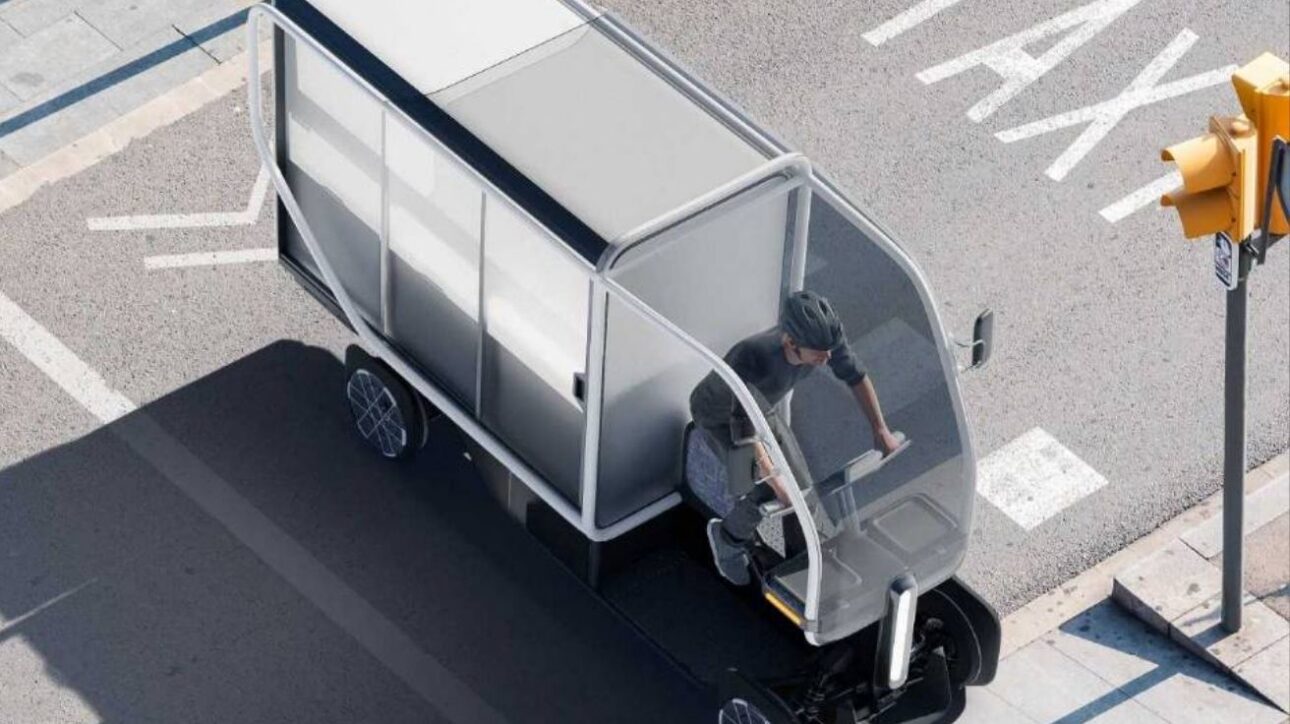
The model will be offered in two distinct versions: a compact one, with a length of 3.4 meters and a capacity for 145 kg of cargo; and a larger one, with a length of 3.65 meters and a capacity to carry up to 295 kg.
Both share the same height (2.1 meters) and have widths of 1 meter (compact version) and 1.2 meters (larger version).
The maximum speed is limited to 20 km/h, respecting local regulations for non-motorized vehicles on bike lanes and residential streets.
Range And Energy System
The larger version has a range of up to 37 km on a full charge, according to preliminary data from the manufacturer.
The range of the smaller version has not yet been disclosed.
In both, the motorization is powered by two units of the Honda Mobile Power Pack, a system of portable and removable batteries developed by the manufacturer itself.
The choice of interchangeable batteries facilitates continuous vehicle operation, allowing for quick swaps without the need for long recharge breaks.
Cargo Capacity And Weather Protection
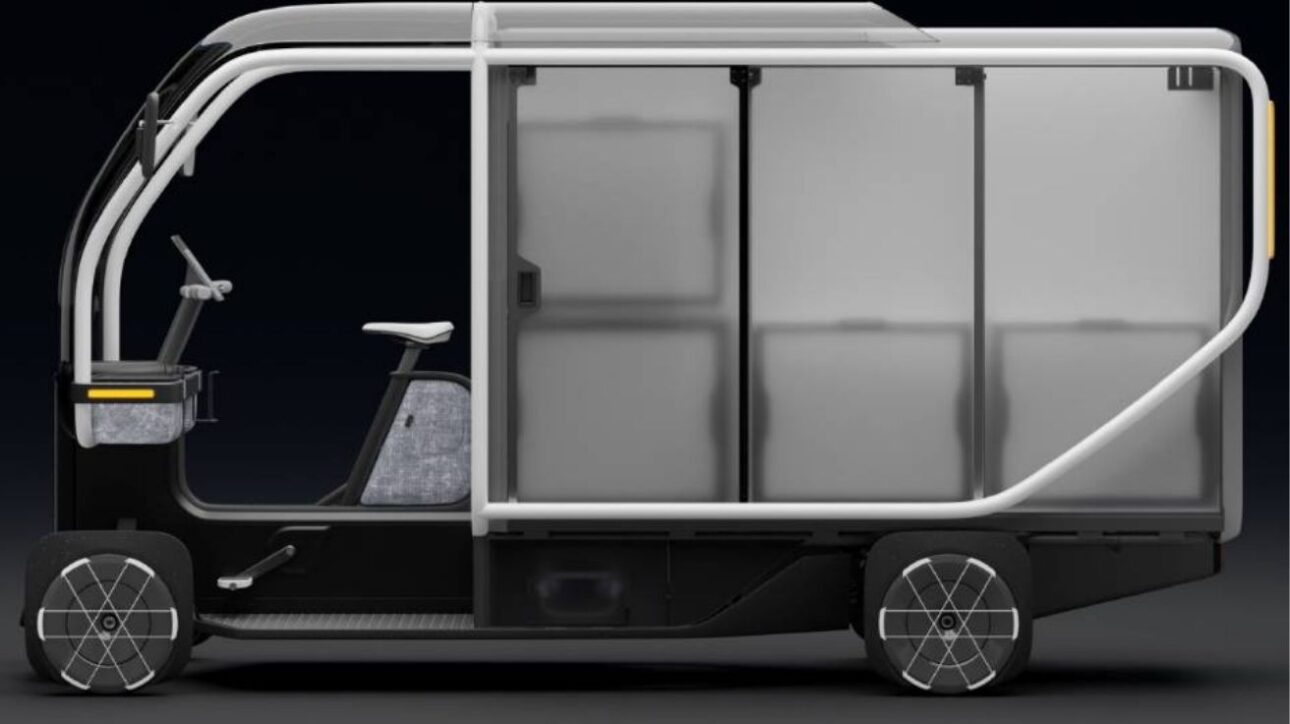
The cargo compartment can also be customized according to operational needs, with adjustable modular boxes that enhance logistical flexibility.
This allows for transporting anything from small packages to bulkier deliveries, without the complexity of larger vehicles.
Additionally, the structure includes a canopy with ultraviolet (UV) protection, an internal fan, and a full front cover, ensuring greater comfort and protection from adverse weather conditions.
Integration With Honda FaaS Platform
Another highlight of the Fastport eQuad is its integration with a digital platform developed by Fastport, Honda’s mobility division.
Dubbed FaaS (Fleet as a Service), this solution offers remote monitoring of vehicles, intelligent battery usage management, and automatic software updates (known as OTA, or over-the-air technology), allowing for continuous improvements in operation and cost reduction.
Testing And Launch Forecast
Currently, the model is undergoing practical tests with logistics companies in North America and Europe.
Mass production is expected to begin in 2026, following the completion of validation programs and adjustments based on feedback from real operations.
With this launch, Honda enters a strategic segment that has already attracted competitors like Citroën and Renault, which are also developing compact vehicles for sustainable urban deliveries.
Electric Micro-Logistics Trend
However, the electric pedal truck from the Japanese manufacturer differentiates itself by focusing on the combination of physical effort and electric propulsion, merging practicality, low environmental impact, and operational versatility.
In recent years, the growth of e-commerce and on-demand deliveries has increased pressure on urban centers, prompting cities like Paris, Berlin, and São Paulo to seek cleaner and quieter alternatives for freight transport.
In this context, solutions like the Fastport eQuad become prominent for their efficiency and adaptability.
Another factor that strengthens Honda’s proposal is the potential for reducing operational costs.
Without the need for fossil fuels, with lower maintenance and sufficient range for urban shifts, the Fastport eQuad can represent significant savings for small and medium logistics operators, especially on short and recurring routes.
Application In The Brazilian Market
Industry experts see the trend of “electric micro-logistics” as irreversible, especially in light of the decarbonization goals that major metropolitan areas have adopted for the coming decades.
By investing in vehicles like the electric pedal truck, Honda is anticipating a growing demand for accessible, eco-friendly, and efficient alternatives for urban transport.
In Brazil, there is currently no official launch forecast for the model, but specialists believe that the country holds significant potential for this type of solution, especially in dense urban centers like São Paulo, Rio de Janeiro, Recife, and Curitiba.
Brazilian legislation already allows for the circulation of electric tricycles on bike lanes and exclusive lanes, provided speed limits and dimensions defined by traffic authorities are respected.
Is the Brazilian market ready to adopt the Fastport eQuad as a viable and scalable solution for last-mile urban logistics?


