






 Portuguese
  Spanish


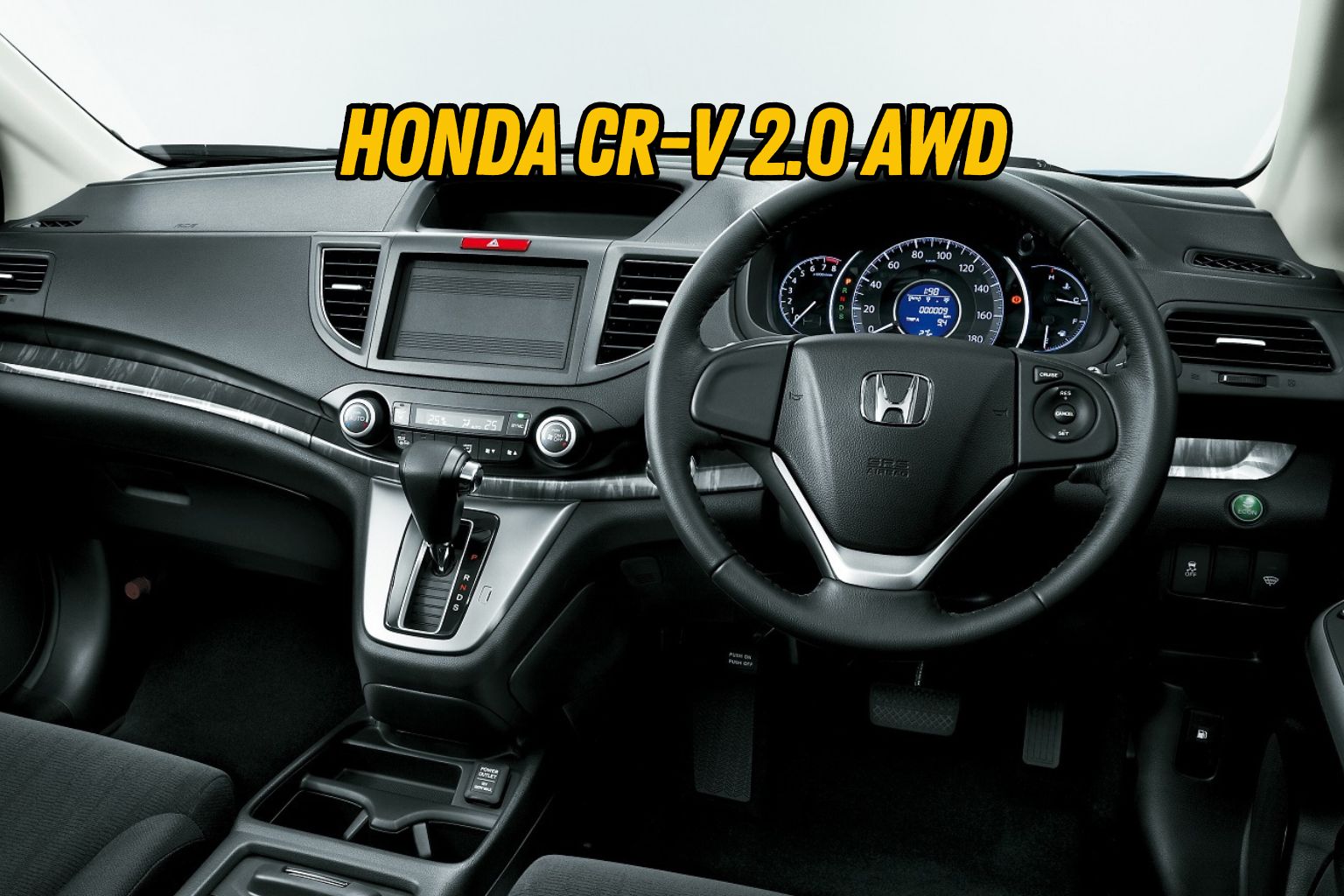


Honda CR-V 2.0 AWD Was Overlooked When New, But Today It Stands Out in the Used Market for All-Wheel Drive, Reliable Engine, and Above-Average Comfort.
When it arrived in Brazil, the Honda CR-V 2.0 with all-wheel drive was never a unanimous choice. Discreet design, high price, and a more technical proposition made the model go almost unnoticed in a market that was starting to fall in love with eye-catching SUVs.
Years later, the scenario changed. In the used market, the CR-V AWD came to be seen as one of the most complete, robust, and underrated crossovers ever sold in the country, delivering a mechanical set that many modern SUVs simply cannot match.
Why the Honda CR-V AWD Did Not Catch the Brazilian Consumer’s Eye When New
The main problem with the CR-V was never the product, but the market timing. It arrived when Brazilian consumers still associated SUVs with aggressive looks and a sense of status.
-
Suzuki XL6: Affordable Premium Minivan in India Offers Seating for Six, Hybrid Engine, and Impressive Fuel Efficiency

-
Banco do Brasil and Uber Launch Cashback Program Offering Up to 3.5 Loan Installments Back, Drivers Gain Access to New Cars Worth Up to $30,000 Through Move Brasil Initiative

-
Looking for a Car for Dirt Roads? Fiat Uno, Strada, and Volkswagen Gol Offer Durability and Affordability

-
MG Motor to Produce Two Electric Cars in Brazil with $75 Million Investment, Creating 600 Jobs


The CR-V relied on engineering, comfort, and reliability, not visual impact. Additionally, the high price deterred those who compared only technical specifications or external size. The result was modest sales volume and a discreet exit from showrooms.
All-Wheel Drive: A Feature That Was Overlooked at the Time
One of the biggest strengths of the CR-V was precisely what the public valued the least. The AWD on-demand system automatically distributed torque between the axles when there was a loss of traction.
This ensures more stability in rain, dirt roads, sand, and slippery surfaces, without the high consumption of a permanent 4×4. It is a refined technical solution focused on safety and control, not marketing. Today, many modern SUVs do not even offer all-wheel drive, even though they cost much more.
Honda 2.0 Naturally Aspirated Engine: Simplicity That Became a Rarity
The CR-V AWD uses the classic Honda 2.0 naturally aspirated engine, known for its extreme durability. No turbo, no direct injection, and no oil-bathed belt, the set prioritizes reliability.
This engine works with multi-point injection and wide tolerances, which allows it to run 300,000 to 400,000 km without deep interventions, when well maintained. It’s exactly the type of mechanism that ages well outside of warranty. While modern SUVs bet on downsizing, the CR-V continues to deliver longevity.
Reliable Automatic Transmission and Refined Behavior
Another strong point is the traditional automatic transmission with a torque converter. Shifts are smooth, predictable, and well adapted for urban and highway use. There is no history of serious chronic failures in this set.
With basic maintenance, the transmission lasts the life of the engine without financial surprises. This makes a huge difference in the used market, where predictability is worth more than innovation.
Comfort and Space That Still Exceed Many Current SUVs
Even with the advancement of compact SUVs, the CR-V continues to deliver superior internal space, especially for rear passengers. The trunk is spacious and functional, designed for real family use.
The suspension setup favors comfort and stability, making the vehicle excellent for long trips. It is a quiet SUV, with a mature ride and a sense of solidity that many current models lack. Here, age does not mean obsolescence.
Maintenance and Ownership Costs: More Rational Than it Seems
As a global Honda, the CR-V shares many components with other models from the brand.
This keeps maintenance costs controlled and predictable. It’s not a cheap car like a compact, but it’s far from being expensive for what it offers.

Fuel consumption is consistent with the size, and all-wheel drive does not represent a prohibitive cost. Overall, the monthly cost is shown to be more balanced than that of many modern turbo SUVs.
Why the Honda CR-V AWD Became a Find in the Used Market
Today, the CR-V AWD brings together a rare combination:
- Functional All-Wheel Drive
- Extremely Reliable Naturally Aspirated Engine
- Durable Automatic Transmission
- Above-Average Comfort and Space
Since it was not trendy when new, the model never inflated in the market.
This opened up opportunities for those seeking real technical content at a lower price than the car delivers.
Who Should Consider the CR-V 2.0 AWD in 2025
The CR-V is ideal for those who:
- Seek a robust and comfortable SUV
- Value safety and stability
- Want to avoid problematic turbo engines
- Plan to keep the same car for several years
For this profile, it is a much more rational choice than many new SUVs filled with fragile technology.
Time Has Been Fair to the Honda CR-V AWD
The Honda CR-V 2.0 AWD is the classic example of a car that was not understood in its time, but has aged better than many competitors. While modern SUVs bet on marketing and risky solutions, it continues to deliver solid and reliable engineering.
In the used market, few models offer as much mechanical security, comfort, and real capability for such reasonable values. What was once ignored is now a find for those who understand cars.





Ótima reportagem, mostrou os atributos do excelente veículo. Mas para ser mais justo, faltou falar que o consumo condizente com o que o veículo possui é de 5km/l com gasolina na cidade e 7 ou 7,5km/l na estrada com ar ligado na topografia montanhosa de MG, com desempenho tranquilo como um carro 1.0 aspirado. Mas o espaço, conforto, silêncio ao rodar, estabilidade e porta malas são maravilhosos.