Portuguese
  Spanish


The Rodovia dos Imigrantes celebrates five decades with a new phase of modernization in the Anchieta-Imigrantes System. In addition to the electronic gantries of Siga Fácil, the Government of São Paulo is studying a third lane of 21.6 km, with a large part of the route in tunnels and a focus on safety, capacity, and the flow of heavy vehicles
The Rodovia dos Imigrantes celebrates 50 years as one of Brazil’s great road engineering works. Inaugurated in June 1976, it changed the connection between the Metropolitan Region of São Paulo and the Baixada Santista by overcoming the Serra do Mar with tunnels, viaducts, and special structures.
Built by Dersa, the road complemented the Via Anchieta, inaugurated from the 1940s. It became a corridor for tourism, regional mobility, and cargo to the Port of Santos, the largest port complex in Latin America.
Rodovia dos Imigrantes enters a new phase
Five decades after its inauguration, the Rodovia dos Imigrantes is preparing for a technological stage. The Siga Fácil System will have electronic gantries at km 29 of the Imigrantes and km 33 of the Via Anchieta.
-
Brazilian Job Market Surprises: Unemployment Falls to 5.6%, Hits Record Low for May, Brazilian Incomes Rise, and Underemployment Reaches Lowest Level Ever Recorded by IBGE

-
Chinese E-commerce Giant Predicts Robots Will Replace 700,000 Delivery Workers as Autonomous Vehicles Expand to 200 Cities, Offering Training for Workers to Maintain Their Machines

-
Trump warns Europe with 100% tariff threat on digital tax, potentially impacting wine and trade agreements
-
As Homeownership Becomes Unattainable in Brazil, Japanese Municipalities Offer Abandoned Houses for as Low as $3,000 to Revitalize Aging, Emptying Cities


The technology eliminates the mandatory stop. The equipment is in the testing and technological validation phase.
Siga Fácil replaces toll plazas with intelligent gantries, capable of identifying vehicles by license plates or tags. The model allows payment only for the distance traveled, with speed, efficiency, and fair pricing.
Supervised by Artesp, the system aims to reduce queues and accidents. Implementation will be gradual in concessions like Novo Litoral Paulista, Nova Raposo, and Rota Sorocabana.
Third lane may increase capacity
The Government of São Paulo is analyzing a new connection between the Plateau and the Baixada Santista. The third lane of the Imigrantes is under study and foresees 21.6 kilometers.
About 80% of the route would consist of tunnels. The project includes a tunnel over six kilometers long, expected to be the largest road tunnel in Brazil.
The proposal aims to increase operational capacity, improve road safety, and favor heavy vehicles. With the third lane, the capacity of the mountain section is expected to grow by 25%.
The descent capacity for trucks and buses may advance up to 145%, a relevant point for passengers and cargo to the São Paulo coast.
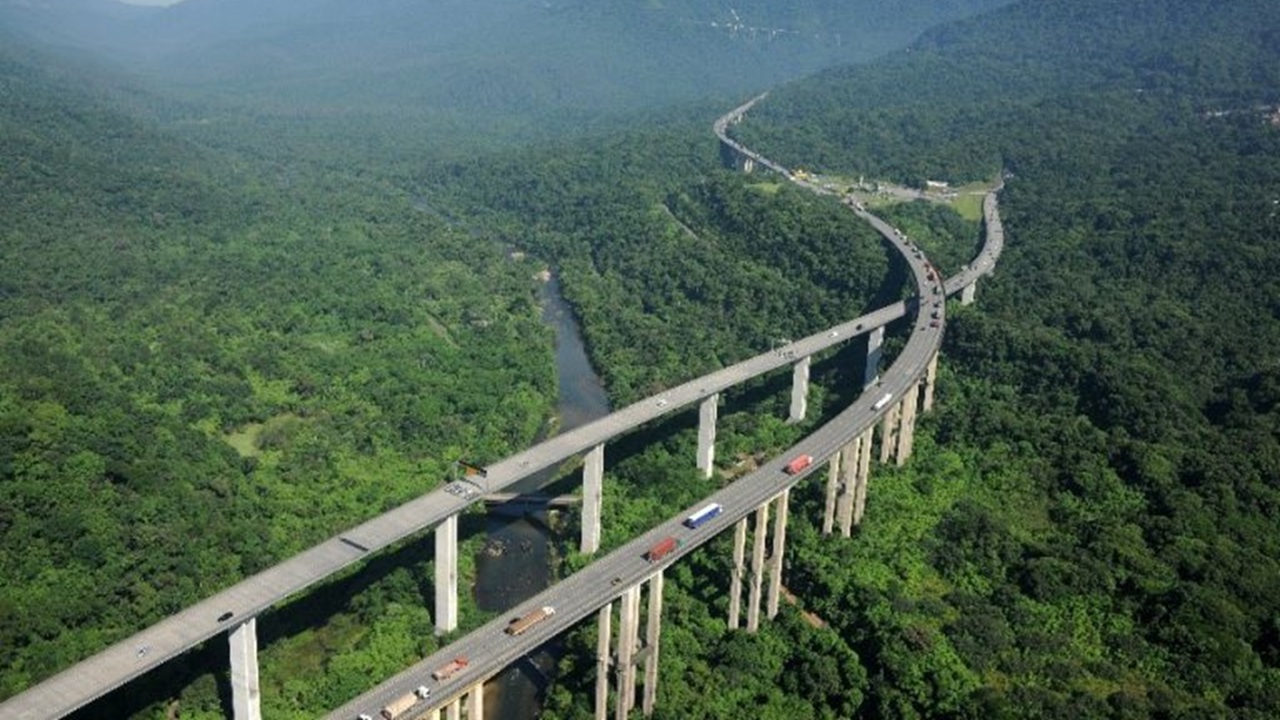
Investments and Deliveries in the System
Since the concession, more than R$ 11 billion have been invested in the Anchieta-Imigrantes System in infrastructure, technology, conservation, and road safety.
Ecovias Imigrantes took over the administration in 1998. The main milestone was the second lane of the Rodovia dos Imigrantes, inaugurated in 2002, which increased operational capacity and incorporated environmental solutions.
Recent deliveries include the new User Service Base at km 46 of Via Anchieta, in Cubatão, and the modernization of tunnel lighting.
The concessionaire plans to complete the recovery of 100% of the pavement of the Anchieta-Imigrantes System by 2027. Improvements are also planned for curves on the Anchieta, a new escape ramp at km 46, and studies for new access routes to the Port of Santos.
Since the beginning of the concession, more than 3.4 million operational services have been performed, including mechanical assistance, medical services, traffic inspections, and removals.
Do you often use the Rodovia dos Imigrantes, Via Anchieta, or another route to go down to the São Paulo coast? Tell us in the comments how you evaluate the changes, the electronic toll, the safety in the mountains, and what improvements are still missing for drivers, truckers, and passengers.
With information from agenciasp.