






 Portuguese
  Spanish


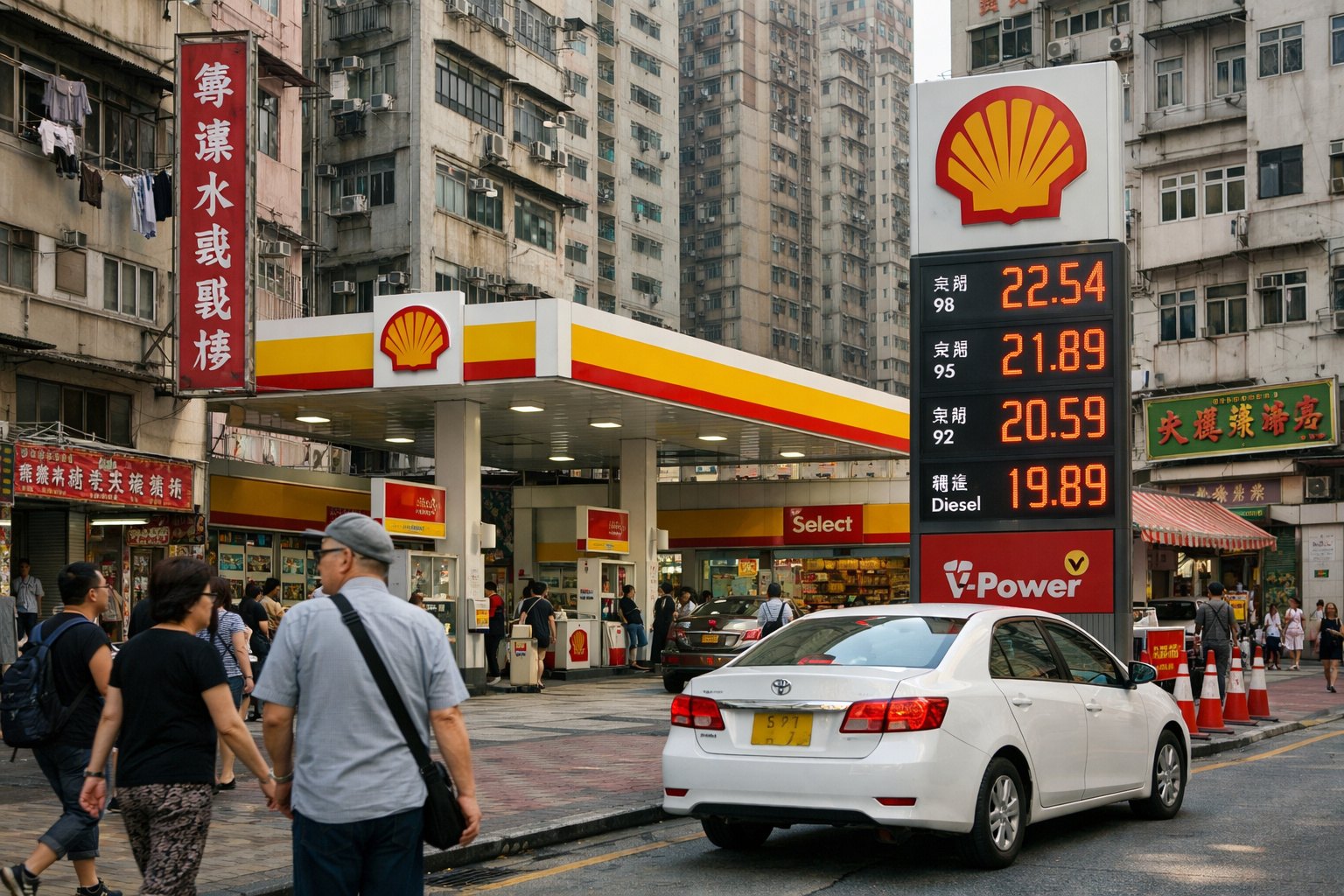
International crisis and local factors drive prices to historic levels and directly impact the cost of living in the region
Hong Kong has returned to the global spotlight by consolidating an unwanted position: that of the region with the most expensive fuels in the world. This scenario, which was already historically high, has intensified even further in light of recent international tensions, creating a domino effect that directly impacts the local economy and the population’s wallet.
The information was released by “Poder360”, with updated data showing how the combination of internal and external factors has drastically raised prices. Currently, a liter of gasoline in Hong Kong costs, on average, R$ 20.66 — a price more than three times higher than that practiced in Brazil, where the average price hovers around R$ 6.74. Consequently, filling up a popular car like the Fiat Mobi, with a 47-liter tank, can cost an impressive R$ 971.02. Meanwhile, diesel prices are even higher, being sold for over R$ 22 per liter.
External dependence and real estate crisis explain the surge in prices
To understand this scenario, it is essential to analyze the structural factors that make Hong Kong so vulnerable. First of all, the region has no refineries, which means it is entirely dependent on fuel imports to meet its internal demand. This factor alone places the territory in a sensitive position regarding fluctuations in the international market.
-
Petrobras and Engeko’s New Investment Plan Promises Billions and Thousands of Jobs, Capturing Market Attention

-
JBS Halts Beef Production for China as Brazil Exceeds 50% of 1.106 Million-Ton Quota; Tariff May Rise from 12% to 67%, Raising Concerns Over Cattle Prices.

-
Brazil’s Social Security Alters Biometric Rules for Pensions and Benefits, Sets 30-Day Deadline, Expands Requirements, and Clarifies Who Is Exempt from Immediate Update
-
Major Brazilian Supermarkets, Including Carrefour and Assaí, May Close Earlier to Prevent Price Increases


Moreover, there is an indirect but extremely relevant component: real estate costs. Hong Kong has some of the most expensive square meters in the world, reaching around R$ 110,000, according to data from the Global Property Guide. This high value directly impacts the operational costs of fuel stations, which end up passing these expenses on to the final consumers.
As a result, any global instability quickly translates into local increases. This is exactly what happened with the war in the Middle East, which began on February 28, further pressuring the price of oil barrels in the international market.
War in the Middle East intensifies price increases and forces emergency measures
Since the end of February, the effects of the geopolitical crisis have become evident. The price of gasoline in Hong Kong recorded a 9.1% increase, while in Brazil, during the same period, the appreciation was 7.8%. This difference highlights the degree of vulnerability of the Asian region to global fluctuations.
In light of this scenario, the local government has adopted emergency measures to try to contain the economic impacts. Among them is the creation of a subsidy of 3 Hong Kong dollars (approximately R$ 1.91) per liter of diesel. However, the measure has a limited validity of two months and represents a significant cost of R$ 1.2 billion for public finances.
In addition, other actions were announced, such as the reduction of tolls for freight vehicles, buses, minibuses, and taxis. The goal is to primarily relieve the most affected sectors, such as public transport, logistics, and fishing.
Population changes habits and electrification gains strength in the region
In light of high prices, residents of Hong Kong have begun to adopt new behaviors. Despite a population of approximately 7.5 million people, there is a relatively low presence of private cars on the streets. Most vehicles consist of taxis, ride-hailing cars like Uber, buses — many of them double-decker — and trucks.
According to data from the Hong Kong Automobile Association, released in March, there are about 500,000 private vehicles in the region, which represents an average of 1 car for every 15 inhabitants. Meanwhile, the subway system remains one of the main alternatives for urban mobility.
Another growing phenomenon is the commuting of residents to refuel vehicles in cities of mainland China, such as Shenzhen and Zhuhai. In these locations, the average fuel price is approximately R$ 6.99, making the practice economically advantageous.
Furthermore, the electrification of the fleet is consolidating as an irreversible trend. Currently, 17.2% of vehicles in Hong Kong are electric, a significant advance compared to the 11.5% recorded in 2024. This growth is driven by both individual decisions and public policies.
Since 2019, the government has already invested over R$ 2.2 billion in the acquisition of electric buses and the expansion of charging infrastructure. Thus, Hong Kong is not only facing the challenges of expensive fuels but also positioning itself as a reference in urban energy transition.
And you, what do you think of fuel prices in Brazil when you see that in Hong Kong the price of gasoline exceeds R$ 20 — are we still expensive or could it be worse?





Be the first to react!