Portuguese
  Spanish


Recycled plastic houses from Amazonas EcoLar will have 50 m², two bedrooms, living room, kitchen, and bathroom, with pre-registration open in Manaus for families in risk areas. The project uses ecological blocks of plastic waste, promises quick assembly, and will be coordinated by the Civil Defense of Amazonas in the Petrópolis neighborhood initially.
The recycled plastic houses from the project Amazonas EcoLar have begun to advance in Amazonas with a proposal that combines free housing, recycling, and the relocation of families from vulnerable areas. On February 23, 2026, the Government of Amazonas started the pre-registration of the first families planned for the housing complex in the Petrópolis neighborhood, south zone of Manaus.
The initiative is coordinated by the Civil Defense of Amazonas and uses blocks made from recycled plastic waste, such as PET bottles and other polymers. According to the state government, the homes will be allocated to families living in risk areas and will be delivered completely free of charge.
Pre-registration started in Manaus for vulnerable families
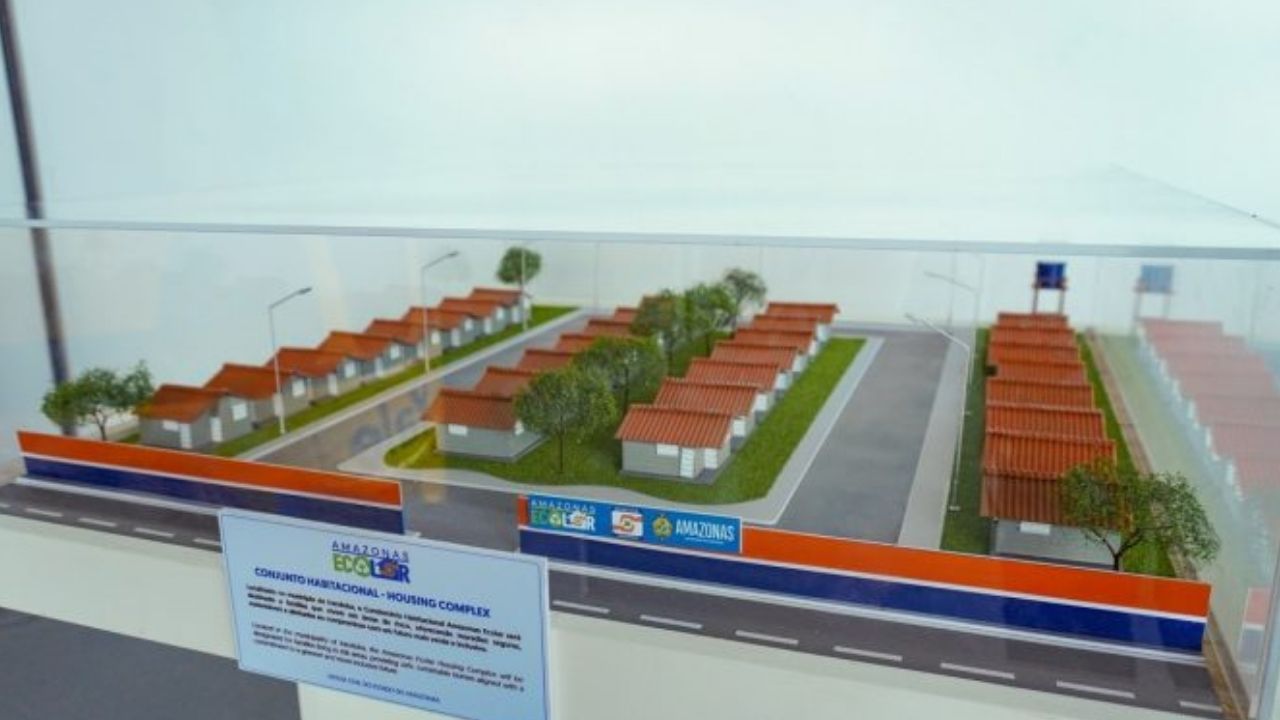
The pre-registration was opened on February 23, 2026, for families that may be eligible for the first 16 housing units of Amazonas EcoLar in the Petrópolis neighborhood, Manaus. The deadline provided by the government is until March 4, through the Amazonas Meu Lar platform or the SASI app.
-
Brazilian Couple Builds Entire Cabin from Cement and Shade Cloth in Just 7 Days to Escape Renting, Using Affordable Farm Supplies Instead of Steel Mesh

-
Epoxy Paint Revolutionizes Bathroom Makeovers in a Weekend at a Fraction of Renovation Costs

-
Finnish Man Buys Unwanted Island for a Bargain, Builds Home with Seven Trees and €400 Roof, Lives Off-Grid with Family in -35°C

-
Burnished Concrete Gains Popularity in Brazilian Homes for Its Durable Finish and Minimalist Aesthetic


During the application process, applicants need to select the option “Amazonas EcoLar” to correctly direct the registration to the program. The selection of beneficiaries depends on the analysis of the registrations made on the official platform, according to the rules released by the state government.
Homes will be free and will have 50 m²
The housing units will be about 50 m², with two bedrooms, a living room, a kitchen, and a bathroom. The structure was designed to accommodate families removed from vulnerable areas and offer a safer housing solution.
The government reported that the houses will be delivered free of charge to the selected families. The social focus of the program is to remove residents from risk areas and offer dignified housing with faster and more sustainable construction.
Ecological blocks use recycled plastic waste
The recycled plastic houses will be built with blocks made from plastic waste. The material includes PET bottles and other polymers that, instead of being improperly discarded, are transformed into construction components.
This technology allows transforming plastic waste into housing structures. The proposal combines affordable housing, circular economy, and pollution reduction in rivers, streams, and urban areas of Amazonas.
Construction dispenses with cement, mortar, and glue
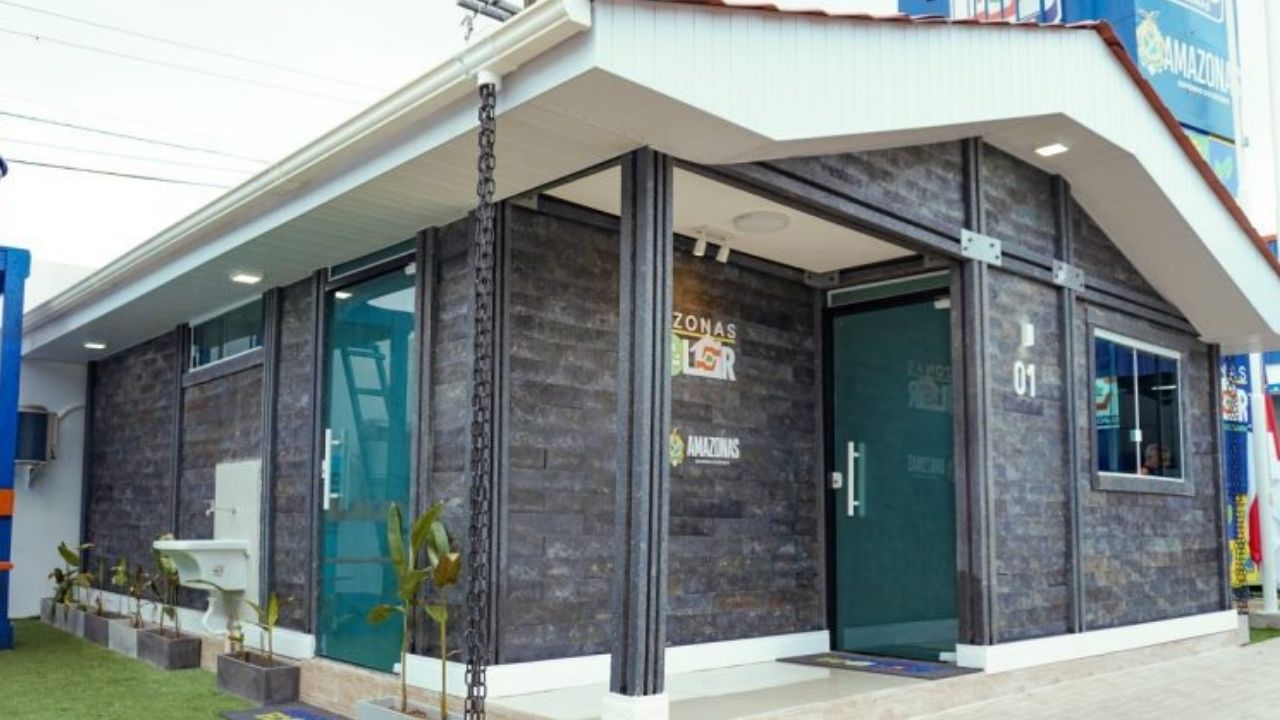
One of the points highlighted by the government is the block interlocking system. The assembly dispenses with mortar, cement, or glue, which reduces waste on the construction site and makes the process cleaner.
According to the source, each house can be erected in up to five days. This timeframe is one of the main differentiators of the project, especially in situations where families need to be quickly removed from risk areas.
Amazonas EcoLar was presented as a housing solution
The sustainable housing model was presented by Governor Wilson Lima on December 16, 2025, during an event in Manaus. On the same occasion, the Civil Defense Recycling Center of Amazonas was also inaugurated.
Wilson Lima stated that the initiative seeks to address two challenges at the same time: housing and proper disposal of plastic waste. The government’s statement associates the project with social protection, environmental preservation, and innovation applied to housing.
Civil Defense states that the project acts before the disaster
The Secretary of State for Civil Defense, Colonel Francisco Máximo, stated that Amazonas EcoLar represents a new way for Civil Defense to operate. According to him, the project is not limited to disaster response but works with prevention.
The idea is to offer safe housing to families living in risk areas before an extreme event causes greater losses. At this point, housing ceases to be just a social policy and becomes an urban adaptation measure as well.
First houses will be in the Petrópolis neighborhood
The first housing complex mentioned in the pre-registration stage will have 16 homes in the Petrópolis neighborhood, south zone of Manaus. The planned area is 3,200 square meters on Delfim de Souza street.
In addition to the houses, the project includes earthworks, urban roads, sidewalks, drainage, sewage system, water supply, public lighting, landscaping, playground, and outdoor gym. The proposal goes beyond the individual house and includes urban infrastructure in the surroundings.
The project will involve UGPE and Civil Defense
The urbanization and infrastructure works will be carried out by the Special Projects Management Unit, UGPE, an agency linked to the State Department of Urban and Metropolitan Development, Sedurb. The assembly of sustainable housing will be the responsibility of Civil Defense.
The Secretary of Sedurb and UGPE, Marcellus Campêlo, stated that the initiative helps reduce pollution in rivers, streams, and urban areas. According to him, the project also strengthens the circular economy and risk management in the state.
Recycling Center can process 80 tons per month
The Amazonas Civil Defense Recycling Center will have an initial capacity to process more than 80 tons of plastic per month. According to the government, this volume is enough to produce up to ten houses monthly.
The recyclable material will be purchased from cooperatives and waste picker associations. This point connects the housing project to income generation, as the waste pickers become part of the chain that supplies the production of ecological blocks.
Waste pickers enter the sustainable construction chain
The superintendent of the Climate and Environment Institute, Pablo Oliveira, stated that the initiative creates a new economic dynamic for waste pickers. According to him, diversified collection points in Manaus should generate income, organization, and sustainability.
Before the project, a large part of the plastic collected in Amazonas needed to be sent to other states for recycling. With the Recycling Center, the government claims that the circular economy cycle is now carried out within the state itself.
Technology came from Colombian company
The technology used in Amazonas EcoLar is based on a solution developed by the Colombian company Conceptos Plásticos, an international reference in the sector. The total investment reported by the government, including technology transfer and machinery acquisition, is estimated at R$ 11 million.
This point shows that the recycled plastic houses do not rely solely on waste collection. The project involves machinery, technical knowledge, local adaptation, and the ability to transform plastic into suitable construction blocks.
Houses promise resistance, comfort, and safety
According to the government, the blocks and structural elements have high resistance and durability. The homes are also presented as fire-resistant, moisture-resistant, and with anti-mold properties.
Another highlighted point is the thermal and acoustic comfort, a relevant feature for the Amazonian climate. The promise is to deliver houses that are quick to assemble but with adequate performance for permanent family use.
Each unit will have its own biodigester
In the Manaus phase, each housing unit will have its own biodigester. The goal is to ensure proper effluent treatment and preserve the local groundwater.
This detail enhances the sustainable nature of the program. In addition to using recycled plastic in construction, the project also includes a sanitary solution designed to reduce environmental impacts at the implementation site.
Project also foresees other public structures
In addition to the homes, the material produced by the Recycling Center can be used in other public structures. The source mentions schools, community centers, inspection posts, and support equipment.
This means that the technology can have uses beyond housing. If the model works in practice, the ecological blocks could expand the construction of public facilities with recycled plastic waste.
Pilot project also announced in Iranduba
In the December presentation of 2025, the government informed that the project would begin with the construction of 25 housing units in the municipality of Iranduba, as a pilot project, with delivery expected by March of the following year.
Then, in February 2026, the pre-registration for the first 16 units in the Petrópolis neighborhood, in Manaus, was announced. The two pieces of information indicate different stages of the Amazonas EcoLar, with the possibility of expansion to the capital and interior.
Solution tries to unite housing and climate adaptation
The recycled plastic houses are part of a broader urban adaptation agenda. The source informs that the Amazonas EcoLar was presented during the United Nations Climate Change Conference, COP30.
The state government associates the initiative with tackling extreme climate events, reducing plastic pollution, and protecting families in risk areas. The project attempts to transform an environmental liability into a housing solution.
Challenge will be to move from pilot project to scale
Despite the potential, the main question now is about scale. Building the first units is different from transforming the technology into a permanent housing policy, with predictable cost, maintenance, quality control, and transparent selection of beneficiaries.
It will also be necessary to monitor the performance of the houses over time. Real durability, comfort, family acceptance, and monthly production capacity will be decisive factors to know if the model can grow.
Plastic waste becomes wall, income, and housing
The Amazonas EcoLar draws attention because it connects three problems in one solution: lack of safe housing, plastic disposal, and the need for income for waste pickers. By transforming waste into blocks, the project creates a chain that starts with collection and ends with construction.
Even so, success will depend on execution. Recycled plastic houses can represent a promising alternative, but they need to prove efficiency beyond the official announcement, in the daily lives of the families who will live in them.
If you could choose, would you support houses made with recycled plastic blocks for families in risk areas, provided they were safe, free, and monitored? Leave your opinion in the comments.