Portuguese
  Spanish


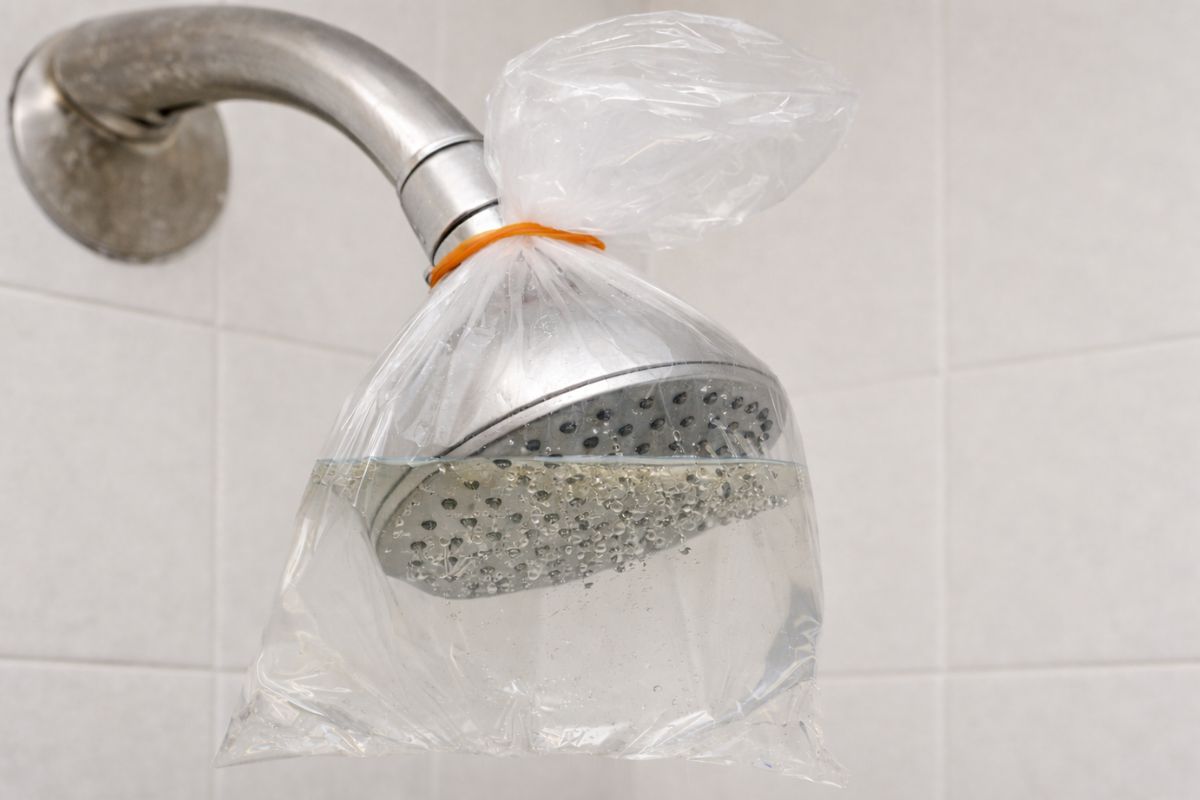

The holes in the shower get clogged with the accumulation of limescale and minerals from the water over the months, reducing the pressure of the jet, but cleaning with alcohol vinegar in a plastic bag attached to the sprayer dissolves the crusts without tools and restores the strong flow without changing any parts.
The decrease in water pressure during a shower is one of the most common and easiest household problems to solve. When the shower jet starts to come out weak, irregular, or at odd angles, the cause is almost always the accumulation of minerals and limescale that block the small holes of the sprayer. This calcification process is natural in various Brazilian regions where the water composition favors the formation of sediments that settle at the flow outlet over the months. The good news is that the problem can be solved with vinegar, a plastic bag, and a few minutes of patience.
Regular cleaning of the shower is not just a matter of comfort. When the holes get clogged, the internal pressure increases and forces the plastic component of the sprayer, which can cause side leaks and even damage parts that would need to be replaced. Additionally, a clogged shower forces the user to stay longer under the water to rinse off, wasting water and electricity. Keeping the shower clean saves on three fronts at the same time: it avoids part replacements, reduces shower time, and preserves the lifespan of the device.
Why the shower clogs and how to identify when to clean
The accumulation of limescale and minerals in the shower is a gradual process that often goes unnoticed.
-
A Brazilian street cleaner built a machine to recycle PET bottles in the hinterlands of Paraíba, transforming the trash he swept from the streets into threads, brooms, and equipment sold even outside Brazil, and began earning about R$ 7,500 per month with his own invention.

-
In a city where every piece of land is worth gold, he began buying plots in the 1960s and built a real estate empire with over a thousand properties.

-
An artist sank over 500 life-sized human statues at the bottom of the Caribbean Sea, and what seemed like macabre art turned into a living reef covered with corals that attracts divers from all over the world.

-
A fossil kept for years in a small museum in Montreal concealed 450-million-year-old soft tissue, a discovery that has only happened once before in history.


The water that comes through the pipes contains dissolved minerals such as calcium and magnesium that, when passing through the small holes of the sprayer, deposit microscopic layers of residue that, over time, solidify and form a crust that partially or completely blocks the water outlet. The harder the water in the region, the faster this process occurs.
The signs that the shower needs cleaning are visible: the jet comes out irregularly, with some holes working and others blocked, the pressure decreases even without changes in the plumbing system, and in more advanced cases, the water runs down the sides of the sprayer instead of coming out through the holes.
When these signs appear, the problem is already established, but the solution remains simple. Preventive cleaning every three months prevents calcification from becoming too rigid.
What you need to clean the shower without tools
The list of materials is short and is probably in your pantry right now. To unclog the shower, you need a bottle of alcohol vinegar, a sturdy plastic bag, and a rubber band or hair tie to secure the bag around the sprayer.
Alcohol vinegar acts as a natural solvent that reacts with limescale and dissolves impurities without damaging the plastic or metal material of the device.
It is not necessary to disassemble the shower or use harsh chemical products. The most efficient technique involves submerging the sprayer in vinegar inside the plastic bag, allowing the acetic acid to react with the mineral deposits for the necessary time to dissolve the crusts.
It is a maintenance task that anyone can do without prior experience and without the risk of damaging the equipment.
The step-by-step to unclog the shower with vinegar and a plastic bag
The procedure is straightforward and takes less than an hour from preparation to result. First, turn off the circuit breaker corresponding to the shower to ensure total safety during handling, as you will be working with water and proximity to electrical components in a humid environment.
This step is non-negotiable and should always be the first before any contact with the device.
Next, fill the plastic bag with enough alcohol vinegar to cover all the holes in the shower and secure the bag around the sprayer with the rubber band, ensuring that the holes are submerged in the acidic solution. Let the vinegar act for at least 30 minutes. In cases of more intense calcification, the time can be extended to two hours.
After removing the bag, use toothpicks or an old toothbrush to loosen the softened residues. Let cold water run for a few seconds to eliminate any traces of vinegar before turning the power back on.
The safety precautions you cannot ignore when cleaning the shower
Electrical safety is an absolute priority when handling any component involving water and electricity.
Turning off the circuit breaker before starting the procedure on the shower is not a suggestion. It is an obligation that prevents serious shocks that can occur even in devices that seem to be turned off by the faucet. The circuit breaker should remain off throughout the cleaning process.
After completing the unclogging of the shower, let cold water run for a few seconds to eliminate any traces of vinegar before turning the power back on. Only after confirming that the flow is clear and that the device is dry externally should the circuit breaker be turned back on.
For those with gas showers, the procedure is simpler in terms of electrical safety, but it is still necessary to close the gas valve before handling the sprayer.
The maintenance routine that keeps the shower working with strong pressure
Incorporating shower cleaning into the household care schedule prevents the problem from recurring. Performing preventive vinegar application every three months prevents calcification from becoming rigid and difficult to remove, keeping the holes clear and the jet uniform all year round.
In regions with harder water, the frequency can be increased to every two months.
Using toothpicks or small brushes to remove superficial residues from the shower between complete cleanings also helps. Checking the state of the internal filters during routine maintenance completes the care.
The goal is to ensure that the shower never reaches the point of total clogging, because preventive cleaning is quicker, easier, and cheaper than waiting for the problem to become serious.
Have you cleaned the shower with vinegar or do you wait until the jet becomes weak to solve it? What cleaning trick works best in your home? Share in the comments. Practical tips that save money and time deserve to be shared with those in need.