Portuguese
  Spanish


Calculation considers a gable roof, area corrected by 30% inclination, consumption per square meter, and a 5% reserve to show how to determine the quantity of concrete or Roman tiles without making a purchase mistake.
Calculating the number of tiles before covering a roof avoids wrong purchases and helps estimate the material needed for the project. The example uses a gable roof with defined measurements.
In this scenario, with 10 meters in length and 6 meters from the center to the edge, the calculation results in 1,350 concrete tiles or 2,077 Roman tiles. The results include a 5% reserve for losses and cuts.
The procedure starts with the area formed by each section of the roof. Since the presented model has two slopes, the first step considers a rectangle of 6 meters by 10 meters, resulting in 60 square meters per side.
-
With 26 Million Brazilian Families in Substandard Housing, Churches to Launch 2026 Challenge: Each Parish to Build or Renovate a Home for a Local Family

-
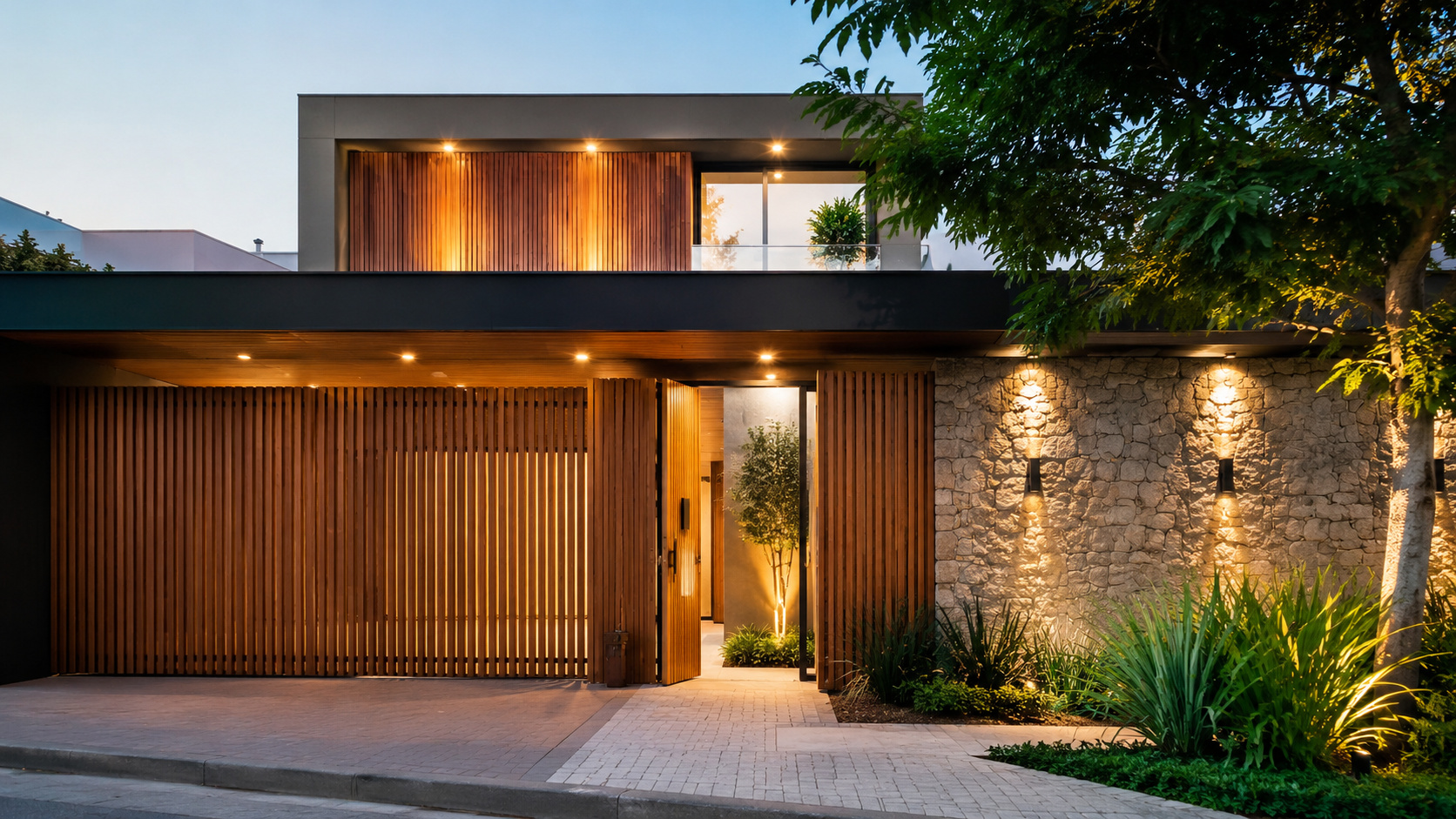
Wood-Look Aluminum Emerges as a High-Tech Alternative for Facades and Gates, Offering Sophisticated Aesthetics and Low Maintenance

-
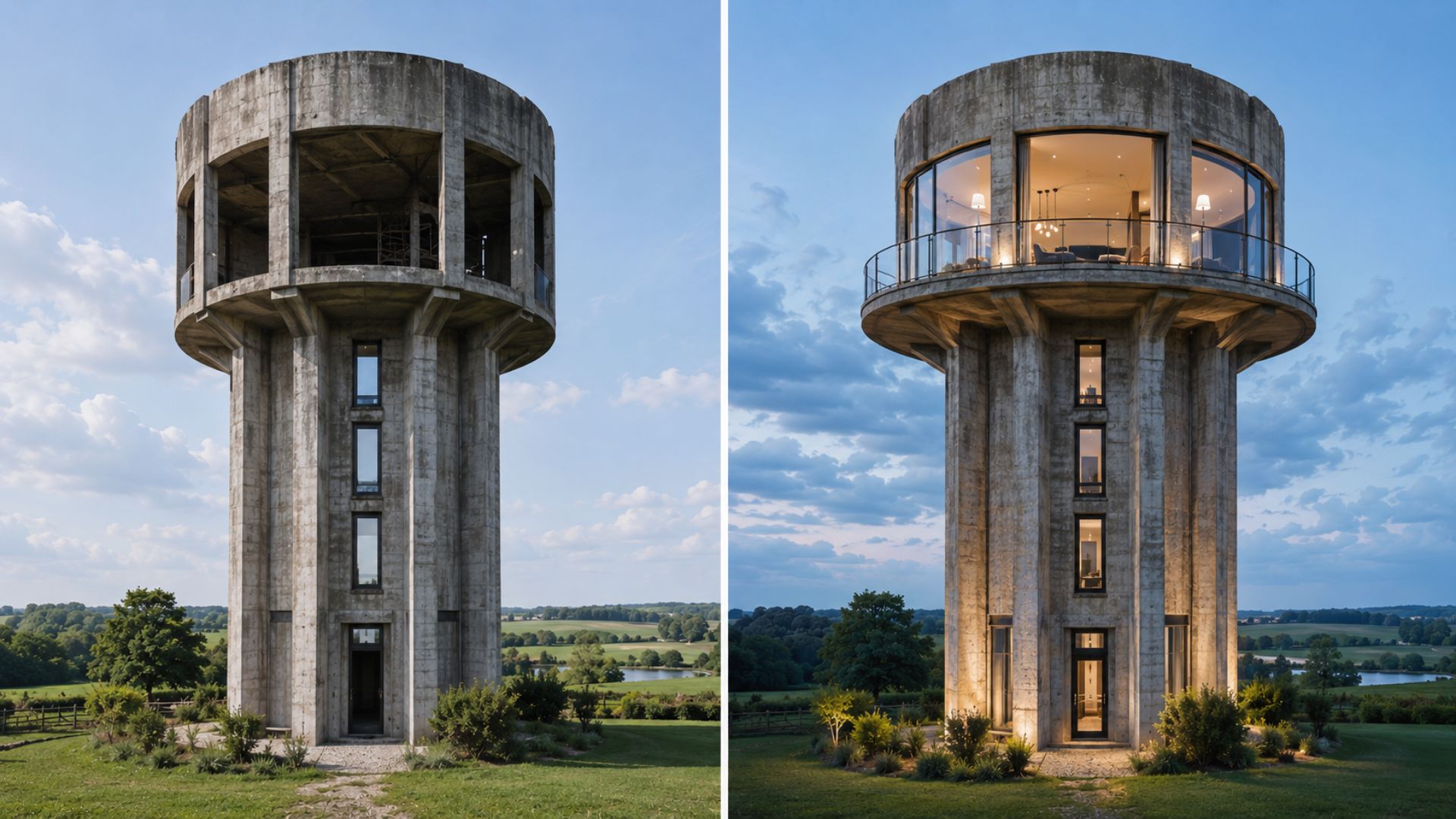
Couple Transforms 1964 Concrete Water Tower into Four-Bedroom Home with Views of London Over Four Years
-
U.S. City Builds Tiny Home Village on Water Company Land to House 136 Homeless People: Inside the Social Housing Units


Since there are two sides, this area is multiplied by two. Thus, the roof has 120 square meters before the correction for inclination, a measure that serves as the basis for the next step.
Quantity of tiles depends on the corrected area
The example considers a 30% inclination, presented as a common condition for most tiles used in constructions. To adjust the roof area to this inclination, the calculation multiplies the 120 square meters by 1.03.
With this correction, the final area to be covered becomes 123.6 square meters. This is the value used to determine how many tiles will be needed, according to the type chosen for the covering.
From this point, the calculation stops looking only at the size of the roof and starts considering the tile consumption per square meter. This consumption changes according to the model used in the project.
In the example, two types are presented: concrete tile and Roman tile. The concrete tile uses 10.4 units per square meter, while the Roman tile requires 16 units per square meter.
Concrete tile reaches 1,350 units with reserve
To calculate the total number of concrete tiles, the corrected area of 123.6 square meters is multiplied by 10.4. The approximate result is 1,286 tiles to cover the entire roof.
This number, however, does not yet consider losses during the project. The calculation includes a 5% reserve, used to cover breakages, cuts, and possible unforeseen events in the installation process.
With this addition, the 1,286 concrete tiles are multiplied by 1.05. The final result presented is 1,350 concrete tiles for the roof used as an example.
The reserve acts as a safety factor over the estimated total. Thus, the calculation does not work only with the exact amount of covering but also with a margin for real use on the site.
Roman tile requires 2,077 pieces on the same roof
In the case of the Roman tile, the calculation uses the same corrected area of 123.6 square meters. Since this model consumes 16 units per square meter, the multiplication results in approximately 1,978 tiles.
As with the concrete tile, the calculation also adds a 5% reserve. This percentage covers losses, broken pieces, and necessary cuts during the placement of the tiles on the roof.
By multiplying 1,978 by 1.05, the final result is 2,077 Roman tiles. The difference compared to the concrete model appears because each type of tile has a different consumption per square meter.
The example shows that the number of tiles does not depend solely on the length and width of the roof. The slope, the number of slopes, the type of tile, and the reserve also factor into the final calculation.
For this gabled roof, the base is a corrected area of 123.6 square meters. With it, the calculation indicates 1,350 concrete tiles or 2,077 Roman tiles, always considering the additional 5% margin.