Portuguese
  Spanish



Little-known technology promises clean energy continuously even without sun and could redefine the future of the global energy matrix
Since the 1970s, the search for efficient renewable sources has fascinated people around the world. At that time, as a classic documentary showed, photovoltaic cells were already seen as an almost perfect solution — after all, they could convert light directly into electricity, without moving parts. However, there was a crucial problem: the cost was absurdly high. A single set of photovoltaic cells could cost around 250 thousand dollars, generating enough energy for only three or four families.
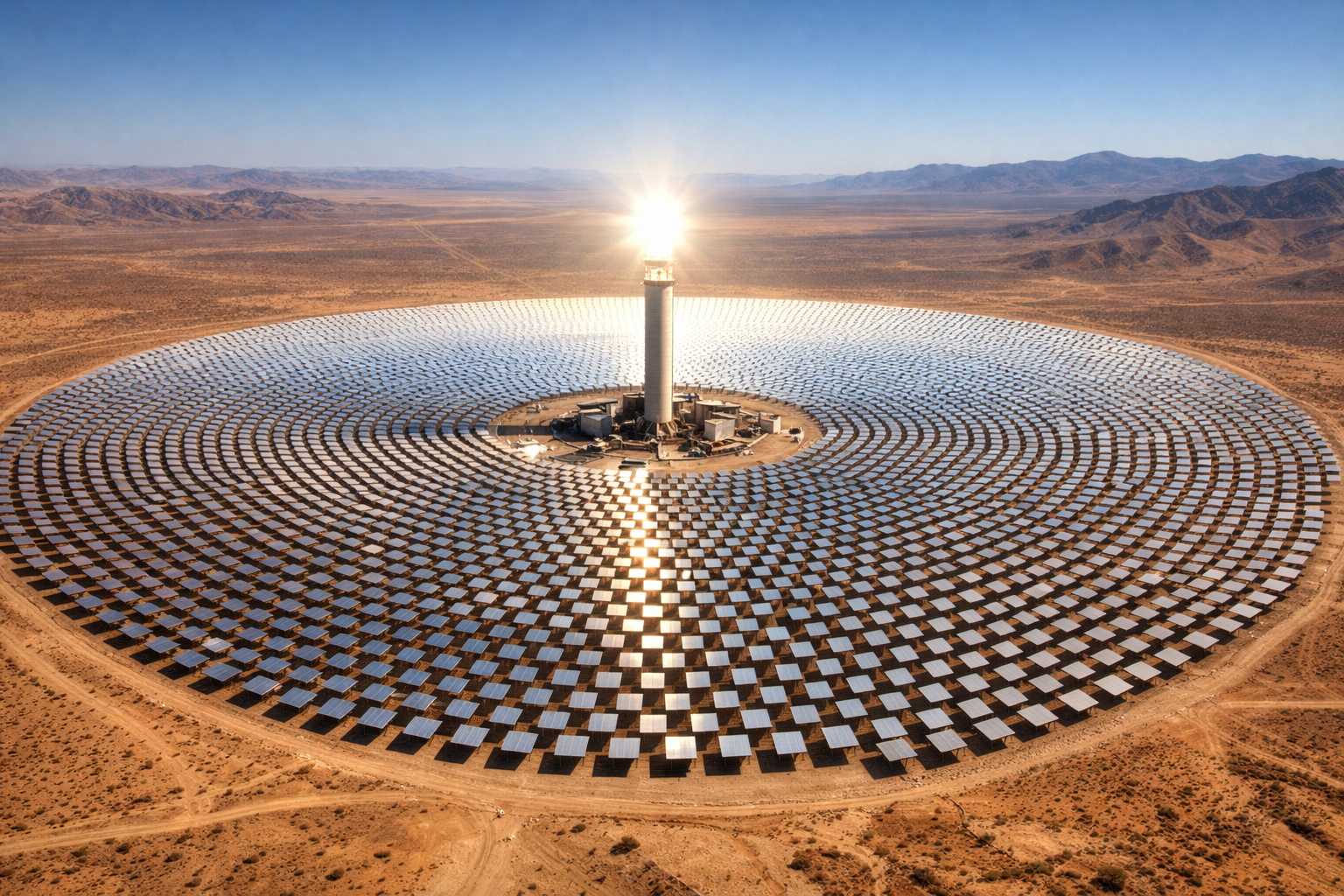
In light of this scenario, a competing technology began to gain traction and draw attention: concentrated solar power, also known as CSP (Concentrated Solar Power). Unlike traditional solar panels, this approach uses large mirrors to reflect and concentrate sunlight onto a single point, generating intense heat that can be converted into electricity.
This information was disclosed by “DW Planet A,” according to a detailed report on the evolution of solar energy, which gathers analyses from experts and historical data from the global energy sector.
-
Tesla injected an additional $250 million into the German factory, doubled the battery cell target, and opened its own production line for startups.

-
No more TV stuck on the wall: Samsung The Freestyle+, the new projector with over 400 lumens projects on walls, floors, and ceilings, bringing cinema to any corner of the house.

-
A Japanese governor single-handedly stalled the construction of the world’s fastest train for nine years, and only now has he agreed to allow a tunnel excavated at a depth of 1,400 meters.
-
Almost 1 billion euros, two gigafactories, and a million-dollar public investment, Chinese company aims to turn Spanish city into Europe’s new battery hub.


How concentrated solar energy works and why it can operate even at night


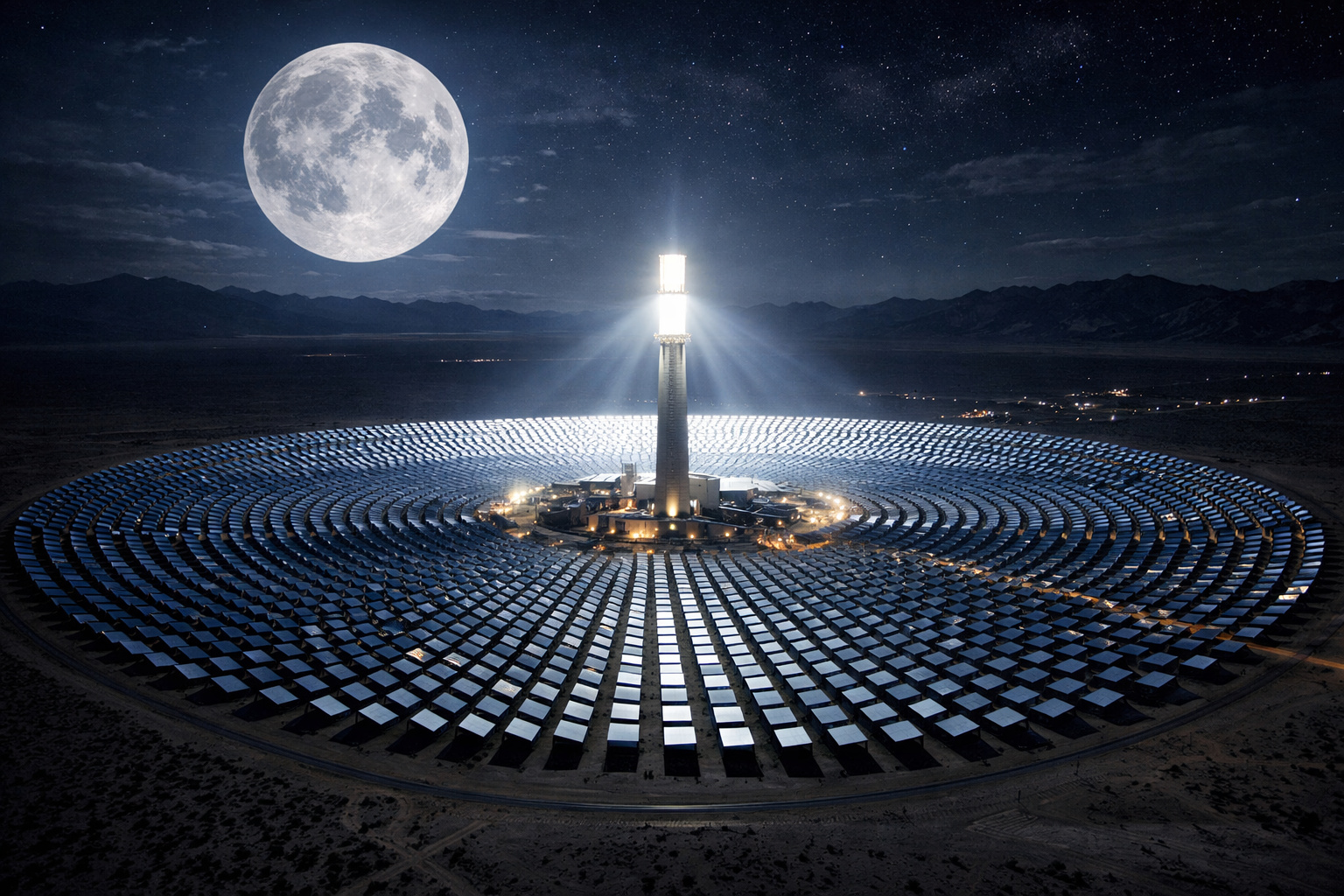
Contrary to what many believe, solar energy does not need to stop when the sun sets. And this is precisely where CSP technology stands out. In plants of this type, thousands of mirrors track the sun’s movement throughout the day, reflecting its rays to the top of a tower.
At this specific point, the heat is intensified by about 1000 times, heating a fluid — usually molten salt — to extremely high temperatures. This heated material is then used to generate steam, which drives turbines and produces electricity, similar to traditional plants, but without burning fossil fuels.
Moreover, there is a decisive differentiator: thermal storage. The heated molten salt can be stored in large tanks, losing only 1°C per day. This means that the energy captured during the day can be used hours later, including at night or during peak demand times.
Consequently, this technology allows for something that conventional solar panels cannot: continuous energy supply, even without direct sunlight.
Challenges, billion-dollar failures, and the possible rebirth of technology in the global scenario
Despite the enormous potential, concentrated solar energy has faced various obstacles over the past decades. One of the most emblematic cases was the Crescent Dunes project in the United States, which cost about 1 billion dollars and promised to supply up to 75 thousand homes.
However, the project experienced recurring technical failures, mainly related to molten salt. In some cases, the material solidified inside the tubes, causing shutdowns. On one occasion, the plant was inactive for eight months. On another, a leak contaminated the soil, leading to the complete dismantling of the tower. As a result, the project was terminated, damaging the reputation of the technology.
Meanwhile, photovoltaic energy was advancing rapidly. In just over a decade, the cost of electricity generated by solar panels has dropped by about 90%, mainly driven by public policies and the expansion of the industry in China.
Currently, the scale difference is enormous: there are about 1,700 gigawatts of installed capacity in photovoltaic solar energy, compared to only 7 gigawatts of CSP plants in the world.
Still, the scenario may be changing. In recent years, China has been heavily investing in the technology, with about 30 new plants under development. This is because the country requires renewable projects with a capacity of 1 GW to include at least 10% energy storage.
Thus, a hybrid strategy emerges: during the day, the cheap energy from solar panels is used, while the heat generated by CSP is stored for nighttime use.
Experts point out that this combination may be essential to ensure stability in electrical grids, especially as we increase the use of intermittent sources like solar and wind.
Therefore, although concentrated solar energy lost the competition to traditional panels in the past, it may have found a new role: acting as an efficient solution for storage and continuous supply of clean energy.