






 Portuguese
  Spanish


Anchor Brands Crush Marine Fauna and Expose Fragility of Antarctic Ecosystems in the Face of Lack of International Regulation
For the first time in history, researchers have managed to record in rich detail the damage caused by ships to the seafloor of Antarctica.
The evidence was obtained between December 2022 and March 2023, at the height of the austral summer, by an international team of scientists from the NGO Kolossal (USA), Memorial University of Newfoundland (Canada), and the National Institute of Water and Atmospheric Research of New Zealand. The unprecedented data was published on June 8, 2025, in the scientific journal Frontiers in Conservation Science.
The study revealed that grooves, crushed sponges, and missing marine organisms were directly caused by the anchoring of large vessels in shallow and fragile waters. The affected site is located in the Antarctic Peninsula, considered one of the most sensitive and warming areas of the continent.
-
China Develops Custom 140-Ton Electric Mining Truck with 770 kWh Swappable Battery, Deploys 290 Units in Xinjiang’s Largest Zinc Mine

-
Meta to Launch Arena, a New Prediction App Targeting 3.56 Billion Users, Competing with Polymarket and Kalshi

-
Scientist Challenges Famous Human Evolution Theory, Argues Homo Sapiens Evolved Gradually Over Thousands of Years
-
15-Year-Old American Builds Ocean Generator with PVC Pipe and 3D-Printed Propeller for $12, Wins National Prize, Presents at White House, and Makes Forbes 30 Under 30 List





Unprecedented Research Reveals Direct Impact of Human Activity
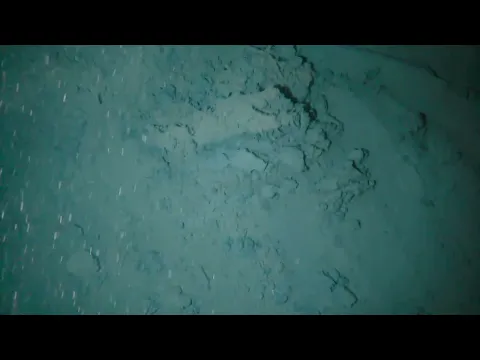
During more than 62 hours of underwater filming, researchers documented extensive damage in areas with depths between 70 and 82.5 meters.
The images, captured by underwater cameras, showed grooves on the ocean floor and the destruction of colonies of benthic sponges. In addition, entire regions were recorded where the fauna completely disappeared.
According to scientists, the comparison between the impacted sites and untouched neighboring areas makes it clear that human action was responsible for the changes. The recovery of ecosystems could take centuries due to the slow growth rate of Antarctic organisms.
Tourism Growth Accelerates Marine Degradation
According to IAATO (International Association of Antarctica Tour Operators), the number of vessels in the region grew from 51 ships in 2013–2014 to 77 in the 2023–2024 season. This increase exerts direct pressure on the fragile seafloor.
In March 2023, for example, eight vessels dropped anchor simultaneously in a bay known as Yankee Harbour. The area, near the Antarctic Peninsula, is a frequent stopping point for tourist ships.
The most concerning fact, however, is that not all anchoring operations are reported. This further complicates control and environmental preservation since the impacts may be underestimated.
Polar Ecosystem Could Take Centuries to Recover
According to Paulo Sumida, an oceanographer and director of the Oceanographic Institute of USP, the impact on Antarctic organisms may be more long-lasting than in tropical regions. This is mainly due to the extremely slow growth rate of polar marine animals.
Although a study from January 2022 had already indicated that an ocean floor affected by a shipwrecked vessel 77 years ago in the Pacific has still not fully recovered, the fact is that the damage caused by anchors in Antarctica can also, thus, extend over several generations.
The local benthic fauna is crucial for water filtration, carbon sequestration, and maintaining the balance of the ecosystem. Its destruction can compromise essential functions of the polar marine environment.
Sustainable Measures Are Urgent, Experts Say
To curb the advance of degradation, scientists propose the creation of exclusion zones for anchoring, protecting the most vulnerable points. In addition, they advocate the use of new technologies that eliminate the need for traditional anchors.
According to researchers, it is crucial to start comprehensive mapping of the areas already affected and measure the extent of the damage. With this, it will be possible to plan more effective preservation policies.
They warn that without urgent international regulation, the impacts may worsen in upcoming tourist seasons.
Antarctica At Risk Demands Immediate Global Action
The study published in June 2025 is a clear warning about the risks that the expansion of human activity represents for regions still considered untouched.
Uncontrolled exploitation, especially in areas as fragile as the seafloor of Antarctica, therefore requires a coordinated response among countries, tourism operators, and environmental entities.
For this reason, the establishment of international rules to limit anchoring, oversee tourism operations, and preserve polar biodiversity has become urgent.
The question now is: what should be priority — maintaining the growth of Antarctic tourism or preserving the polar ecosystem for future generations? Share your opinion!






