






 Portuguese
  Spanish


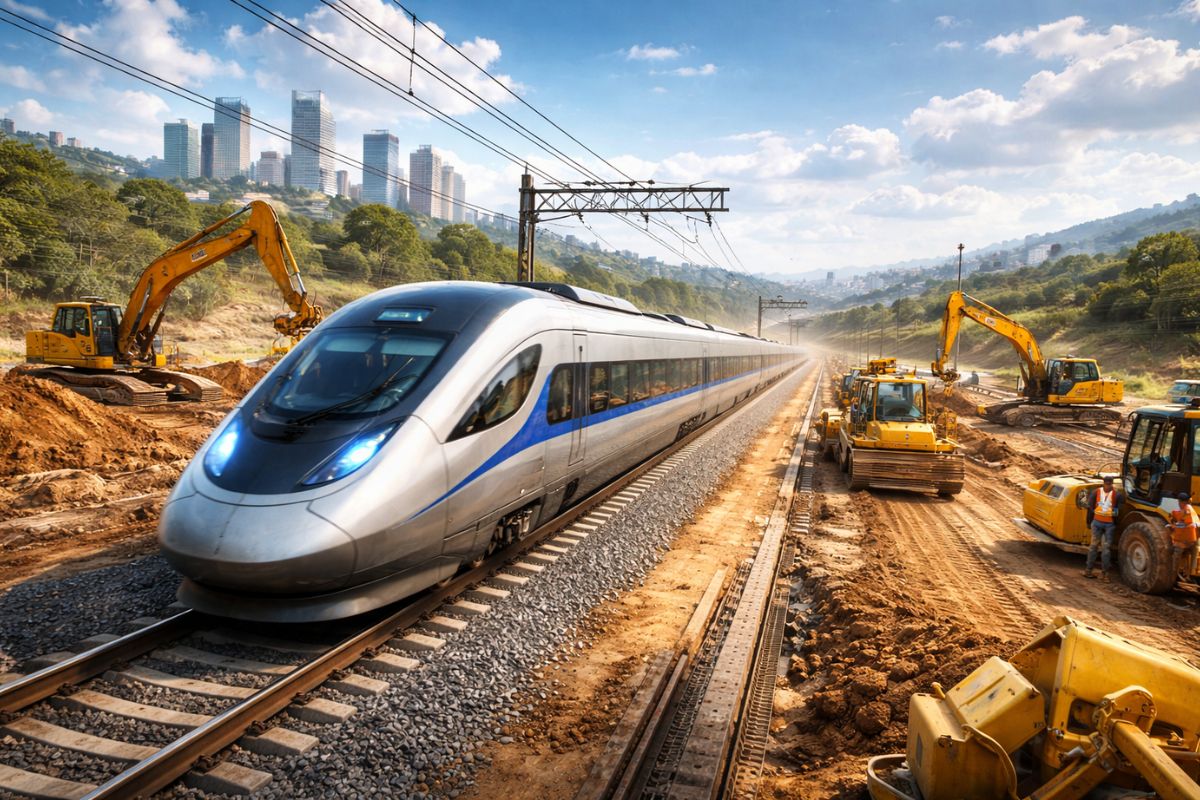


The North Axis Intercity Train begins to take shape in the interior of São Paulo, with a 30-year concession, phased construction, and a promise to change the economic corridor between the capital and Campinas
In April 2026, a earthmoving machine began work in Vinhedo, in the interior of São Paulo, next to tracks that have existed for decades, marking the first physical sign that the Intercity Train between São Paulo and Campinas has finally started to become a reality.
The North Axis Intercity Train has been structured as Brazil’s first medium-speed train, with speeds of up to 140 km/h and an estimated travel time of 64 minutes for the 101 km route between São Paulo and Campinas, within a total investment of R$ 14.2 billion and with a projected impact on 11 cities and 15 million people in the region.
What changed for the project to finally move forward
The São Paulo-Campinas corridor is one of the densest economic axes in the southern hemisphere, connecting two metropolitan regions that together have more than 30 million people. For decades, the dominant response to this displacement has been the highway, while the train has been mainly associated with freight.
-
U.S. City Builds Tiny Home Village on Water Company Land to House 136 Homeless People: Inside the Social Housing Units

-
Woman Turns Shipping Container into Home, Embraces Rural Life to Cut Monthly Expenses to Just Over $330
-
France Revamps 530 Social Housing Units with Large Balconies and Glass Facades Without Demolishing Existing Buildings

-
Facing high rent, couple transforms parents’ garage into a fully functional apartment, creating a complete home at a fraction of the market cost.




The Intercity Train has been strongly re-discussed due to a rare combination of factors: a structured private concession model, partial funding from the state government, and an auction that actually took place. The North Axis contract was signed with the C2 Mobility Consortium on Rails EIC Trains, formed by the Comporte group and the Chinese railway manufacturer CRRC, about 90 days after the auction held at B3.
Three layers of the Intercity Train on the North Axis

To understand what is being built, the project has been organized into three layers, each with its own objectives and deadlines.
The first is Line 7 Rubi, which has been operating for decades transporting passengers between Barra Funda and Jundiaí. It is undergoing modernization of stations and the replacement of wooden sleepers with concrete sleepers, with the goal of making improvements without interrupting the circulation of passenger and freight trains, an operation that requires meticulous planning. The concession for Line 7 Rubi has been transferred to TIC Trens, which took over operations starting in 2026 under the same contract.
The second layer is the TIM, the intermetropolitan train that will connect Jundiaí to Campinas with a new stopping service. The TIM plans for 44 km with stops in Louveira, Vinhedo, and Valinhos, an estimated travel time of 33 minutes, and a projected start of operation in 2029, aiming at the demand for frequent travel between municipalities in the region.
The third layer is the Intercity Train express itself, the most complex service. With a length of 101 km, it will be express between São Paulo and Campinas, with three stations: Barra Funda, Jundiaí, and Campinas, capacity for up to 860 passengers per trip, and an estimated duration of 64 minutes. The system plans for 15 trains of 10 cars each, totaling 150 carriages operating in the corridor.
Predictability, fare, and the transformation of the mobility axis
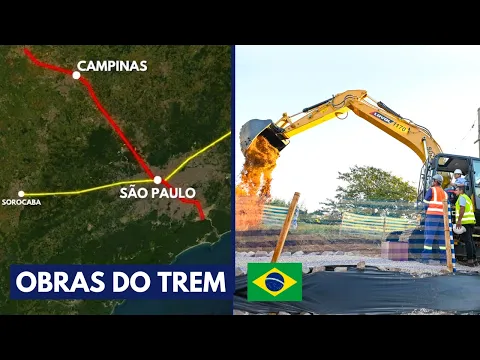

The central argument of the Intercity Train is to provide predictability of departure and arrival times, with competitive travel time for those relying on the corridor. The base text indicates that the average fare should vary around R$ 64, compared to regular buses, chartered services, and individual transport.
On the urban infrastructure side, the Barra Funda station, the starting point in São Paulo, is associated with a change that goes beyond a renovation. TIC Trens will be responsible for the modernization and expansion of the Água Branca station, with the proposal to transform it into a major hub, connecting CPTM lines, subway lines, the Intercity Train North axis, and the future TIC West axis.
Why the project is considered high-complexity engineering
The challenge of the Intercity Train is not only in the express train but in the physical context in which it needs to be built. The project includes tunnels, railway diversions, the so-called sidings, and interventions to mitigate flood risks in areas vulnerable to flooding.
There are 17 sidings planned between São Paulo and Jundiaí. They function as crossing pockets, essential in single-track sections to allow trains traveling in opposite directions to meet without halting operations.
Another sensitive point is the coexistence of passenger trains and freight trains on the same corridor. The text indicates that this corridor is a logistical artery for agribusiness and the São Paulo industry, and that freight cannot stop while the works progress. The described solution is the physical segregation of the tracks, with parallel lines dedicated to each type of train, in addition to technical adaptations where space is narrower.
The section between Jundiaí and São Paulo, with execution expected to start in April 2027, is cited as the most challenging, as it directly impacts Line 7 Rubi and requires interventions in already existing stations.
West Axis, new tracks and the next chapters of the program
While the North axis begins to take shape, the São Paulo government is preparing the TIC West axis, which will connect São Paulo to Sorocaba with two services, a direct express and a local service, in addition to engineering challenges different from those of the North axis.
The base text indicates a forecast of seven tunnels, three bridges, and 33 viaducts, in addition to utilizing the original bed of the Sorocaba railway in part of the route, which reduces expropriation costs but requires geometric adjustments to achieve 140 km/h.
Also noted is the state government’s decision to directly undertake the construction of 279 km of new tracks on the West axis, especially the section between Água Branca and Barueri, with an estimated investment of around R$ 10.3 billion. The mentioned schedule forecasts project and expropriation activities starting in 2026 and rough construction from 2029.
In addition to the North and West axes, the intercity train system includes an East axis towards São José dos Campos and a South axis towards Baixada Santista, with an auction planned for 2027. The set is linked to the SP on the Tracks program, which encompasses more than 40 projects including intercity trains, VLT, urban trains, and metro, with estimated investments of R$ 194 billion and over 1,000 km of new tracks.
The impact on the corridor and what changes for the cities in the interior
The most concrete impact of the Intercity Train begins where construction is already underway. Cities like Vinhedo, Valinhos, and Louveira, described as functional satellites of Campinas, are starting to come onto the radar of a railway connection with São Paulo that alters the tolerable travel radius for those living and working in the region.
The text also indicates that the real estate market is already beginning to price the change along the corridor, and that companies that currently need to be within the capital to access the job market are starting to consider operations in cities about 60 minutes by train as viable alternatives.
If the projected volume of 672,000 passengers per day is confirmed, the Intercity Train North axis could move more people than the metro in several Brazilian capitals in a corridor that currently relies almost exclusively on the highway.
Do you think the Intercity Train will truly change the routine of those traveling between São Paulo and Campinas, or will the car continue to dominate this route?









