Portuguese
  Spanish


In São Francisco, about 12 km from Praia, in Cape Verde, the community recycling project Ekonatura processes about 100 kg of glass and plastic per hour and transforms waste into school desks, chairs, and other products, an example of circular economy that brings furniture to schools.
What is trash for many people is raw material for the Ekonatura project. In São Francisco, about 12 kilometers from Praia, the capital of Cape Verde, a community initiative collects discarded glass and plastic and transforms them into school desks, chairs, and even construction material. The story was reported by the agency Xinhua.
The scale draws attention to a neighborhood project. According to the report, Ekonatura has an average recycling capacity of about 100 kilograms of glass and plastic per hour, which allows a considerable volume of waste to be removed from the streets and returned to the community in the form of useful objects. It’s waste turning into a solution, hour after hour.
The most symbolic destination of this work is the classrooms. Much of what comes out of Ekonatura becomes school furniture, bringing desks and chairs to schools in need, while reducing accumulated waste on an archipelago where every piece of waste matters. It is a meeting between the environment and education.
-
Experts Reveal Which Water Bottle Material—Metal, Plastic, or Glass—Harbors the Most Bacteria and When Each is Best to Use

-
77-Year-Old Woman Earns Top Marks for Embroidered Children’s Book Thesis with Her 98-Year-Old Mother, Moves Audience After Returning to University Entrance Exams 30 Years Later with a Score of 980
-
Domestic Workers in Switzerland Earn Around $220 per Day, Compared to $24-$60 in Brazil

-
As Engineering Jobs Decline in Brazil, Professionals Eye the U.S. with 186,500 Annual Openings and Salaries Up to $170,000



The Ekonatura project: waste that becomes school furniture
Ekonatura was born as a community bet. The project was created in 2019, within the Raiz Azul initiative, and is run by the São Francisco Community Development Association, in partnership with institutions such as EcoCV, the University of Cape Verde, and local industry. The idea, from the beginning, was to combine income generation with environmental care.
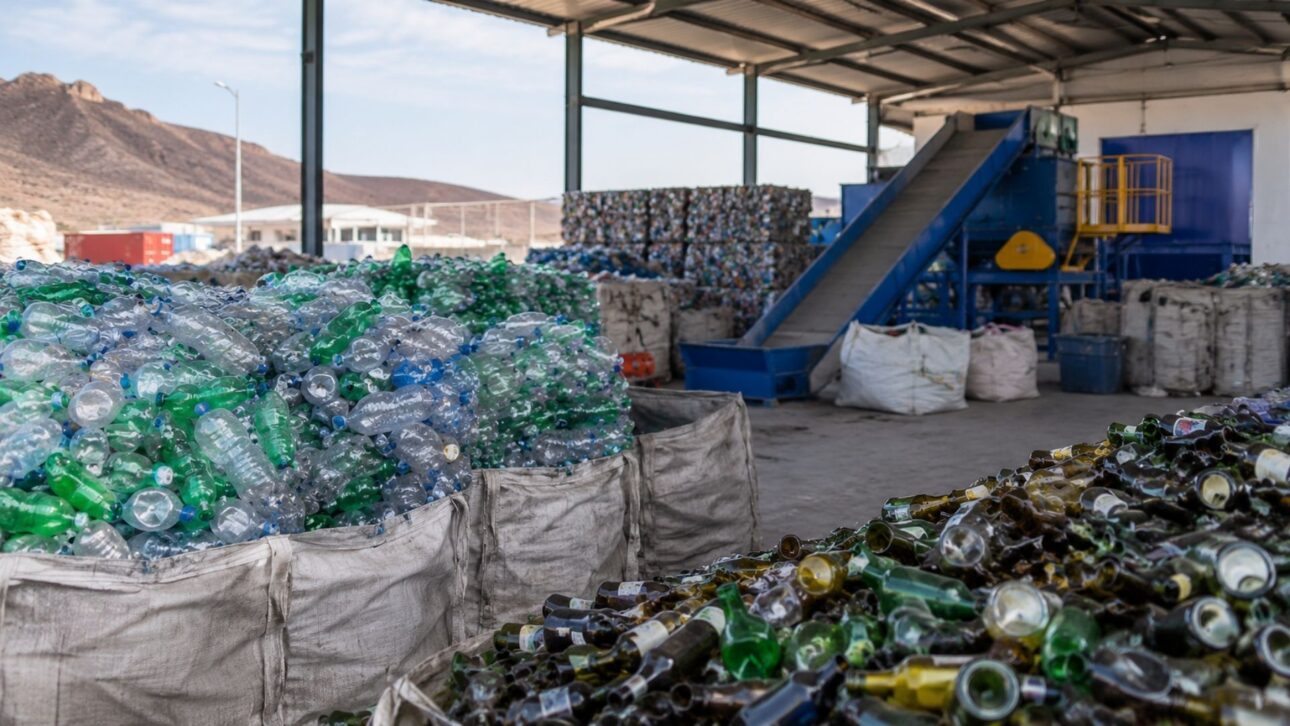
The focus fell on two materials that suffocate any city: glass and plastic. Instead of letting bottles and packaging accumulate in landfills, Ekonatura started collecting these wastes from residents and partner companies and transforming them into valuable products. Waste stopped being a problem and became an input.
The motivation lies in the words of those who lead the project. “The idea was to promote sustainable waste management, protect the environment, and improve the well-being of community members,” stated João Ferreira, manager of Ekonatura and president of the local association, in an interview cited by the press. It is a social mission as much as an environmental one.
After a pause during the pandemic, the project resumed activities around 2021 and 2022 and continued to grow. What started small, with few machines and volunteers, gained momentum and recognition, eventually catching the attention of the international press for the creativity of turning waste into school desks.
100 kg per hour: how waste becomes raw material
Behind the desks, there is a well-defined process. First comes collection and sorting, separating glass from plastic and removing what is not useful. Then, the materials go through shredding and hot pressing, stages that melt and mold the plastic and grind the glass, transforming the raw waste into raw material ready to become a product.
The capacity gives a sense of the work. With about 100 kilograms of glass and plastic processed per hour, Ekonatura manages to handle a constant flow of waste, at an industrial pace for the standards of a community project. The more material comes in, the more furniture and objects can come out on the other end.
The machines have a story of their own. According to the portal Xinhua, part of the equipment, such as the glass crusher, was manufactured in workshops of a technical school in São Vicente, and the plastic processor was developed in partnership with the local industry. It is national ingenuity to enable recycling with what is available.
There are, of course, technical limits to overcome. The project mainly works with one type of plastic, HDPE, and still cannot handle others, like PET from soda bottles, due to the lack of specific equipment. Even so, in glass alone, the initiative has already produced about 100 tons of recycled sand, the result of hundreds of thousands of reused bottles.
From waste to school desk
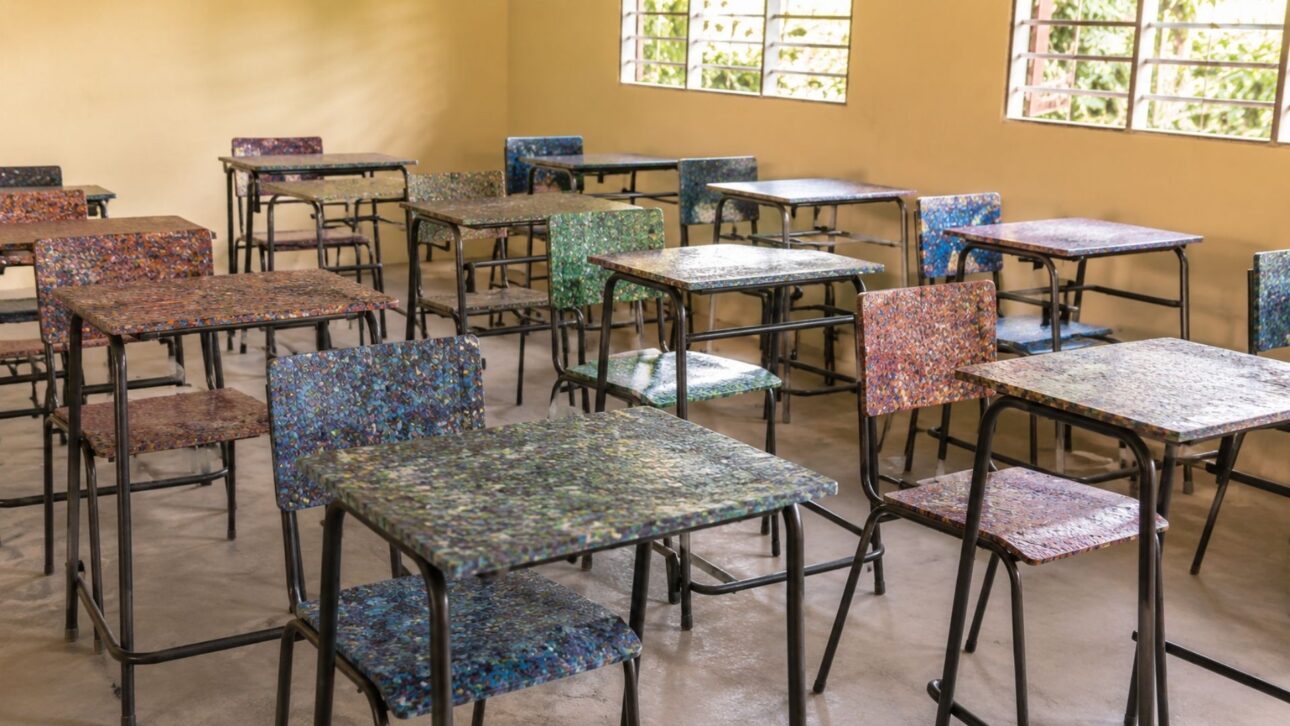
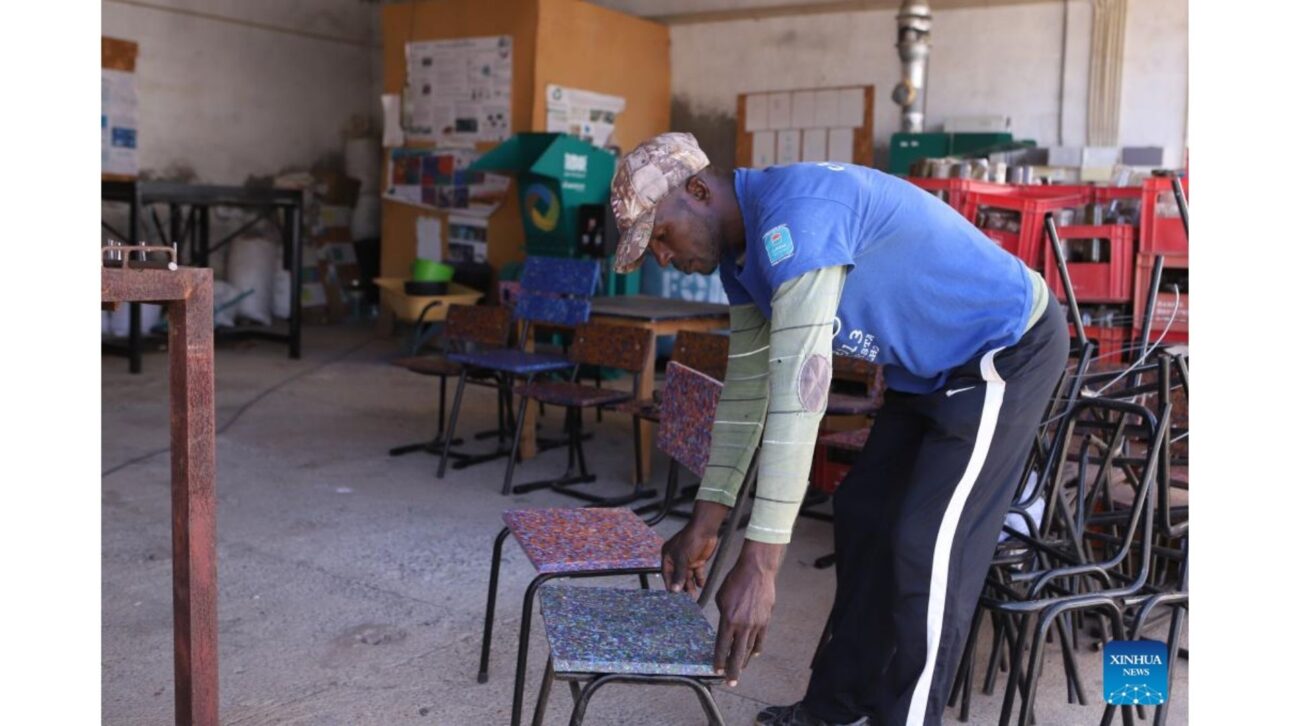
The most remarkable product of Ekonatura is the school desk. In many cases, the project does not manufacture the furniture from scratch, but rather recovers structures of damaged desks, replacing broken backs and seats with pieces made from recycled plastic. Thus, an old and unused desk returns to the classroom as new.
The manager himself explains the logic of reuse. “We reuse the structures of damaged desks and replace the backs and bases with recycled materials,” said João Ferreira. It is an intelligent way to save, as it utilizes the metal that is still useful and only replaces the worn parts with plastic that would come from waste.
The production, however, does not stop at desks. In addition to school chairs, of which about 160 units have already been delivered to schools in the region, Ekonatura manufactures waste containers of various sizes, plant pots, paving stones for sidewalks, and decorative objects. Each item is proof that waste has more value than it seems.
This variety is part of the project’s survival strategy. By diversifying the products, Ekonatura expands its sources of income and impact, serving schools, sidewalks, and homes at the same time. The school desk is the flagship, but recycling fuels an entire small line of community products.
The schools that received the furniture
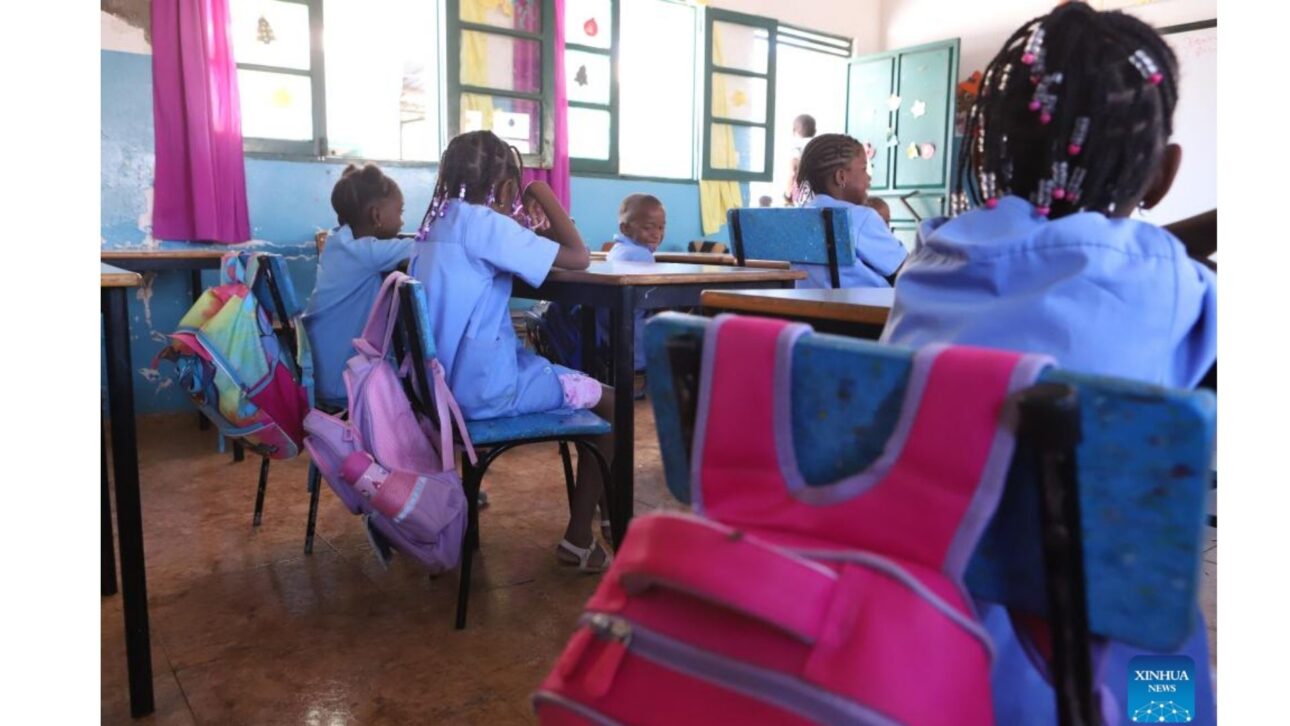
The most visible impact is in the classrooms. The desks and chairs produced by Ekonatura have been distributed to schools in the Praia region, with priority given to the community of São Francisco, but also reaching places like Calabaceira and Castelão. Where furniture was lacking, recycled waste helped fill the gap.
For a school with few resources, this changes the routine. A room with enough desks in good condition allows more students to study comfortably, without sharing a chair or writing on their lap. What seems like a detail makes a direct difference in the quality of education, especially in lower-income communities.
There is also a powerful symbolism in this furniture. Each school desk made from recycled plastic carries a silent message for the students: that waste can become something useful and beautiful. The classroom itself becomes a living example of a circular economy, teaching by example even before any lesson.
Energy and low impact: recycling responsibly
Ekonatura’s recycling is born with the mark of sustainability. According to local reports, the project aims to operate with low environmental impact and has even invested in solar energy to power part of the operation, reducing the carbon footprint of work that already exists to protect the environment. Recycling while using little clean energy closes the cycle coherently.
The environmental gain goes beyond energy savings. Each kilogram of recycled glass and plastic is one less kilogram in landfills and in nature, where these materials take centuries to decompose. In a small and touristy archipelago like Cape Verde, keeping waste off the beaches and streets has environmental and economic value.
It is this combination that makes the model attractive. Recycling locally, with clean energy and local community labor, avoids the expensive transportation of waste and the importation of ready-made furniture. Ekonatura shows that the most efficient environmental solution is often also the closest and simplest.
Circular economy on an island: why it makes so much sense
On an island, the logic of the circular economy stops being theory and becomes necessity. Cape Verde is a country with limited resources, which imports much of what it consumes and has little space to accumulate waste. Reusing what is already in the territory, instead of discarding and buying from outside, is almost a matter of survival.
Ekonatura embodies this idea concretely. By transforming local waste into local products, the project closes the cycle within the community itself: today’s waste becomes tomorrow’s desk, without leaving the island. It’s circular economy in the most literal sense, from disposal to new use, door to door.
A collaborator summed up this philosophy in three words. “Waste is money,” said Miguel Alves, responsible for operations related to the project, in a statement to the Cape Verdean press. The phrase captures the mindset change that the initiative promotes: seeing value where once there was only dirt and disposal.
This reasoning is even stronger because it is an island. Cape Verde imports much of what it consumes, from furniture to construction materials, which makes everything that comes from outside more expensive. Producing locally, from the waste already in the country, cuts import costs and keeps money circulating within the community itself, instead of flowing abroad.
Educating children to recycle
Ekonatura doesn’t stop at furniture production; it also educates. Along with delivering the desks, the project promotes environmental education actions in the beneficiary schools, explaining to children and young people the importance of recycling and correctly disposing of waste. The idea is to form a more conscious generation.
This work with students has a multiplying effect. A child who learns to separate waste takes the habit home and influences the entire family, spreading the culture of recycling throughout the community. Teaching from an early age is planting a seed that bears fruit for decades, far beyond the schoolyard.
Behind all this are people from the community itself. The project involves a small group of volunteers, men and women, who receive a modest compensation and handle the day-to-day recycling. It’s local income, social inclusion, and environmental education all in one package, all driven by what the city was throwing away.
The challenges: lack of money and machines
Despite the success, Ekonatura operates at the limit. The demand from schools for desks and chairs is growing, but the project faces a lack of financial resources and equipment to meet this demand. There is plenty of will and raw material, but money and machines are lacking.
The manager himself acknowledges the bottleneck. “We have limitations in financial resources and machinery, and this affects our response capacity,” admitted João Ferreira. In a community project, each new piece of equipment means more recycled waste and more desks in classrooms, but buying machines requires an investment that is not always available.
Even so, the growth potential is clear. With more support, partnerships, and investment, Ekonatura could expand its operation, process other types of plastic, and take the model to more islands and schools in Cape Verde. What is lacking is not ideas or demand, but the structure to scale a solution that has already proven to work.
There are concrete paths to take this leap. Partnerships with companies, government support, and even mechanisms like recycling credits, which reward those who remove waste from the environment, could inject resources into the project. With more machines, the initiative could also recycle PET and other plastics currently left out, multiplying the volume of waste transformed into desks.
What Brazil has to do with this
The story of Cape Verde speaks directly to Brazil. The country deals with tons of poorly utilized waste, low recycling rates, and thousands of waste pickers who live precisely by giving a destination to glass and plastic. A community model like Ekonatura shows a way to add value to this work.
The connection with education is also strong here. Many Brazilian public schools lack furniture in good condition, while mountains of plastic waste are discarded every day. Connecting recycling to the production of school desks could, in theory, solve two problems at once, as happens in São Francisco.
Brazil already has tools for this on paper. The National Solid Waste Policy provides for reverse logistics and values the work of waste picker cooperatives, but recycling is still in its infancy, with the country reusing only a fraction of what it discards. Community initiatives like Ekonatura show a way to turn these rules into concrete products within neighborhoods, generating income and furniture at the same time.
In the end, the message is about seeing waste differently. Ekonatura proves that, with community organization and circular economy, it is possible to transform waste into income, furniture, and environmental awareness. It is an inexpensive and replicable lesson for any Brazilian city willing to treat its own waste as a resource.
And you, would you take this idea to your city?
The Ekonatura project shows that it is possible to unite the environment and education with creativity: about 12 km from Praia, in Cape Verde, the initiative recycles about 100 kg of glass and plastic per hour and transforms waste into school desks and other products for the community, a concrete example of a circular economy.
And you, do you think your city could adopt a project like this, which transforms recycled waste into school desks and generates income in the community itself? Share in the comments if you know of any similar initiatives in Brazil and what you think is missing for recycling to take off here.