






 Portuguese
  Spanish


A trader from Maldon, England, paid 20 pounds for an old notebook at a car boot sale and discovered a rare World War I record from 1915 with about 900 volunteers, of whom approximately 140 died. The document went to auction at Hansons and returned home, in the North of the country.
Sometimes, a historical treasure is lying on the ground, for sale for a pittance. That’s what happened in England, when a building materials trader from Maldon, in Essex county, paid just 20 pounds for an old notebook at a car boot sale. What seemed like old paper was, in fact, a rare World War I record. The story was shared by the auction house Hansons.
The buyer’s instinct spoke louder at the time. “I saw the ledger book lying on the ground and couldn’t get the money out of my wallet fast enough,” said the trader, who preferred to remain anonymous. For 20 pounds, he took home a document that tells the story of hundreds of ordinary men who went to war.
The value of the find, however, is not in the money, but in the memory. The notebook gathers about 900 volunteers who enlisted in just three days in December 1915, of whom approximately 140 did not return alive. Each handwritten line is the record of a life marked by World War I.
-
Hyundai Workers Vote to Strike Over Fears of Being Replaced by Atlas Robots in Factories

-
Honor X80 Pro Max Launches with Massive 11,000 mAh Battery, 90W Charging, 6.8″ AMOLED Display with 10,000 Nits Brightness, Weighs Only 203g, and IP69K Certification; Price Also Surprises
-
World’s Most Powerful MRI Machine in France, Weighing 132 Tons and Generating 11.7 Tesla Magnetic Field, Offers Unprecedented Clarity of the Human Brain
-
Hong Kong Converts Former Coastal Landfill into Desalination Plant Producing 135 Million Liters of Drinking Water Daily


The 20-pound notebook that was a war treasure
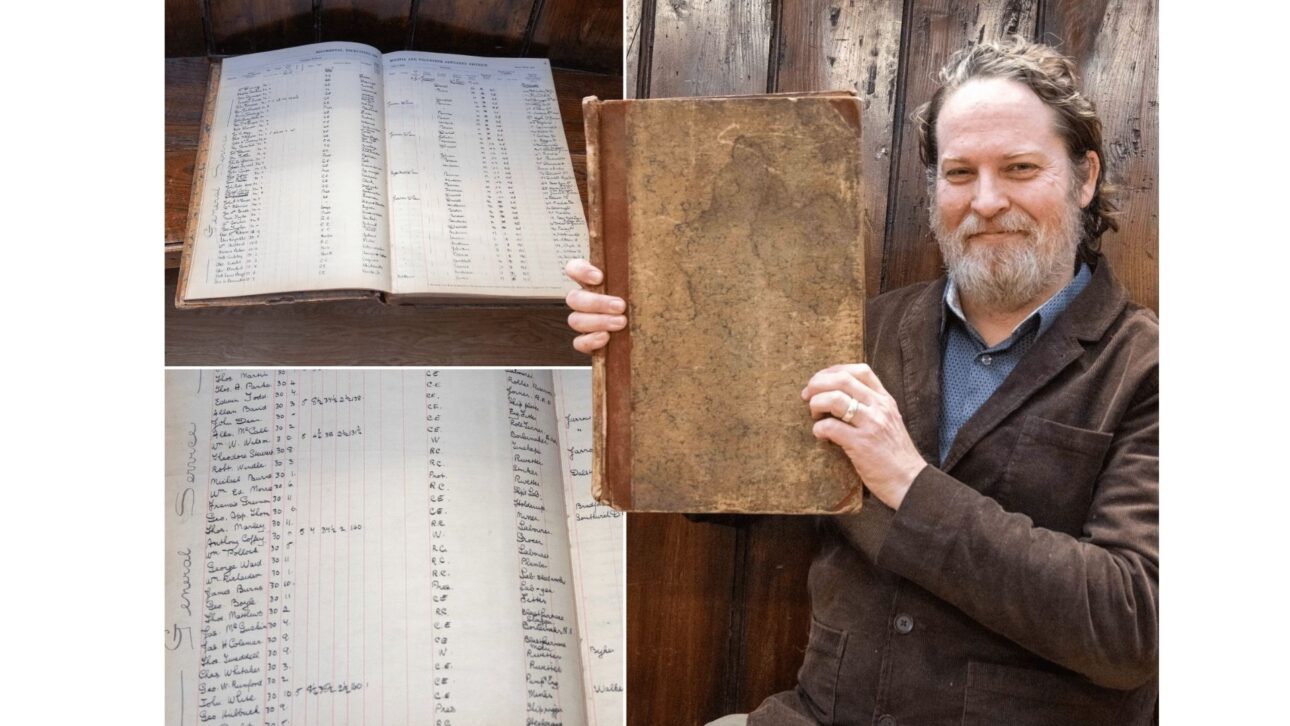
The scene is entirely improbable. At a car boot sale, those events where people sell used items in the parking lot, an old book went unnoticed among the junk. It was there that the trader from Essex, with an eye trained for old things, realized there was something special about that grimy notebook.
The £20 bet proved to be brilliant. Instead of just any diary, the document was an official enlistment record from World War I, the kind that rarely survives to this day. The buyer immediately understood that he had a piece of British history in his hands for a negligible price.
This type of treasure hunting is the dream of any collector. Paying almost nothing for something of enormous historical value at a weekend bazaar is the outcome that drives thousands of people to scour fairs and thrift shops. In the case of the World War I record, the merchant’s luck ended up benefiting the memory of an entire community.
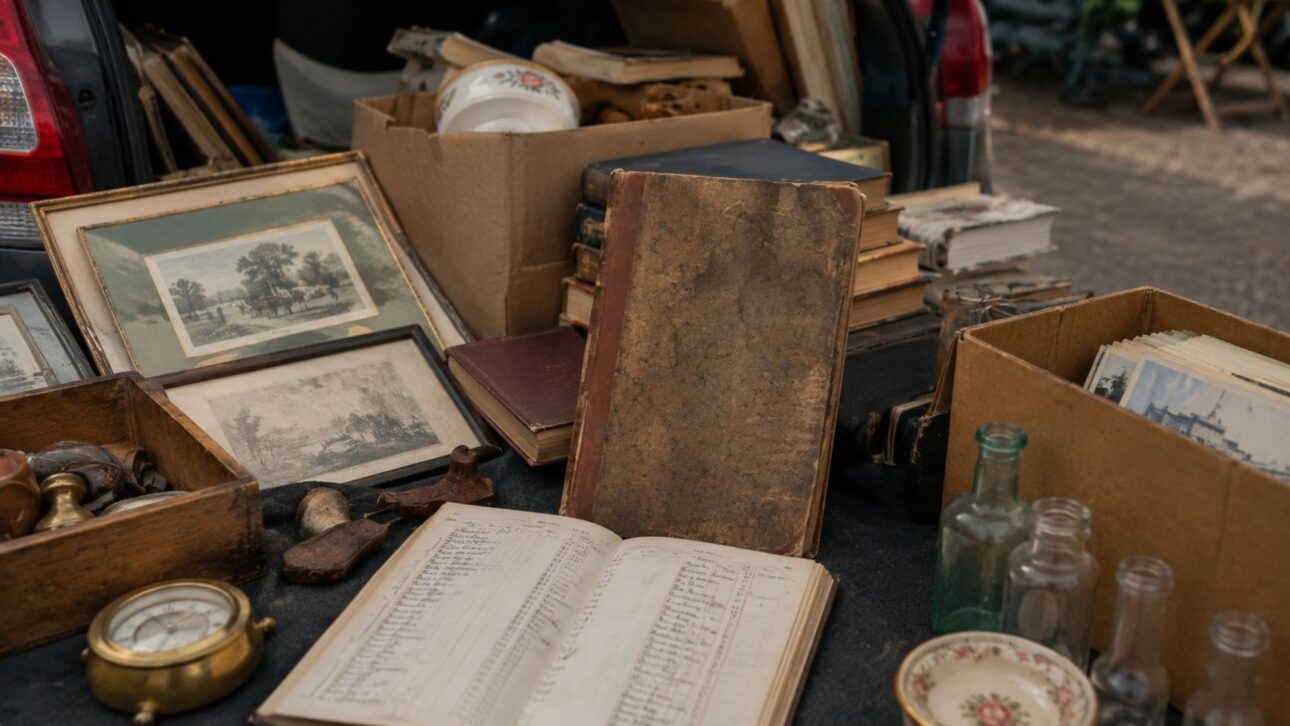
Car boot sales are a universe of their own in England. At these weekend gatherings, sellers spread everything on tables and the ground, and it’s common for relics to appear mixed with trinkets, precisely because many people don’t know the value of what they’ve inherited or kept. It’s in this mix of forgotten objects that finds like the World War I record appear.
900 volunteers in a few days: what the record holds
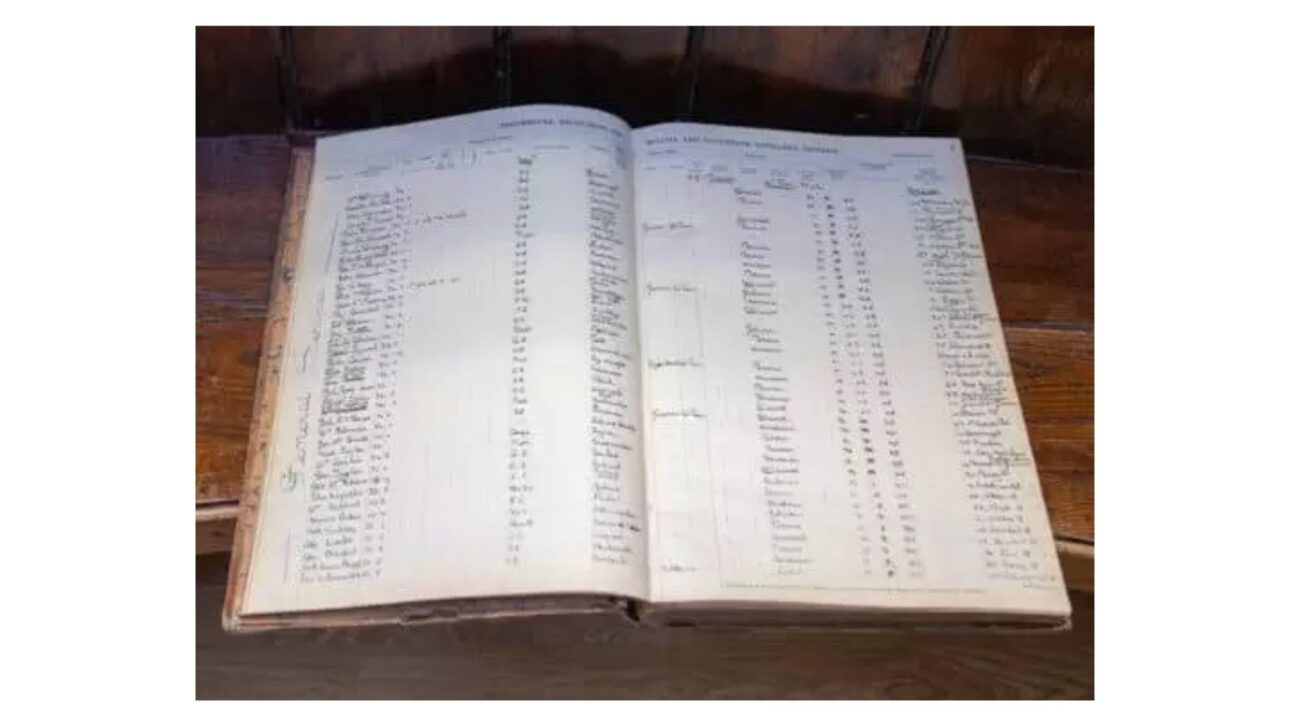
The content of the notebook is what makes it precious. The record lists about 900 men who volunteered in just three days, in December 1915, during World War I. Seeing so many names gathered, handwritten at the same time, gives a sense of the war effort at that moment.
The details noted are impressive for their precision. For each volunteer, the register book includes name, age, height, chest measurement, and even distinctive marks on the body, like scars. It was a complete registry, made to identify each recruit, and today it serves as a written snapshot of hundreds of real people.
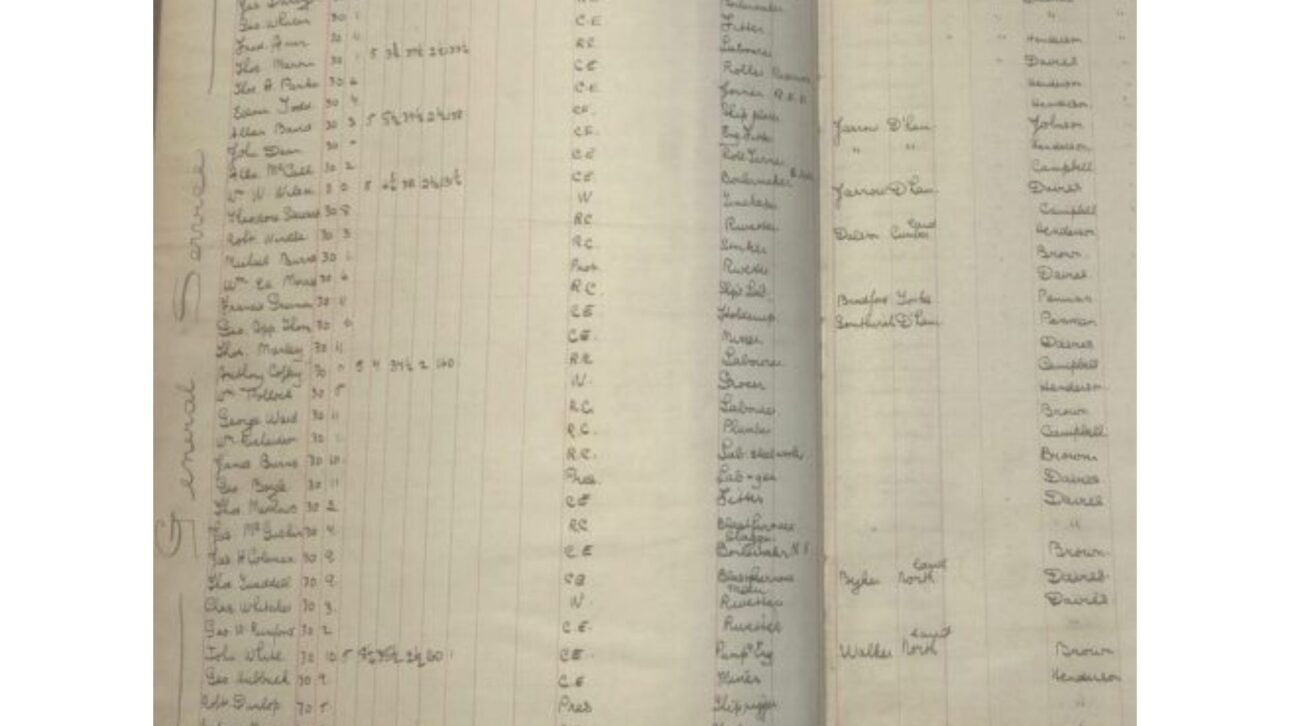
Behind the numbers are flesh and blood people. The record holds names like Theodore Stewart, timekeeper, James McAtominey, plumber, and Anthony Coffey, blast furnace worker, among many others. They are not anonymous soldiers, but workers with professions and stories, which makes the document even more valuable for those researching World War I.
The Derby Scheme: enlist or “attest”
The record was born from a specific recruitment scheme. In 1915, the United Kingdom launched the so-called Derby Scheme, a voluntary enlistment campaign aimed at men aged 18 to 40. The idea was to persuade civilians to commit to the war before compulsory military service was imposed.
The rule gave volunteers two options. A man could enlist immediately or just “attest,” that is, declare his willingness to serve and wait to be called up later, returning to civilian work in the meantime. Those who attested received a gray armband and a small cash bonus, a public sign of the commitment made.
This context explains the crowd of signatures in just a few days. The Derby Scheme created a rush for enlistment across the country, and records like this documented every man who joined. That’s why the notebook found at the bazaar is so revealing: it captures an exact moment when the First World War was mobilizing entire towns.
Workers from the Palmers Shipyard who went to war
The volunteers in the notebook had a common address. Most worked at the Palmers Shipbuilding and Iron Company, a large shipyard and ironworks in Jarrow, in the northeast of England. They were clerks, plumbers, blast furnace workers, and other manual laborers who traded the factory for the uniform.
The war had already knocked on their door before enlistment. Six months earlier, in June 1915, the Palmers shipyard had been the target of a German zeppelin attack, which killed 17 people and injured 72 others. For the workers of Jarrow, the First World War was not something distant, but a threat that had already reached their own factory floor.
After signing, many went to the same military destination. A large number of volunteers ended up serving in the Durham Light Infantry, the region’s infantry regiment, while others went to the Royal Navy. The notebook, therefore, is also the portrait of an entire working community going to the front, coming from a single shipyard.
140 of the 900 did not return
The hardest part of the record is what came after. Of the approximately 900 volunteers listed, about 140 died in the war, almost one in every six. The notebook, which began as a hopeful enlistment list, turned over time into the record of a generation cut down by the First World War.
The numbers from the shipyard as a whole are even more significant. A war memorial dedicated to the employees of Palmers Shipbuilding lists 185 dead in the conflict, encompassing all the company’s workers, not just the 900 in the notebook. No matter the perspective, the toll of lost lives is painful and real.
It is this human dimension that gives weight to the document. Each name in the register could belong to someone who did not return, leaving behind family, trade, and city. More than an auction curiosity, the notebook is a memorial in book form, restoring identity to men who might have become just statistics of the First World War.
For families, such a document can be a reunion. A descendant searching for a great-grandfather soldier might find, in those lines, the age, height, and even the scars of the ancestor, data that practically no other archive holds. The register transforms forgotten names into people once again, and that is why it is so valuable for the memory of families connected to the First World War.
Why such a record is so rare
The rarity of the find has an almost tragic explanation. According to experts, enlistment records like this should have been destroyed after the end of the First World War, as part of the bureaucratic disposal of military documents. Therefore, finding an intact copy, outside of an official archive, is almost impossible.
The auction house reinforced this exceptional character. For Matt Crowson, a specialist in military items at Hansons, having an original and primary record of volunteers from that era is something practically unprecedented outside a regimental museum or an institutional archive. It is the type of document that normally only exists in public collections.
There is also the value for research. Since the names in the notebook have probably never been digitized, the register is a rich source for historians and descendants seeking their roots. Each piece of data there can fill gaps about First World War soldiers that would otherwise be lost forever.
The auction at Hansons and the value of the find
From the bazaar, the notebook went to the auction block. The register was taken to Hansons Auctioneers and included in the auction of medals, military items, and weapons of the house, held on February 25, 2026, in the company’s hall in Etwall, near Derby. Quite a leap for an object bought for 20 pounds.
The price expectation already indicated the historical value. The sale estimate ranged between 1,000 and 1,500 pounds, that is, dozens of times more than the merchant had paid at the trunk sale bazaar. For a notebook found on the ground, it was confirmation that the gamble had been well worth it.
More important than the figure, however, was who acquired the register. Instead of disappearing into a private collection, the document was purchased by an institution linked to the military history of the region, ensuring that that piece of the First World War remained accessible to the public. The fate of the notebook ended up being as symbolic as its discovery.
The auction of military items is, in itself, a showcase of history. Hansons is known for taking curiosities of humble origin, from the attic to the bazaar, and turning them into coveted pieces, and the World War I record fit this profile. At the auction, the document that had cost 20 pounds became the target of bids from those who understood its value, proof that well-preserved history is worth gold.
Back home: the record returned to the North
The outcome of the story does justice to the memory of the 900. The record was acquired by DLI Friends, a group connected to the Durham Light Infantry, precisely the regiment in which many of the notebook’s volunteers served. After being found hundreds of kilometers away, in Essex, the document returned home, in the northeast of England.
Today the notebook has a home worthy of its importance. It is kept at The Story, in Durham, a space that houses the collection and archive of the Durham Light Infantry, and can be consulted by appointment. From a lost object in a bazaar, the record became part of an official historical collection.
This return has a special meaning. The book that listed hundreds of men from Jarrow heading to war now rests in the archive of the very regiment that many of them joined. It’s as if the record has completed a circle, from the factory to the front, from the bazaar back to the home of its own history.
Why documents like these matter, and what Brazil has to do with it
Cases like this show that history resides in common objects. An old notebook can hold the memory of an entire city, and losing it would mean erasing names that deserved to be remembered. Recovering a World War I record is, at its core, recovering identities that time almost took away.
In Brazil, the lesson applies to preserving our own memory. The country has historical documents scattered across archives, churches, stations, old factories, and even family drawers, many at risk of being lost due to lack of care. Valuing these records is protecting the history of industrialization, wars, and migrations that shaped Brazilian cities.
There is also an invitation to conscious treasure hunting. Just as the English merchant found a treasure in a bazaar, Brazilian thrift stores, fairs, and antique shops may hide papers, photos, and books of great historical value. Paying close attention to what seems like junk may be the first step to saving a piece of the past.
Technology can be a powerful ally in this preservation. Digitizing old documents ensures that names and dates survive even if the paper is lost, and also makes them accessible to researchers from anywhere in the world. The English case, where the record may never have been digitized, shows the risk of leaving an entire memory trapped in a single fragile notebook.
The story of the 20-pound notebook proves that great treasures can be where you least expect them: a rare World War I record, with 900 volunteers and about 140 dead, found in a car boot sale in England and now back in the regiment’s archive, after being auctioned at Hansons.
And you, have you ever found any valuable antique at a fair, thrift store, or bazaar, or do you know someone who found a hidden treasure like that? Share your best find here in the comments and what you think should be done to preserve historical documents like this World War I record.


