Portuguese
  Spanish


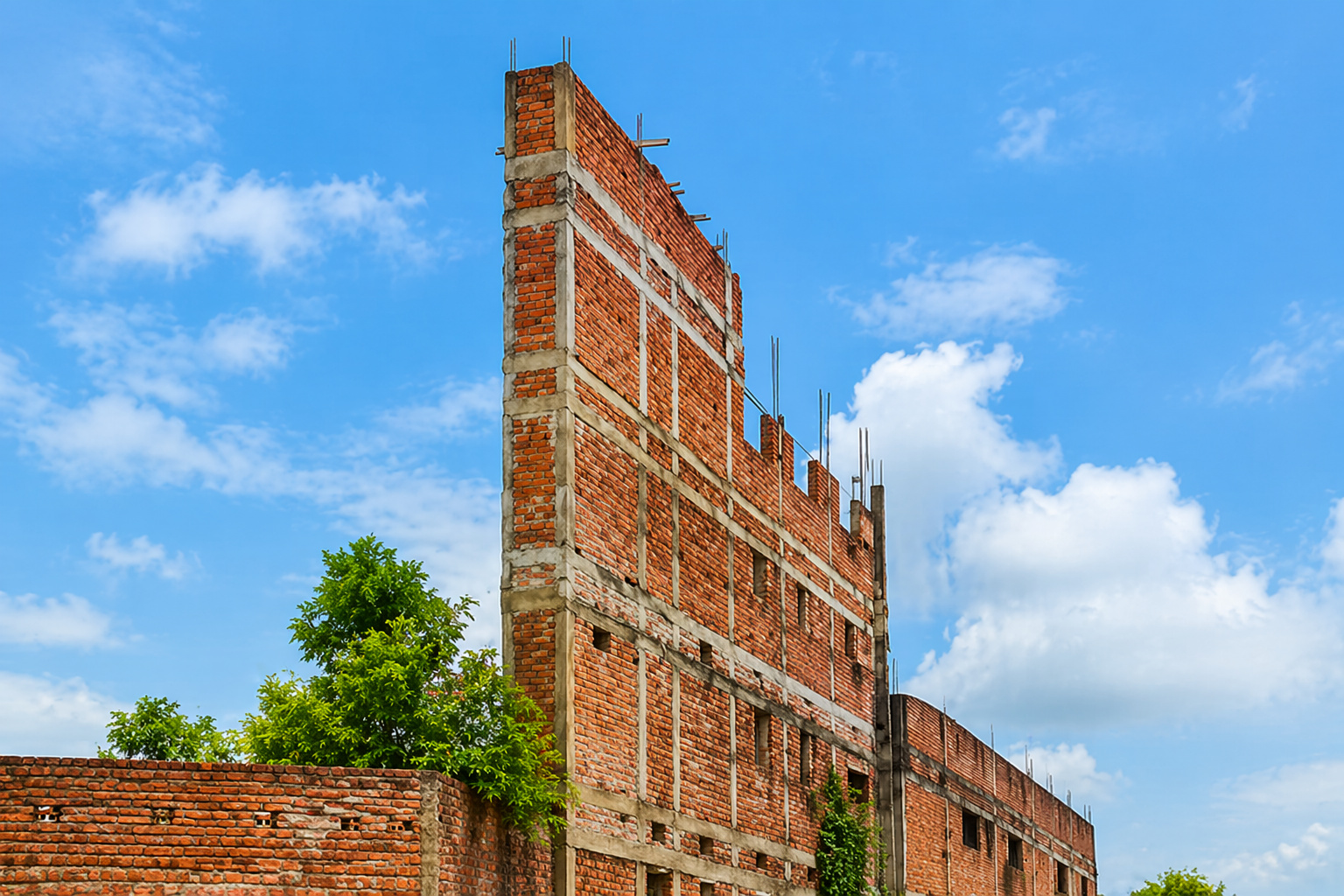


Unusual construction in India, called the Great Wall of Bihar, impresses with its minimum width and curious shape, making the narrow house a phenomenon on the web
The Great Wall of Bihar, an extremely narrow house built in a minimal space, has been attracting attention for its unusual shape and the way it was built in several floors. The construction surprises residents and onlookers by occupying a very small area and still developing upwards.
The impact is evident when observing the property. From the front, it looks ordinary, but when changing the angle, it reveals a structure so thin that it resembles a tall wall. The most curious detail is that, at the top, it is possible to touch both walls at the same time, highlighting the extremely limited space.
Construction catches attention for its wall-like shape
Located in the state of Bihar, India, the house called the Great Wall has gained prominence for its unusual appearance. At certain angles, the structure appears to be just a vertical wall, which surprises those who see it for the first time.
-
14-Year-Old Student Wins Gold at Brazil’s Largest Math Olympiad After Six Months Without a Math Teacher, Becomes Sole Medalist from His City

-
Brazilian YouTube Sensation “Galinha Pintadinha” Celebrates 20 Years, Amassing 65 Million Subscribers and $700 Million in Annual Revenue

-
Fifth-grader’s Project Turns Used Cooking Oil into Over 160,000 Gallons of Biodiesel, Cuts CO₂ Emissions, and Inspires Law in Rhode Island

-
Started with $80 at 17 Selling Used Clothes, Now Aiming for $18 Million with a Network of 50 Thrift Stores




The information was reported by NDTV, an Indian news portal, which presented the details of the construction and its repercussions. The narrow and tall shape has turned the property into a curious case that quickly caught attention.
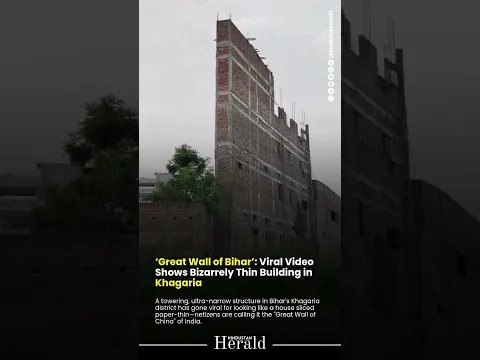

The unconventional appearance has intrigued many people about how the project was executed in such a limited space.
Reduced space defines the whole structure of the Great Wall of Bihar
The construction was made on a plot with about six units of width, while the interior has approximately five units of usable space. This limitation determined the vertical shape of the property.
Even with this restriction, the house was built with several floors, making the most of the available area. This type of solution shows how space can be used creatively, even if unusually.
On the terrace, the limitation becomes even more evident. Standing in the center, a person can touch both walls by spreading their arms, which reinforces how narrow the internal space is.
Curiosity leads to comparisons with great constructions
The repercussions of the case led to various curious comparisons. Some people began to associate the construction with famous large buildings, even with its reduced dimensions.
NDTV, an Indian news portal, highlighted that the property received creative nicknames, referencing structures known worldwide. The comparison arises from the contrast between the extremely limited height and width.
This type of reaction shows how different constructions spark curiosity and quickly spread among the public.
Structure raises doubts about comfort and daily use
Despite the creativity, the house also raises questions about its functionality. The reduced internal space may hinder organization and daily use.
Still, the project demonstrates an alternative for areas where the available land is small. Verticalization was the solution found to allow the use of space.
Even with limitations, the construction highlights how different solutions can arise in the face of a lack of available area.
Case draws attention for creativity and limitations of space
The extremely narrow house built in a minimal space has become an example of how unconventional constructions can stand out. The unusual shape and height catch the attention of onlookers.
The case shows the impact of different projects and how they spark curiosity. At the same time, it highlights the challenges of living in such a limited environment.
And you, could you live in such a space? Leave your opinion in the comments and share this curiosity with others.