Portuguese
  Spanish


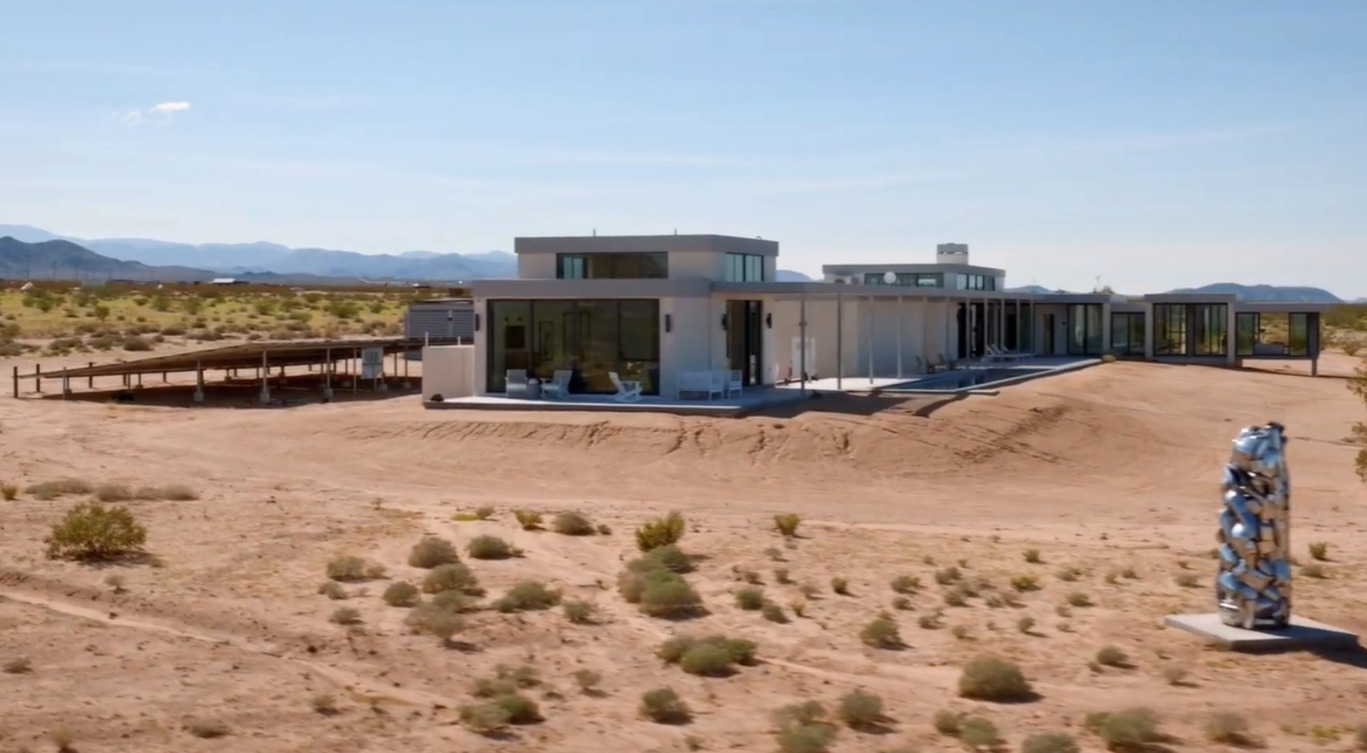

The Saturn Haus, in the California desert, is for sale for $14.99 million with 160 acres, self-sufficient structures, glass, concrete, and panoramic views
The Saturn Haus, listed for sale at $14.99 million in the California desert, features a main residence, support spaces, and panoramic views on a 160-acre lot, marking the public offering since the project’s completion.
Where the mansion is located
The Saturn Haus occupies a remote area between Joshua Tree National Park and the Mojave Desert, in a landscape marked by aridity, visual appeal, and a quest for privacy.
The property is situated in the center of a 160-acre lot purchased by Wendy Wacker in 2012. The address stands out for its isolation and integration with the natural environment.
-
The day Japan crossed the Pacific, took two icy islands in Alaska, and put the United States on full alert in World War II.

-
Son of farmers, he started at the age of 12 working in a pharmacy in the countryside of Paraná, saw his partner declare the company “bankrupt” and leave, and today he runs a supplement brand present in 83,000 pharmacies, investing R$ 67 million towards R$ 500 million.

-
From a motorcycle sold for R$ 146 million: he used to blend açaí in his home kitchen, left informal work, and now runs a network of 140 stores in 12 states.

-
He almost went bankrupt during the pandemic and drove his own delivery truck to keep the ice cream shop open, created the “ice cream wholesale” and now sells 1.3 million popsicles per month starting at R$ 1, with 32 stores and a goal of R$ 100 million.


The glass walls make the complex shine in the desert and help the construction blend into the scenery with panoramic views in every room.

Who owns the property
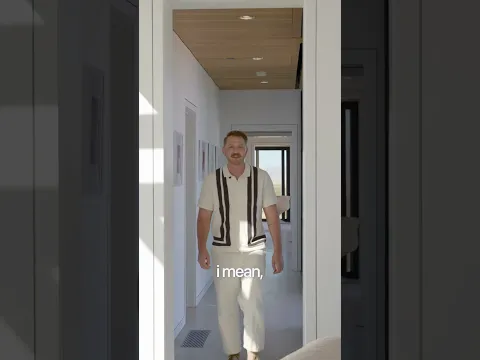
The owner of the property is Wendy Wacker, who purchased the land and spent five years developing the complex.
She worked with Northworks, a collective known for minimalist and contextual architecture.
Wacker pursued a career as a writer but has a family history linked to civic leadership, business, and architecture, with roots in Chicago, where she was raised.
Her great-grandfather, Charles Henry Wacker, was the first president of the Chicago Planning Commission and advocated for wider streets, tree-lined avenues, expansion of forest reserves, and improvements in public infrastructure.
Wendy’s father, Frederick G. Wacker Jr., was an engineer, president of two Chicago companies, a jazz musician, a Formula 1 pilot, and a figure in the architectural and social circles of the city.
How the mansion was planned
Wendy left the Midwest and moved to Southern California, where she invested $7 million to build her vacation home and writing retreat.
She designed a residence that would complement the park-like environment without clashing with the landscape. The project features minimalist and sculptural volumes connected by open-air corridors.
The internal and external spaces were designed to enhance the relationship with the desert. Open garden patios help the structures integrate with the surroundings.
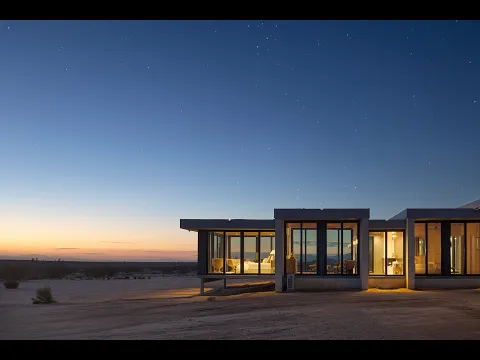
The windows, walls, and skylights were designed so that the movement of the sun transforms the colors and the internal environments.
Dimensions and structures of the mansion
Built primarily of concrete, steel, and glass, The Saturn Haus consists of four distinct structures. The main residence has 196 square meters.
It features a spacious integrated living room, high ceilings, glass walls, and heated floors for the cold desert nights.
The guest house has 119 square meters and bunk beds to accommodate four people. The complex also includes a 58-square-meter music and listening room.
Also part of the ensemble is a 21-square-meter art studio or gallery.
Luxury, autonomy, and sale
The outdoor area of the mansion features a swimming pool surrounded by a deck with a panoramic view, sculptures, natural landscaping, a rooftop terrace, an outdoor kitchen, and dining space under a slatted roof.
In addition to the architectural design, The Saturn Haus functions as a self-sufficient microgrid, powered by a photovoltaic system and wind turbine. The lap pool features advanced thermal technology.
These solutions meet Wendy’s environmental proposal but also respond to the remote location, which requires uninterrupted operation.
Wacker told the Wall Street Journal that the beauty of the place feels otherworldly, with the sky and clouds so close they could almost be touched.
She also stated that she is reluctant to leave the retreat but had to put it up for sale due to health issues. What she will miss the most, she said, will be nature, solitude, the absence of light pollution, and the sky.
With information from Realtor.