





 Portuguese
  English
  Spanish
  3 min of reading
  0 comments


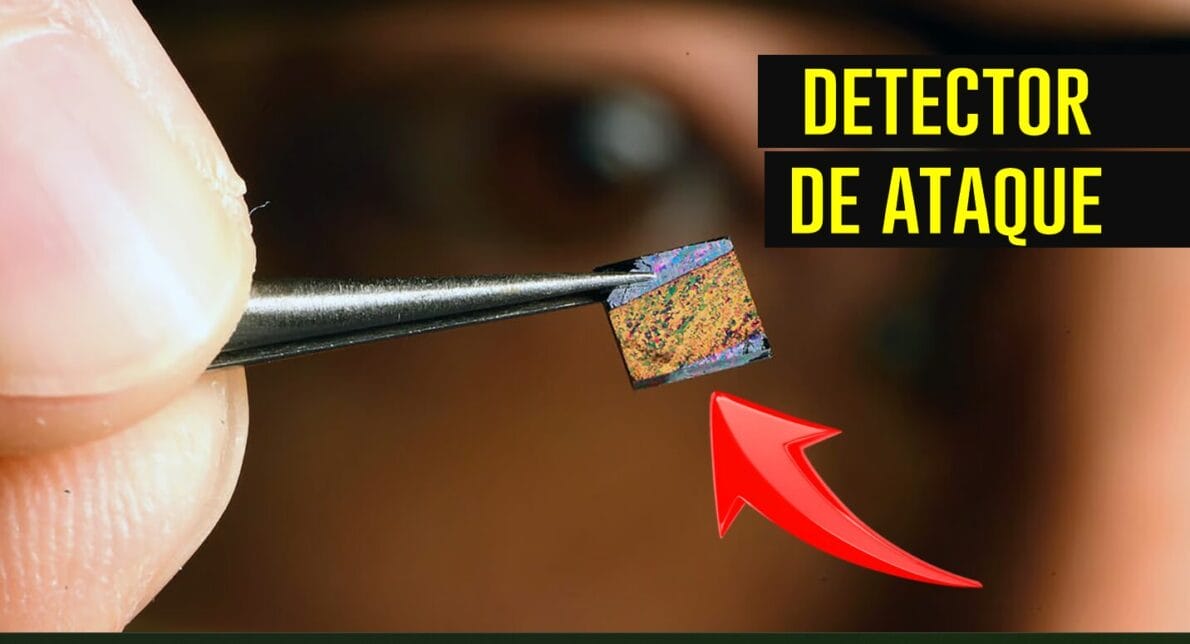
The Home Use Heart Attack Detector Provides Results in Minutes, Eliminating the Need to Wait for Hours. Discover How This Technology Can Revolutionize Healthcare and Save Lives in Critical Situations!
Researchers at Johns Hopkins University (JHU) have developed a groundbreaking chip that promises to detect heart attack biomarkers in just minutes, a significant advancement over current methods that can take hours to provide results.
The device, which could become a home use diagnostic tool, stands out for its high accuracy, even at very low concentrations of biomarkers such as the enzyme creatine kinase and the protein troponin, which are responsible for indicating damage to the heart muscle.
When it comes to heart attacks, time is essential. The quicker the diagnosis, the sooner blood flow is restored to the heart, minimizing damage to the organ and increasing the chances of patient recovery. However, the symptoms of a heart attack can vary significantly among patients, making a rapid diagnosis a true challenge.
-
The Earth’s magnetic pole has decided to “take a trip” towards Russia, getting closer and closer to Siberia, and forcing scientists to update the model used by GPS, airplanes, ships, and military systems worldwide.

-
An underwater volcano on the seafloor off Oregon is showing clear signs of impending eruption, and scientists are observing everything in real-time.

-
Cyclone gains strength and causes drastic climate change: new polar air mass drops temperatures, increases frost risk, and brings heavy rain to various regions of Brazil in the coming days.
-
The solid-state battery, promised for years as the future of electric cars, is finally starting to move from the laboratory to mass production.




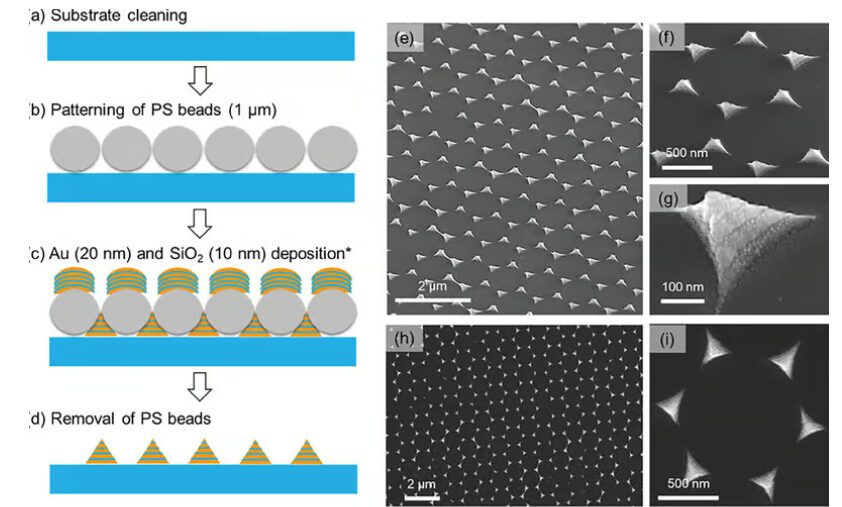
Zheng et al. 2024
Currently, when a person arrives at an emergency room with suspected heart attack, they undergo a series of blood tests, such as checking the aforementioned biomarkers. The problem is that these tests can take one to two hours to process in a laboratory.
With the new chip, this wait can be drastically reduced to just a few minutes, which can save lives in emergency situations.
Cutting-Edge Technology for Rapid Diagnostics
The technology behind the chip developed by JHU is extremely innovative. The device uses a unique “metasurface” to detect heart attack biomarkers quickly and accurately.
The process involves creating a layer of polystyrene spheres arranged in a hexagonal pattern on a quartz base. Then, thin layers of gold and silica are applied over the spheres, filling the spaces. After removing the spheres, a stacked structure of gold and silica atoms remains, which amplifies the chip’s electrical and magnetic fields.
This amplification allows the device to use Raman spectroscopy, a chemical analysis technique that uses light to interact with the chemical bonds present in a blood sample, facilitating the detection of biomarkers.
“The chip detected heart attack biomarkers in seconds, even at extremely low concentrations,” said Peng Zheng, the lead author of the study and an assistant researcher at JHU. He also highlighted that the device can detect the signs of a heart attack even before conventional tests.
Biomedical engineer Ishan Barman, co-author of the study, reinforced the chip’s potential for diagnoses outside the hospital environment. “We are talking about speed, accuracy, and the ability to perform measurements outside of a hospital,” Barman said. He also mentioned that in the future, the chip could evolve into a portable device, similar to the “tricorder” from Star Trek, allowing for rapid diagnostics with just a drop of blood.
In addition to detecting heart attacks, researchers believe the technology could be adapted to diagnose other diseases, such as cancer and infections. “There is enormous commercial potential for this technology platform,” Barman stated.






Be the first to react!