Portuguese
  Spanish


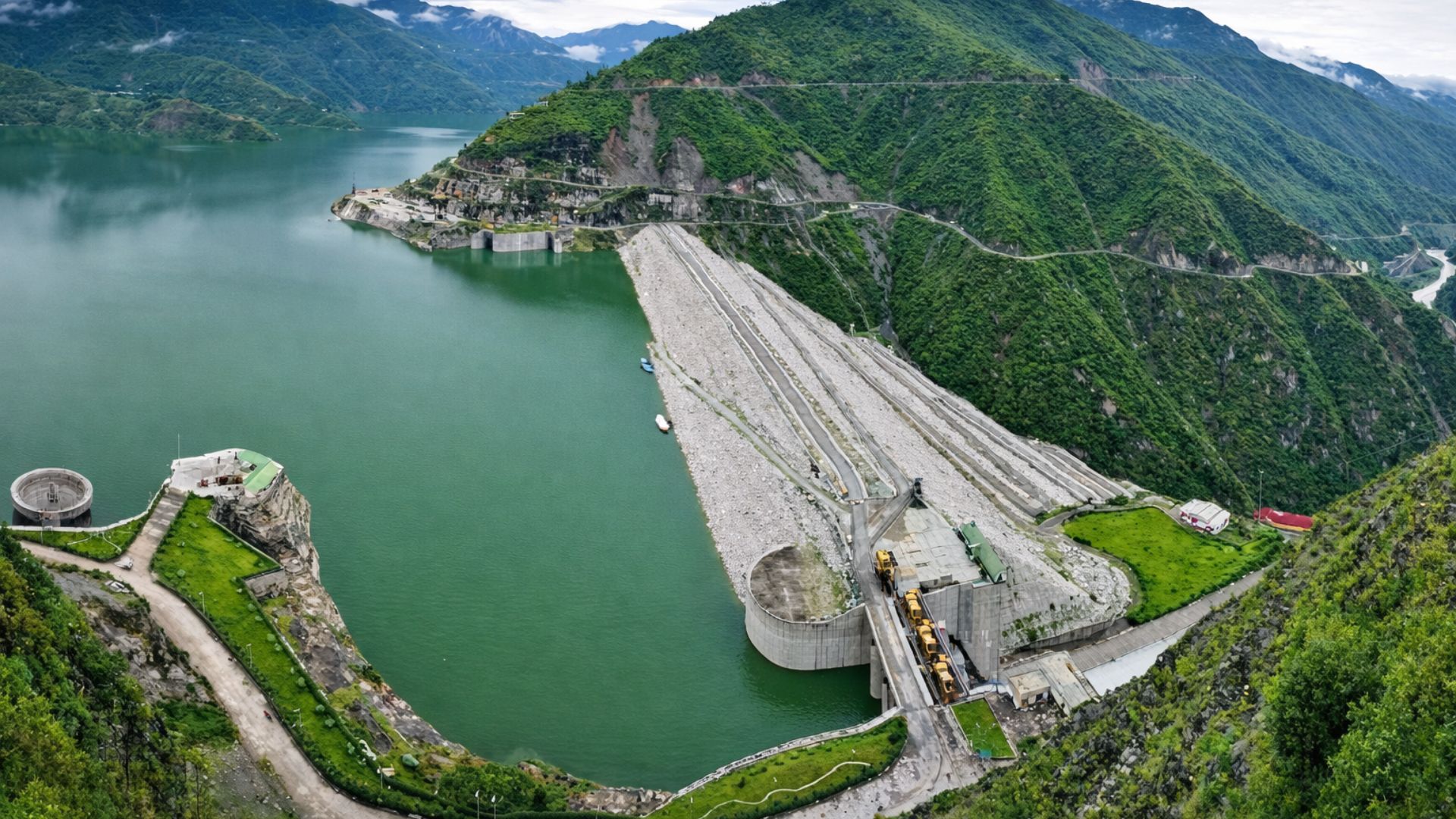

Structure of 260.5 Meters in the Himalayas Transformed the Control of One of the Tributaries of the Ganges into an Strategic Axis for Energy and Water Storage in India, Combining Generation of 1,000 MW, Flow Regulation, and Continuous Operation in a Seismic Risk Area.
In the Indian state of Uttarakhand, in the Himalayas, the Tehri Dam stands at a height of 260.5 meters and has come to control the Bhagirathi River, one of the watercourses that come together to form the Ganges.
By operating as both a reservoir and a power plant, the project concentrates functions of electricity generation, water storage, and flow regulation in a valley with steep terrain and challenging logistics.
Tehri Dam and the Transformation of the Valley in the Himalayas
With this size, the dam has ceased to be merely a structure spanning a river and has begun to function as a retention mechanism capable of storing large volumes and releasing discharges in a controlled manner.
-
Japanese Botanist’s Miyawaki Method Grows Native Forests in Small Spaces in Just Years, Not Decades

-
800-Year-Old Cliffside Temple in Greece Amazes with Secret Cave, Drawbridge, and Stunning Views

-
Japan’s “Akiya” Homes: Abandoned Properties Attract Foreign Buyers as Locals Shun Them
-
Lawyer Turned Entrepreneur Earns $60,000 Annually Selling Brazilian Cheese Bread: Athena Rodrigues Started with $400 and Founded Dona Zelda, Bringing a Taste of Minas Gerais to São Paulo’s Heart


In this type of system, water tends to be accumulated when it is most abundant and released when supply or electrical operation needs regularity, reducing fluctuations linked to monsoons and snowmelt.

The official characterization of the project describes the work as multipurpose, with goals that include electricity and water uses, as well as flood mitigation actions in specific operating scenarios.
In a mountainous state, where rivers flow down with steep gradients, flow control influences the routine of downstream communities as well as the operation of the energy system that receives the electricity generated there.
Rockfill and Earthworks Engineering in Mountainous Areas
Unlike large concrete structures, Tehri is classified as a rockfill dam, built with rocks and compacted materials that form a mass, accompanied by an impermeable core.
This type of engineering is usually adopted in narrow, steep valleys, which are common in the Himalayas, where the geology allows for the embankment to be raised to great heights, as long as the foundation can support weight and pressure.
Still, the environment imposes permanent demands, as fractures in the rock, alteration zones, and infiltrations can affect the behavior of the mass, requiring internal drainage, inspections, and continuous readings.
For this reason, the safety of a dam of this size relies less on a punctual declaration and more on prolonged monitoring, with instruments to measure pressure, displacements, and temperature variations.
Bhagirathi River and the Direct Connection to the Ganges
The river impounded by the dam is the Bhagirathi, which originates in the Gaumukh region, near the Gangotri glacier, and flows down to meet the Alaknanda at Devprayag, at which point the river is referred to as the Ganges.

In hydrological terms, the formation of the Ganges involves precisely this confluence, which helps explain why a project on the Bhagirathi gains national and international repercussions by altering the river’s regime.
In the case of Tehri, the reservoir extends along the valley, creating a mass of water that concentrates storage and begins to influence the rhythm of the flows released to downstream sections.
When the operation changes the released volume, this affects both water availability and flow predictability, a sensitive point in mountainous regions that alternate between periods of abundance and scarcity.
Hydroelectric Plant of 1,000 MW and Reservoir Management
On the electrical axis, the main phase of the project is publicized with a installed capacity of 1,000 MW, associated with the Tehri hydroelectric complex, which integrates generation and flow control.
As the reservoir is part of the “motor” of the system, choices about lake level and discharges have direct effects on production, requiring coordination between water management and electric sector operation.
Moreover, the very function of storage enhances the relevance of the project for supply stability, since large reservoirs can buffer seasonal variations and provide greater regularity in dispatch.
In this logic, the “vault” is not merely a visual metaphor, as the value of the system lies in storing water during periods of higher inflow and releasing it according to technical rules aimed at multiple uses.
Seismic Area and Permanent Monitoring of the Structure
The location in Uttarakhand also draws attention for requiring engineering criteria focused on seismic risk and slope instability, recurring themes in Himalayan areas where the terrain amplifies consequences.
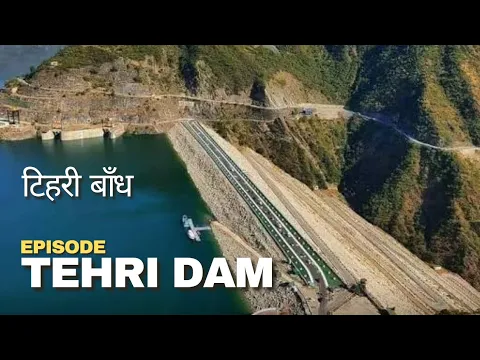

Rockfill dams can accommodate deformations and dissipate energy when well-designed and maintained, but this performance depends on instruments, inspection routines, and rapid response to any detected anomalies.
In this context, safe operation involves measuring the internal behavior of the mass and associated structures, observing infiltrations and displacements, as well as reviewing procedures in light of hydrological and geotechnical changes.
At the same time, water control in a steep valley presents operational challenges, as intense flows can concentrate rapidly, requiring planning for flooding episodes and careful management.
Territorial Impacts and Population Displacement
Works of this type tend to cause profound changes in the territory, as the formation of a reservoir alters the landscape and may require resettlement, reconfiguring urban and rural areas around the new lake.
In the case of the Bhagirathi, reference records indicate that the construction of the dam submerged the old city of Tehri, and the population was displaced to New Tehri, a landmark of local transformation.
These changes increase public and institutional scrutiny over the project, as compensations, environmental monitoring, and safety requirements begin to accompany operation, alongside energy and water roles.
With the reservoir in operation, the valley no longer responds solely to the natural pulse of the river and begins to respond to operational rules, which can modify the rhythm of flows and availability during critical periods.
If a single dam can concentrate storage, regulate a river linked to the Ganges system, and sustain 1,000 MW generation in a sensitive area, what other similar works are already quietly reshaping decisions about water and energy worldwide?