Portuguese
  Spanish


The record of Jesper Makes shows the father and daughter Julia building the cabin almost for free, from the flooring recovered from the old dairy to the alder logs sawn into beams, proving that it’s possible to raise a complete construction by reusing what most people throw away
Accepting the challenge of building an entire cabin without spending almost anything, proposed by his own daughter, turned into a construction and reuse project taken to the extreme. According to the channel Jesper Makes, in a record published in June 2024, the Danish carpenter Jesper accepted his daughter Julia’s zero-budget challenge and erected a cabin in the backyard of their home in Denmark, using recovered material and logs sawn by themselves.
The starting point was a strict rule. The goal was to build the cabin with zero budget, without buying wood, using what already existed on the property and in the surroundings, although Jesper himself admits that nothing is completely free, as tools, fuel, and some foundation blocks cost money, as Jesper Makes explains. It was Julia who chose the location, designed the project, and became her father’s construction partner, in a learning experience as important as the cabin itself.
The boards from an 1888 dairy saved from the trash
The first treasure appeared on the street. According to Jesper Makes, while driving around the region Jesper saw the owners of an old building throwing floorboards out the window, and discovered that the place was an old dairy built in 1888, where milk was turned into butter and cheese, with probably original boards.
-
China Develops Engineered Bamboo Stronger Than Hardwood, Builds 7-Story Building and Truck-Supporting Bridges with Fast-Growing Grass

-
Indonesia to Build 700-Kilometer Sea Wall on Java Island, Investing $80 Billion to Combat Flooding and Erosion

-
Indonesia Plans to Build 5,000 Suspension Bridges by 2026 to Connect Rural Communities to Schools, Health Centers, and Markets

-
Self-assembling 200-ton tower crane climbs skyscrapers floor by floor using hydraulic jacks, dismantles itself without larger cranes.


The reuse began there, in the zero-budget challenge. The owners allowed Jesper and Julia to take the flooring for free, and the duo spent days removing the nails with a tool that pushes the nail out of the wood, cutting the damaged parts and recovering solid pine boards, many with the tongue and groove still intact, as Jesper Makes shows. Each board from the old dairy brought history and signs of use that give character to the cabin.
Storm logs and the sawmill that becomes a bottleneck
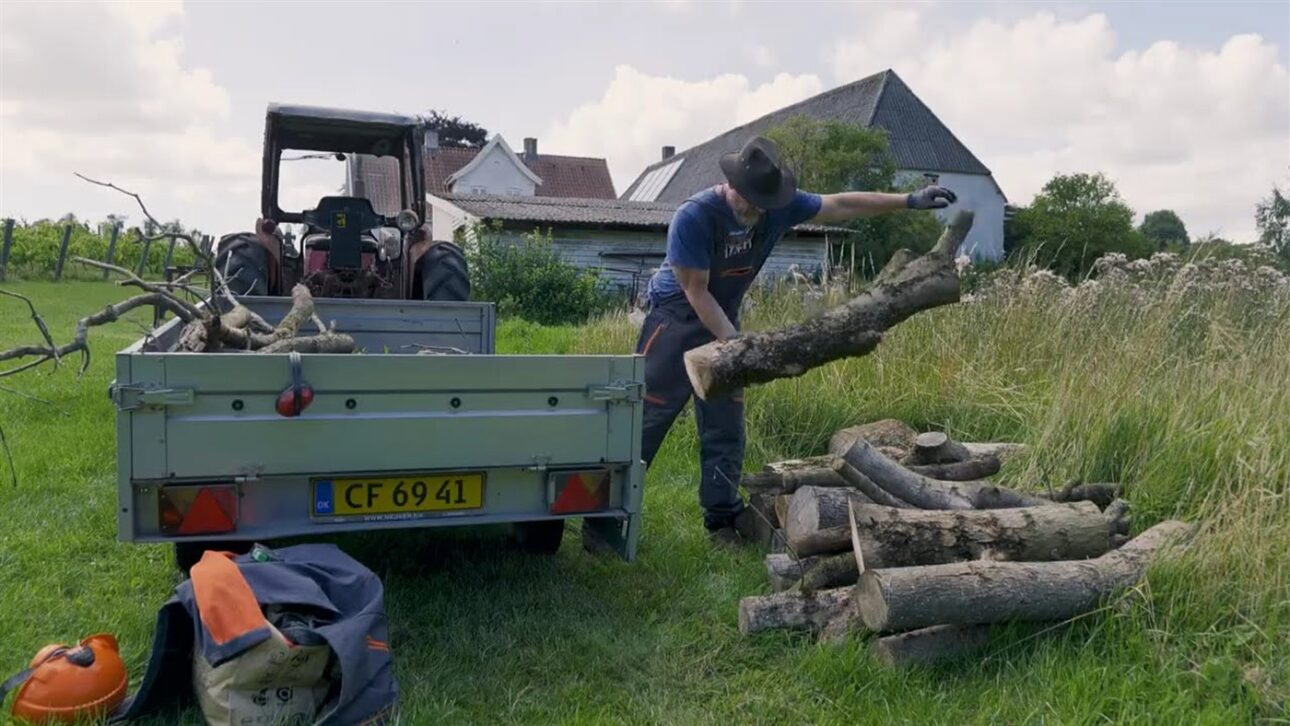
The structure came from the nearby forest. According to Jesper Makes, a neighbor had given Jesper a black alder tree felled by a storm years before, just minutes from the site, and it is from this that the true base of the cabin is born, cut into 3-meter sections with the chainsaw.
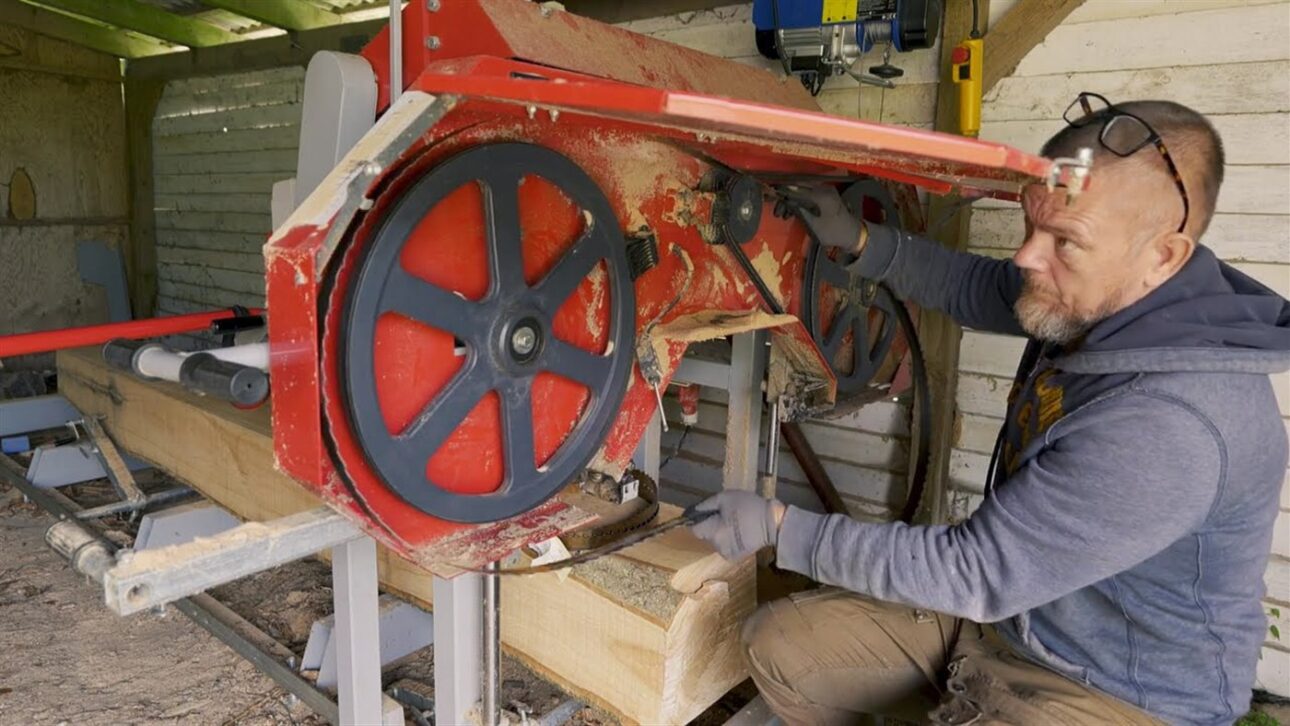
The limitation of the equipment shaped the project. The homemade sawmill only cuts logs up to about 3.2 meters, which forced the duo to work in modules and make use of even the leftovers, and the alder, a dense and heavy wood, even bent the blade before the sawmill yielded beams of 15 by 7.5 centimeters for the base joist, as Jesper Makes details. Keeping the project at zero budget meant sawing their own wood instead of buying it ready-made.
Building with green wood, as the ancients did
A choice in the video challenges the common sense of construction. According to Jesper Makes, the duo started building almost right after sawing the wood, without waiting for it to dry, and Jesper explains that the obsession with drying wood is recent, as woodworkers and structural carpenters have used green wood for much of history.
The trick lies in counting on the movement of the wood. Structural carpenters prefer green wood because it is easier to shape, cheaper, and more accessible, and when well executed, the piece dries in the position it will remain, which tightens the joints and makes the construction stronger over time, as the Jesper Makes channel on YouTube explains. The connections are made with half-lap joints, large screws, and glue, sufficient for the base of the zero-budget cabin.
Foundation over the remains of an old building
The base revealed an archaeological surprise. According to Jesper Makes, when driving the foundation blocks, the duo found old bricks about 40 centimeters from the surface, remnants of a building demolished and buried there in the past, a common practice of clearing the land by burying the debris on-site.
This provided a solid and symbolic foundation. The cabin was literally supported on the remains of a previous construction, and the concrete blocks, which cost about 1,000 Danish crowns, were fixed with quick-setting cement, the only significant expense of a project designed to be zero-budget, as Jesper Makes records. Before concrete, Jesper recalls, the ancients would use large stones as a foundation, like the old barn next to the cabin.
From flooring to insulation: every piece reused
Nothing was bought unnecessarily. According to Jesper Makes, the floor insulation was assembled by supporting mats on slats and pallet boards, with spacing for ventilation that prevents moisture buildup, followed by a vapor barrier to prevent water from rising through the floor in Denmark’s cold climate.
The construction became a collection of reuses. Pallets to support insulation, old reused mats, flooring from the 1888 dairy, and beams sawn from fallen trees or pines that had already served their purpose in Christmas tree plantations, all went into the zero-budget cabin instead of becoming waste or biomass chips, as Jesper Makes shows. It’s reuse as a method, not as a last resort.
What the cabin teaches about low-cost construction in Brazil


The construction directly engages with Brazilian self-construction. In Brazil, reusing demolition wood, pallets, and scraps is a common practice in low-cost construction, and sawing your own wood with a chainsaw and mill appears in sites and rural communities that turn fallen trees into beams without going through the lumberyard.
The lesson is valuable for those who want to build at low cost. Recovering old flooring, sawing fallen trunks, and using green wood with the right joints proves that it’s possible to erect a solid construction almost for free, as long as there is time, tools, and knowledge of the material, exactly the recipe of the zero-budget cabin, a context of sustainable construction increasingly valued. From the Danish backyard to the Brazilian site, the equation is the same: what most discard is raw material for those who know how to work with wood.
The video covers the collection of the 1888 dairy flooring, the cutting of alder trunks, the homemade sawmill, the assembly of the base, and the insulation of the zero-budget cabin.
The zero-budget cabin proves that repurposed material and home-sawn lumber become a real construction. Tell us in the comments: would you build a cabin by sawing your own wood from fallen trees?