Portuguese
  Spanish


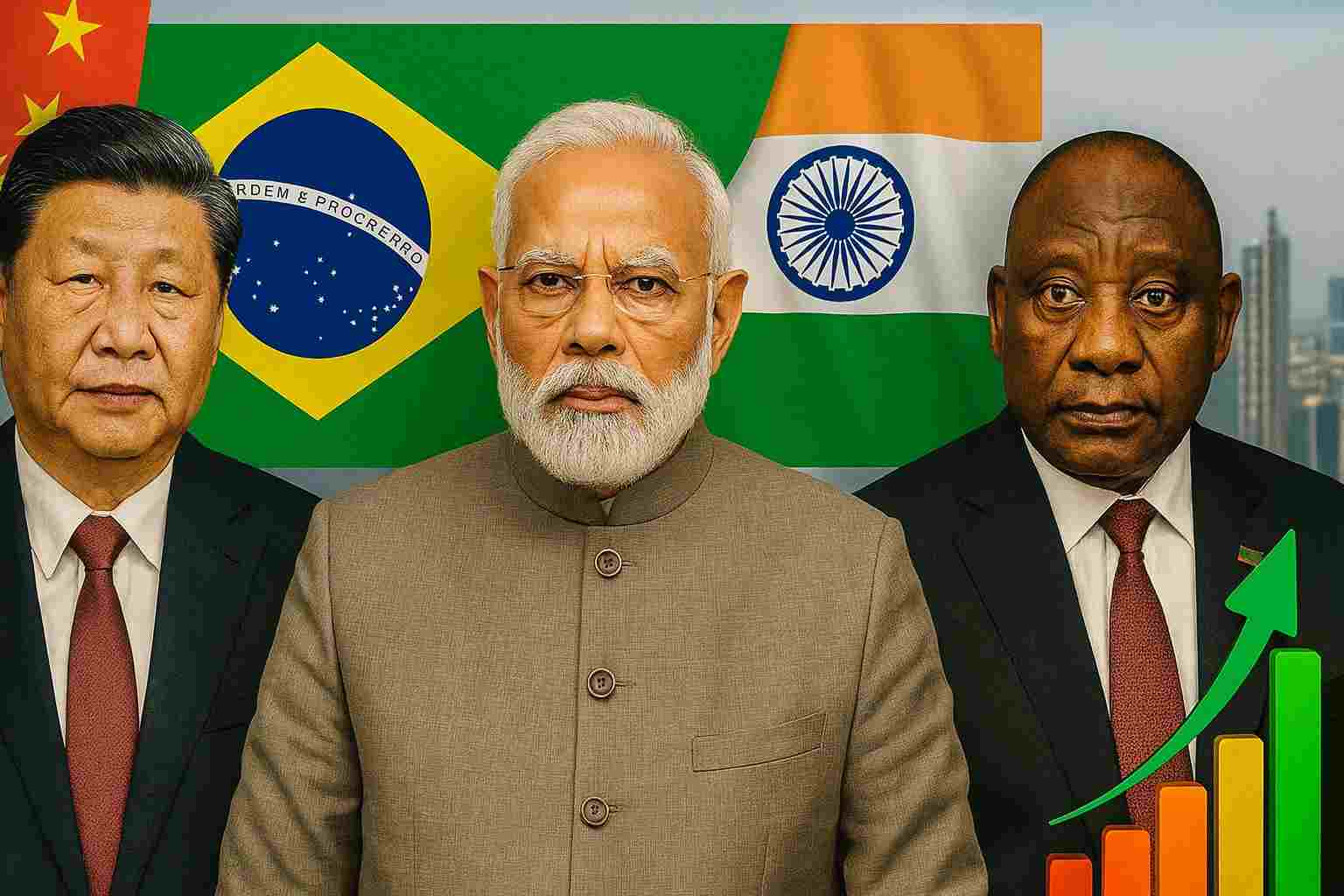


Despite Historical Proximity to Washington by Rivaling With China, India Takes Advantage of Trump Sanctions and Gains Protagonism in Expanding BRICS.
India has always been seen as one of the BRICS countries with the closest strategic ties to the United States, especially due to the historical rivalry with China.
However, the sanctions and barriers imposed by the U.S. president ended up having the opposite effect of what was expected: instead of weakening Chinese influence, they strengthened India’s position within the economic group.
It was in this context that New Delhi took advantage of the BRICS foreign ministers’ meeting, held on Friday on the sidelines of the UN General Assembly, to advocate for multilateralism and call for respect for international law, in a clear message to Washington’s protectionist policies.
-
European Parliament Approves Digital Euro, Aiming to Challenge Visa and Mastercard’s Dominance and Transform Payments Across Europe by 2029

-
Israel finds Hezbollah militarized tunnel over 200 meters long under village, with 4 missile launch shafts, 12 chambers, anti-tank missiles, drones, and weapons depots at a depth of 25 meters.

-
Ukraine launches largest drone attack on Moscow since 2022, Russia claims to have intercepted nearly 200 aircraft near the capital, Kapotnya refinery targeted again, and offensive reignites alert about war reaching the Russian energy heart just a few kilometers from the Kremlin.

-
Truck drivers, freight, and fines from 2022 take center stage in politics: Chamber approves MP with amnesty, mandatory tracking by CIOT, million-dollar penalties, and new minimum wage for those who spend more than 24 hours on the road.



Indirect Message to Washington
The Indian Foreign Minister, S. Jaishankar, did not directly mention the United States, but left the target evident.
He emphasized that the increase in protectionism, tariff volatility, and non-tariff barriers is affecting global trade flows, and urged the BRICS to strengthen its defense of the multilateral system.
According to him, in a turbulent world, the bloc must reaffirm its commitment to dialogue, diplomacy, peacebuilding, and adherence to international law. Under Indian presidency, which Jaishankar assumed, priorities include food and energy security, climate change, and sustainable development.
This stance comes at a time when the U.S. president frequently attacks the legitimacy of BRICS and shows hostility toward international organizations such as the UN, the European Union, and NATO.
He has also downplayed the effects of climate change and ordered military actions against vessels in South America and the Caribbean, alleging a fight against drug trafficking.
Expansion of BRICS and Perceived Threat by the USA
BRICS, which started with four members, now includes ten full members: Brazil, Russia, India, China, South Africa, Egypt, Ethiopia, Iran, United Arab Emirates, and Indonesia. Additionally, ten countries act as partners, and another ten have already requested formal membership, with a dozen expressing interest in joining the bloc.
This expansion worries the United States, which sees the strengthening of BRICS as a threat to American economic primacy and, especially, to the dollar’s role as a global reserve currency. Although India has made it clear that it does not support de-dollarization, the U.S. president reacted with threats, promising tariffs of up to 100% if the group advances in creating a new currency or supports alternatives to the dollar.
In a post-election 2024 statement, he said he would not allow BRICS to reduce the influence of the American currency and warned that if this happens, the countries in the bloc would “say goodbye” to access to the U.S. market.
Parallel Agenda: IBSA and Bilateral Meetings
Jaishankar also coordinated, in parallel, the IBSA ministerial meeting — formed by India, Brazil, and South Africa — which advocated for a transformative reform of the UN Security Council. The group also discussed joint maritime exercises, the Trust Fund, and strengthening trade among its members.
Moreover, the Indian foreign minister met with several foreign colleagues, including Russian minister Sergei Lavrov, consolidating the strategy to enhance diplomatic dialogue while external pressure against the bloc increases.