Portuguese
  Spanish


New research shows that the domestication of the potato not only transformed the diet in the Andean regions but also directly influenced the genetic evolution of indigenous populations, creating one of the most impressive human adaptations ever recorded by modern science.
The relationship between diet and human evolution has gained a fascinating new chapter. A study published on May 5, 2026, in the scientific journal Nature Communications revealed that indigenous peoples of the Andes, especially in Peru, developed an extraordinary genetic adaptation after thousands of years of consuming potatoes as a fundamental part of their diet.
According to information published by the scientific journal Nature Communications and reported by the portal Live Science, the discovery shows that these populations have more copies of a gene responsible for the production of salivary amylase, an enzyme essential for starch digestion. The research suggests that this trait was favored by natural selection over approximately 10,000 years, since the domestication of the potato in the Andean region.
The discovery offers a new perspective on how dietary habits can profoundly influence human biology, shaping genetic traits capable of increasing the chances of survival and reproduction over generations.
-
Hiker in Norway Discovers Rare 1,500-Year-Old Gold Sword Ornament, One of Only 17 Worldwide

-
Brazil’s Largest Grain Port Faces Delays in the Hinterlands, Missing Rail Link Costs Agribusiness Billions

-
Astronomers Detect Excess Alcohol on Interstellar Comet 3I/ATLAS, Revealing Unique Chemical Signature from Another Star System
-
13-Year-Old Californian Girl Wins $25,000 Prize for Creating Low-Cost Water Filter from Discarded Animal Bones


The potato may have shaped the evolution of Andean peoples
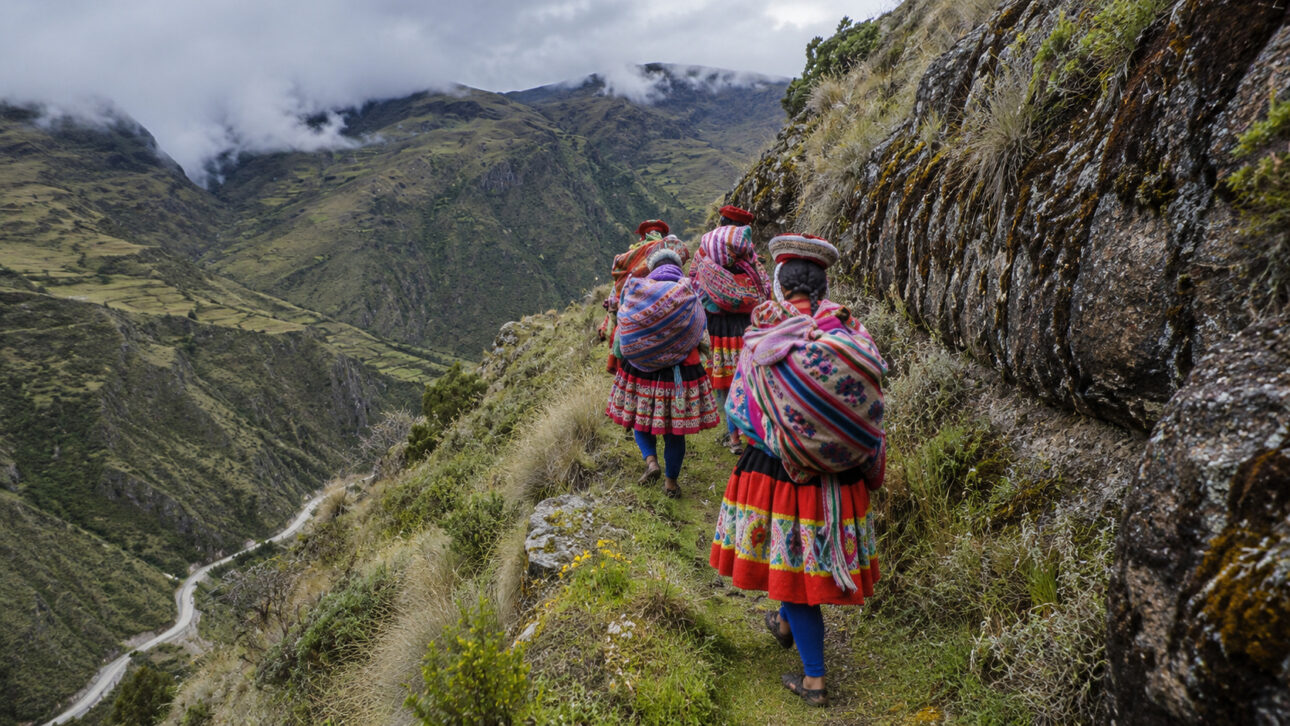
The potato is considered one of the most important agricultural contributions from America to the world. However, its influence may have gone far beyond diet.
Researchers identified that the Andean indigenous people of Peru have, on average, 10 copies of the gene responsible for the production of salivary amylase. In comparison, the global average is only seven copies.
Amylase acts in the mouth, initiating the process of breaking down starch into simple sugars. The greater the number of copies of this gene, the higher the production of the enzyme tends to be, and consequently, the more efficient the digestion of starchy foods can be.
According to the study, individuals who had a greater number of these genetic copies showed a significant adaptive advantage. The data indicates that people with more amylase genes had a 1.24% higher chance of surviving and leaving descendants compared to those with fewer copies.
Although the percentage seems small at first glance, scientists claim that the accumulated impact over thousands of years is enormous.
Professor Omer Gokcumen, from the University of Buffalo and one of the authors of the research, classified this advantage as “incredibly high” in evolutionary terms. According to him, small differences in survival and reproduction can completely transform the genetic composition of a population when repeated generation after generation.
Scientists analyzed thousands of people in 85 populations
To understand the origin of this genetic adaptation, researchers conducted a comprehensive survey involving genomic data from 3,723 individuals belonging to 85 populations spread around the world.
The aim was to map the number of copies of the salivary amylase gene and identify possible signs of natural selection.
The results showed that the Andean indigenous people of Peru presented some of the highest numbers ever recorded. Another group that caught the scientists’ attention was the Akimel O’odham people, located in southern Arizona and northern Mexico, who also showed a high number of gene copies.
However, the researchers point out that there were not enough samples from this group to confirm whether the same evolutionary process occurred in the same way observed among the Andean peoples.
The analyses indicate that the selective pressure related to the consumption of starch-rich foods began to intensify around 10,000 years ago, a period that coincides with the domestication of the first varieties of potatoes in the Andes region.
Furthermore, previous studies had already identified signs of genetic adaptation related to intestinal starch digestion in South American indigenous populations, reinforcing the importance of this food in the evolutionary history of the region.
What this discovery reveals about human evolution
Despite the impressive results, scientists are still seeking to understand exactly what biological advantages are provided by the increase in copies of the amylase gene.
One hypothesis is that individuals with higher enzyme production can extract more energy from starch-rich foods, increasing the availability of calories in challenging environments.
Another possibility involves interactions with the gut microbiome, energy metabolism, and even the immune system.
According to the researchers, new investigations are already underway to clarify these mechanisms.
For specialists in the field, the discovery represents one of the clearest examples of how cultural, dietary, and environmental factors can directly influence human genetic evolution.
Geneticist Charles Lee, from The Jackson Laboratory for Genomic Medicine, who did not participate in the study, stated that the research is one of the most relevant pieces of evidence ever found regarding the influence of diet on the genetic structure of human populations.
He also highlighted that other indigenous populations in the Americas may have developed similar adaptations through different evolutionary paths, depending on the predominant foods in their regions.
As published by the Live Science portal, scientists believe that the variation in the number of copies of the amylase gene likely represents just one among several structural adaptations of human DNA that are still poorly understood.
The discovery reinforces that evolution continues to be a process deeply connected to the way of life of populations. In the case of the indigenous peoples of the Andes, the simple domestication of the potato may have triggered a genetic transformation capable of spanning millennia and leaving visible marks up to the present day.
News source: Live Science.
Scientific reference: Scheer, K., Landau, L. J. B., Jorgensen, K., Karageorgiou, C., Siao, L., Alkan, C., Rivera, A. M. M., Osborne, C., Garcia, O. A., Pearson, L., Kiyamu, M., Rivera-Ch, M., León-Velarde, F., Lee, F. S., Brutsaert, T., Bigham, A. W., & Gokcumen, O. (2026). Rapid adaptive increase of amylase gene copy number in Indigenous Andeans. Nature Communications, 17(1). DOI: 10.1038/s41467-026-71450-8.