Portuguese
  Spanish


Sold on a corner in Yogyakarta, Indonesia, Mbah Satinem’s lupis is glutinous rice covered with grated coconut and palm sugar, cut with a thread. After appearing in Netflix’s Street Food series, this street food became a must-stop and disappears from the counter before 9 am.
There is a sweet in the south of the island of Java that forms a line before the sun heats up and disappears in a few hours. It is called lupis, a traditional Indonesian treat, and the most famous spot to try it is a sidewalk stall in Yogyakarta run by the vendor known as Mbah Satinem. The detail that enchants viewers: the sweet is cut on the spot with a thread, not a knife. The story was told by Good News from Indonesia.
Lupis has always been beloved in the city, but what turned this street food into a global phenomenon was television. The stall appeared in Netflix’s documentary series Street Food, and from then on tourists from all over the world began to rise early to secure a portion. Open at 5:30 am, the stall usually sells out before 9 am, proving that a simple, well-made dish still attracts crowds.
Lupis cut with a thread
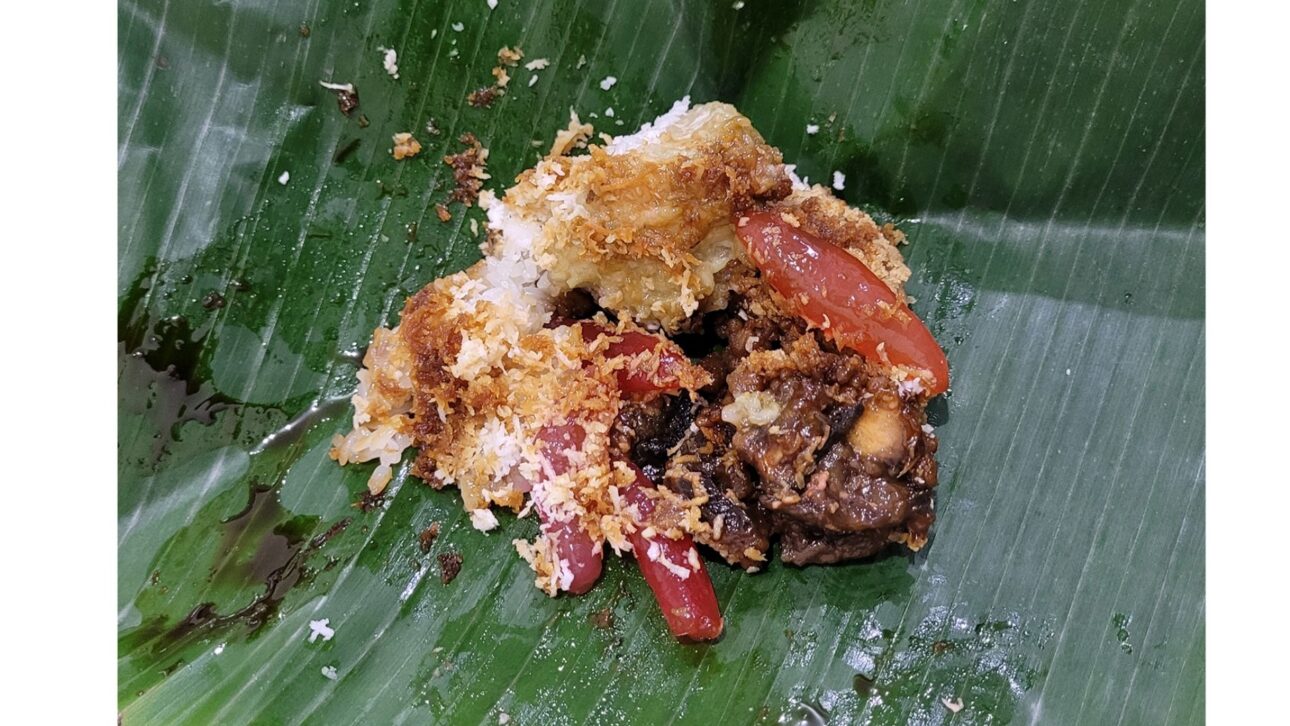
Let’s start with the dish, which is the star. Lupis is made of cooked and pressed glutinous rice, then covered with fresh grated coconut and drizzled with a thick palm sugar syrup, the gula merah.
-
8-Year-Old Discovers 1,700-Year-Old Roman Statuette Fragment Potentially Depicting Jupiter During Routine Outing

-
Brazilian Engineer Revives Ancient Tool for Focus, Creates Supera Network with Over 100,000 Students and $37 Million Revenue

-
Father Turns Simple Idea into Digital Empire, Managing Contracts Worth Over $80 Million Annually

-
12-Year-Old Discovers 1,500-Year-Old Rare Gemstone in Biblical Village Linked to Jesus’ Ministry, Unveiling Ancient Galilean Wealth and Trade



The result is a sweet with a firm and sticky texture, with that balance between the slight saltiness of the coconut and the dark caramel of the palm sugar.
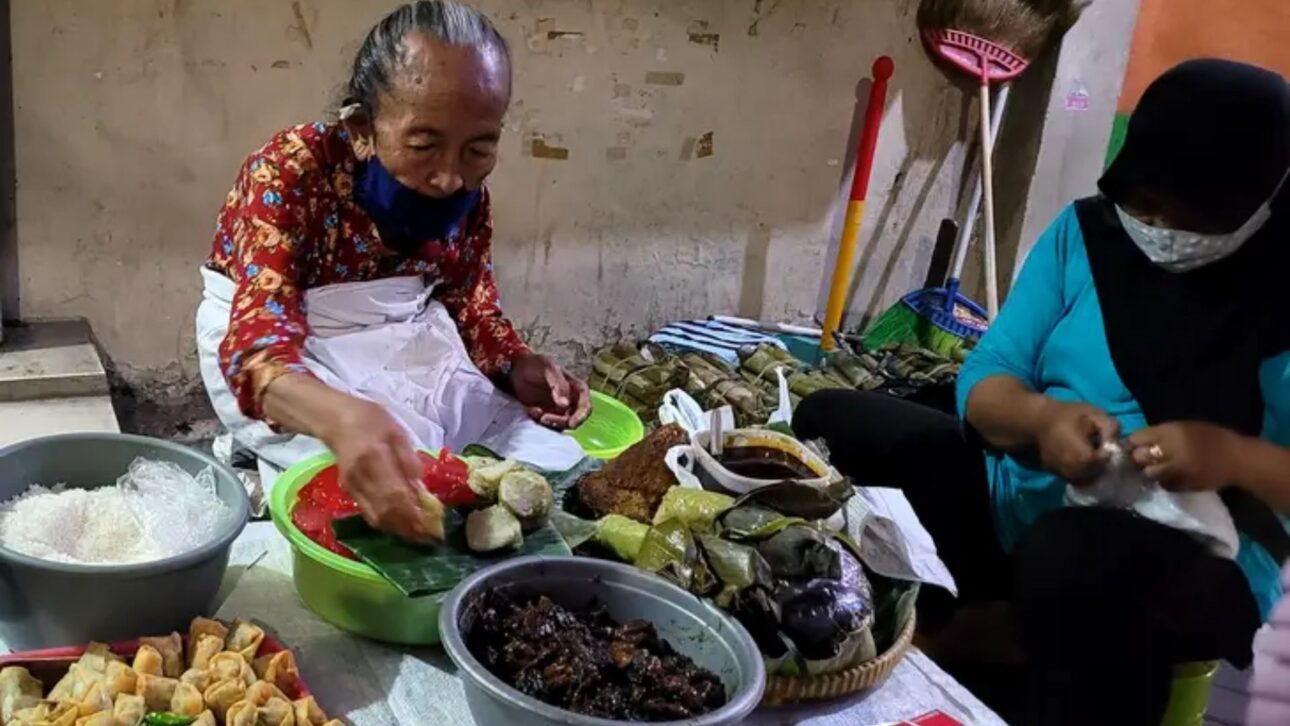
What becomes an attraction is the way it is served. Instead of slicing with a knife, the vendor cuts the block of lupis with a stretched thread, which passes through the mass with a single clean pull.
It is a quick, almost hypnotic gesture, which is part of the identity of this street food and yields the best videos for those visiting the stall.
Lupis does not come alone on the counter. It is usually served along with other treats from the so-called jajan pasar, the traditional market snacks of Indonesia, such as gatot, tiwul, and cenil.
All prepared in an artisanal way, on a wood stove and without preservatives, the way it was done decades ago, which gives the sweet a taste that many people associate with childhood.
The fame that came from Netflix
The turning point had a date and address. In 2019, Mbah Satinem’s stall was featured in the Netflix series Street Food: Asia, in an episode dedicated to Indonesian street food.
In the footage, the lupis is prominently displayed, covered with coconut and dark syrup, and the show introduced the stall to millions of viewers worldwide.
The effect was immediate. What was a beloved spot for Yogyakarta residents became a destination for foreign tourists, who began to include the stall in their itinerary just to try the sweet they saw on screen.
Netflix did for local street food what no advertisement could: it turned a sidewalk treat into an icon recognized outside the country.
This is a pattern that repeats worldwide. When a platform like Netflix puts a simple dish in the spotlight, the queue grows, the name spreads, and the tradition gains a new lease on life.
In the case of lupis, the international exposure helped keep an old recipe alive that, without this push, might have remained limited to those who already knew it.
Opens at 5:30 AM and disappears before 9 AM
The scarcity is part of the charm. The stall opens around 5:30 in the morning and, on most days, sells out before 9 AM, sometimes even earlier.
Those who arrive late risk finding an empty counter, which is why guides recommend showing up early to avoid disappointment.
The amount prepared is intentionally limited. According to reports, Mbah Satinem makes 6 to 10 kilograms of lupis per day, a small volume compared to the demand that fame has brought.
This balance between high demand and artisanal production explains why the street food disappears from the counter so quickly.
For the customer, the race is worth it. A portion of lupis and other treats is available at an affordable price, around 10,000 rupiahs, and larger packages, used in celebrations, cost more.
The ritual of waking up early, facing the demand, and finally tasting the sweet becomes part of the experience, almost as delightful as the dish itself.
A Legendary Stall in Yogyakarta
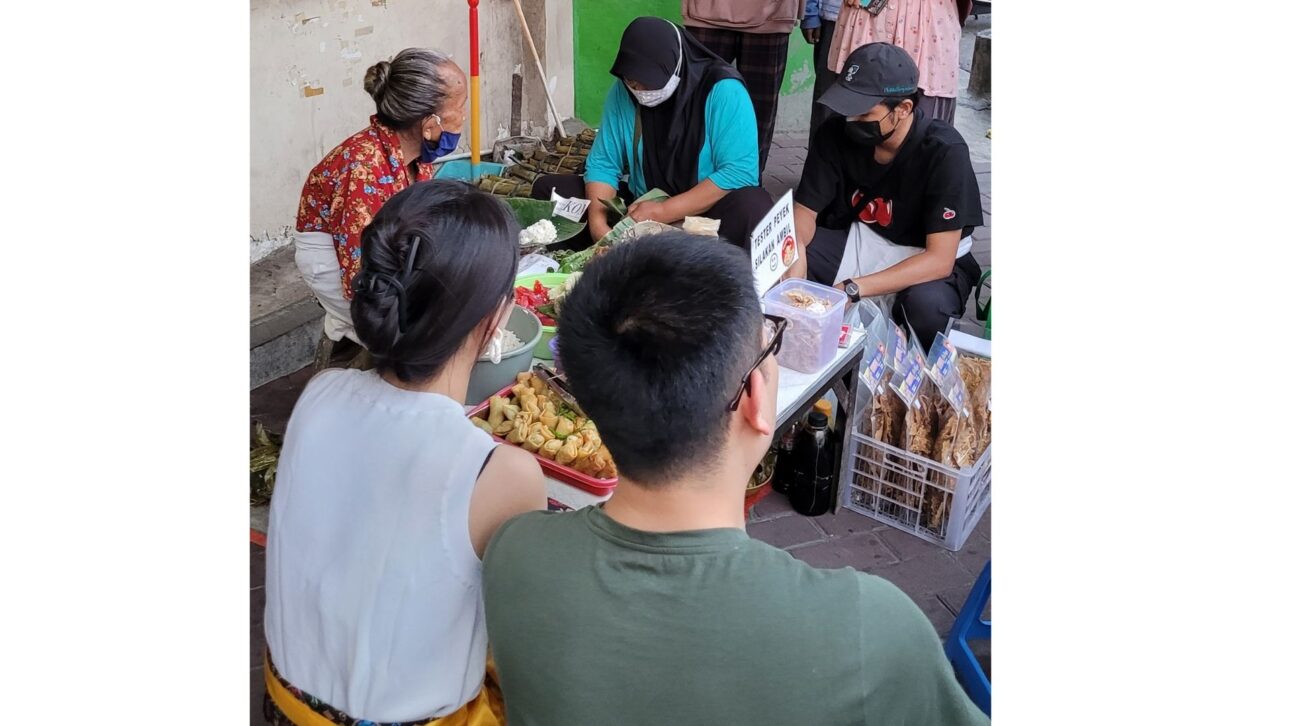
The spot has a long history. The stall has been operating since 1963, in the same corner of the city, near the intersection of Diponegoro and Bumijo streets, just a few meters from the Tugu Yogyakarta landmark. More than six decades in the same place have turned the stall into a local institution, one that spans generations of customers.
In front of the counter is Mbah Satinem, now over 80 years old, who has become the recognizable face of this piece of Indonesian street cuisine.
The affectionate nickname and constant presence have helped the stall become a reference, and many visitors make a point of taking a photo next to the vendor who appears in the Netflix series.
More than a person, the stall represents a chapter of Yogyakarta’s gastronomic culture.
Her lupis is mentioned in guides, blogs, and lists of must-try foods in the city, and the longevity of the business is proof that flavor and tradition build a loyal clientele that keeps coming back.
Why street food enchants the world
The case of lupis explains a larger phenomenon. Street food has become one of the most authentic ways to get to know a place, and series like the one on Netflix have captured this.
A cheap dish, made on the sidewalk with a family recipe, says a lot about the culture of a people, sometimes more than a fancy restaurant.
The secret lies in authenticity. Mbah Satinem’s lupis enchants because it is exactly what it promises: simple ingredients, traditional technique, wood-fired stove, and no industrial shortcuts.
In a world of standardized food, this type of street food offers something rare, a flavor that carries history and place.
In Brazil, the logic is the same. From the Bahian acarajé to the northeastern tapioca, passing by the fair pastel, our street food is also cultural heritage and becomes a tourist attraction.
The craze around lupis in Yogyakarta shows that, in any corner of the world, a good sidewalk treat has the power to gather a line and tell a story.
And you, would you face the line for this sweet?
The story of Mbah Satinem’s lupis proves that simple street food can become a worldwide phenomenon, with the help of a curious technique, the thread that cuts the sweet, and a global showcase like Netflix. So much so that the Yogyakarta stall sells out everything before 9 a.m.
And you, would you wake up at dawn to face the line and try a sweet that disappears before 9 AM? Tell us here in the comments which Brazilian street food you think deserves to appear in a Netflix series and become a worldwide craze.