Portuguese
  Spanish


Crisis in the Automotive Industry: Chip Shortage Caused by Dispute Between the Netherlands and China Threatens Production and Could Halt Factories in Brazil.
The global automotive industry is facing a serious threat again: the lack of chips is expected to halt factories in the coming days.
The warning came after a dispute between the Netherlands and China over Nexperia, a technology giant. Thus, automakers are racing to avoid delays, while governments are mobilizing to prevent a new global crisis in the automotive market.
The European Automobile Manufacturers Association (ACEA) states that the situation is urgent. “There are only a few days left,” said Sigrid de Vries, calling for immediate action. Therefore, the sector fears rapid effects, similar to those experienced during the pandemic.
-
They exchanged the idea of a large house for a 35 m² warehouse, spent US$ 12,000 on the structure, and created a tiny house in Colorado with space to live and work.

-
While modern cities rely on pumps and electricity, in Iran, ancient tunnels carried water through the desert using only slope and gravity.
-
Instead of sending families far from the city, a project in Chile intentionally created incomplete houses on expensive urban land and left technical space for each to grow.
-
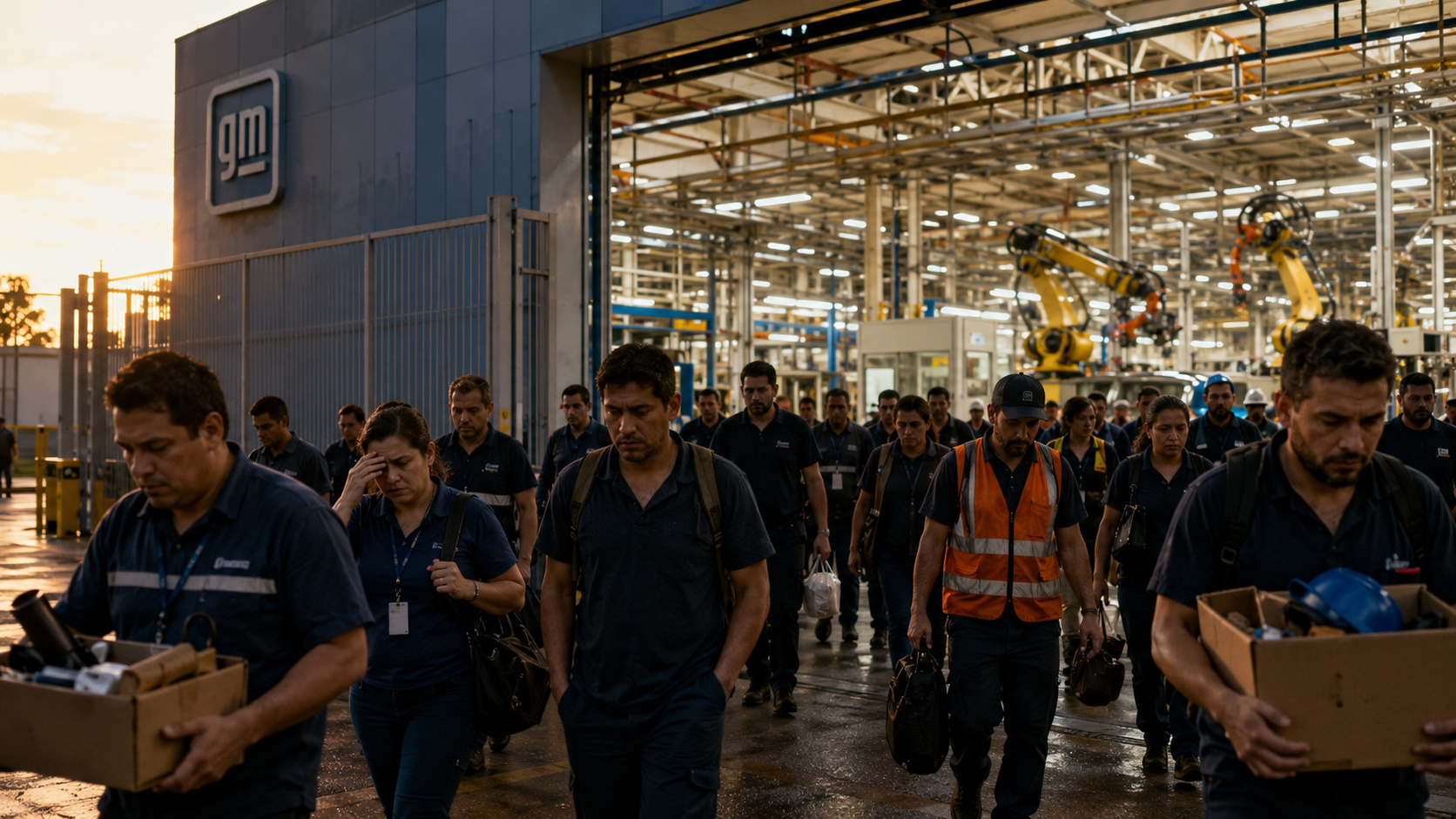
General Motors Replaces Over a Thousand Workers with 50 Cobots at Electric Vehicle Plant, UAW Union Criticizes Move Amid Industry’s Automation Push


Technological Conflict Rekindles Global Tension
Unlike the previous crisis, this time the issue is not in production, but in geopolitics. In September, the Dutch government took control of Nexperia, citing national security risks. In response, China blocked exports of semiconductors produced in its territory.
Thus, the blockade immediately affected the automotive industry supply chain, as chips are essential for sensors, electronic modules, and control systems. Additionally, the company’s Chinese subsidiary declared administrative independence and has begun selling only to the domestic Chinese market.
Automakers Feel the Impact and Acknowledge Risk of Halt
In Europe, the effect is already visible. Volkswagen, Volvo, and Stellantis report critical stocks. Therefore, they are considering partial halts in the coming weeks. Volkswagen, for example, has chips for only one week.
Meanwhile, Bosch admits it may temporarily suspend operations in Germany. Moreover, beyond Europe, Honda factories in the United States have already reported disruptions. According to experts, if the situation continues, up to 20% of global automotive production could be affected by the end of the year.
In summary: the automotive sector is facing a strategic bottleneck amid a global dispute over technology.
Brazil Works to Prevent Chip Shortage and Protect Jobs
In Brazil, the government is moving quickly. In Brasília, Geraldo Alckmin met with Anfavea, Sindipeças, and worker representatives to pressure for a diplomatic solution with Beijing.
As Uallace Moreira, secretary of MDIC, stated, the risk is real. “If there is no quick solution, national production could stop in two or three weeks,” he warned. Nexperia supplies about 40% of the chips used by the Brazilian automotive sector — a number that, therefore, places production in a sensitive situation.
Furthermore, Moreira highlighted that Alckmin has contacted ambassadors in Brazil and China. “The proposal is to keep the country out of this crisis, of a geopolitical nature, which has absolutely nothing to do with Brazil,” he stated.
The Brazilian strategy is to use chips only internally, ensuring traceability. However, the government admits: there is no plan B.
Technology and Politics Determine the Future of the Automotive Sector
Thus, the crisis shows that the global dependence on semiconductors goes beyond industrial production. Now, political disputes determine who has access to technology — and who stops.
Therefore, while diplomacies try to contain the damage, automakers are preparing. The world watches closely the unfolding of a conflict that could redefine the international automotive market.