Portuguese
  Spanish


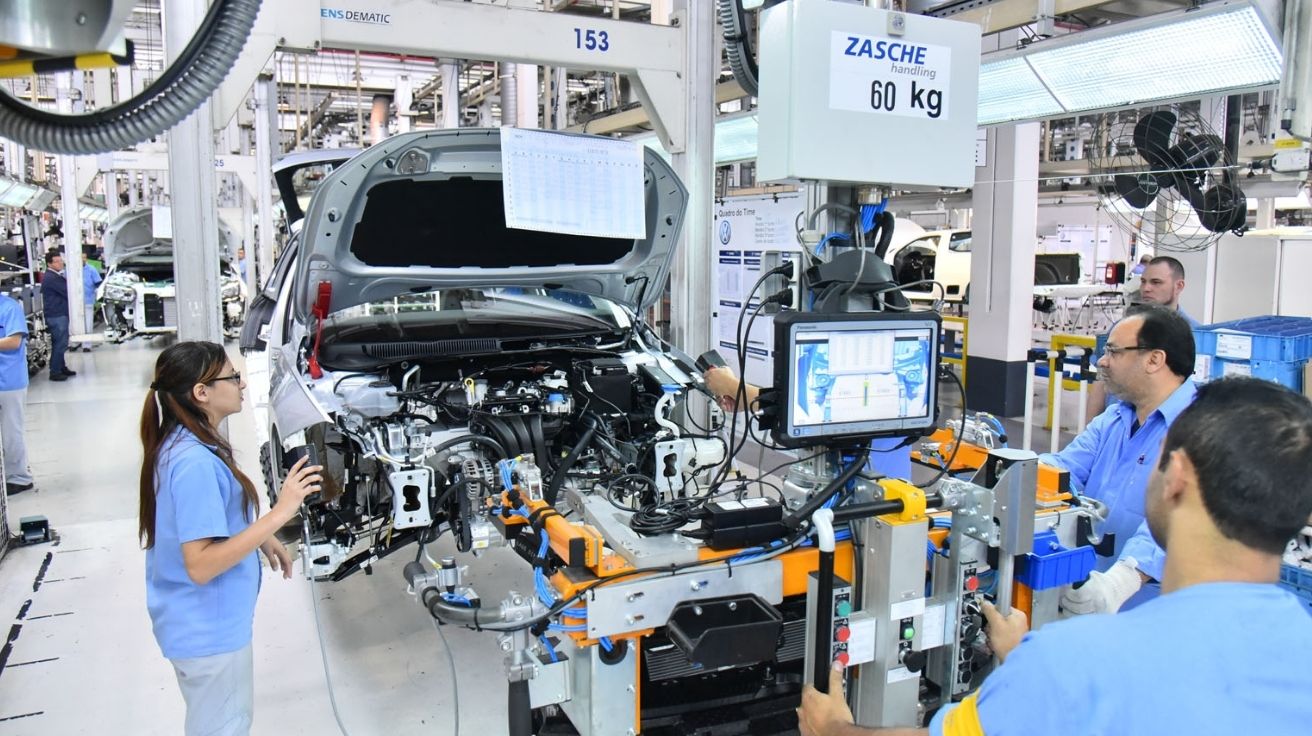

Study Projects Jump in Job Creation If Brazil Accelerates Electric Vehicle Adoption. Opportunities Are Linked to Local Battery Production, Strategic Industrial Policies, and Social Inclusion in the New Era of Sustainable Mobility.
The transition of the automotive industry to electric vehicles could be crucial for Brazil’s economic growth in the coming decades.
A recent study indicates that if the country invests firmly in electrifying its vehicle fleet, it could more than double job creation by 2050 compared to the current scenario, centered on combustion engines.
The research was conducted by the International Council on Clean Transportation (ICCT), in collaboration with the MADE from the University of São Paulo (USP) and the Institute of Economics at the State University of Campinas (IE/Unicamp), with publication in June 2025.
-
Brazilian Startup Turns Coffee Grounds into Plant-Based Leather, Cutting Water Use by Over 50 Times for High-Impact Sustainable Fashion

-
Eco Invest Auction Aims to Unlock $10 Billion in Investments, Focusing on Green Fertilizers, Critical Minerals, Batteries, and AI for Clean Industry in Brazil

-
Half of Brazilians Prefer Lower Taxes with Private Health and Education, While 44% Opt for Higher Taxes for State-Provided Services, Datafolha Survey Reveals

-
Brazil’s Most Expensive Toll Rises to R$ 40.60 on Route from São Paulo to the Coast, Nearly Matching Bus Fare to Santos




The survey analyzes the impacts of the electric vehicle industry in Brazil based on two economic scenarios until 2050: the Base scenario, which maintains the dominance of combustion engines and expands the use of biofuels; and the Electrification scenario, which foresees a significant increase in the production of fully electric vehicles, with an emphasis on nationalizing their batteries.
Economic Scenarios Until 2050 for the Automotive Industry
According to the study, the electrification scenario could increase the number of job positions by 116% compared to the combustion-based model.
This progress would primarily be driven by the strengthening of the local production chain, involving everything from battery and electric motor manufacturing to associated sectors, such as machinery and equipment, transportation, and construction.
Even assuming conservative parameters — such as constant productivity and technology — the data reveals that ambitious goals aimed at the transition to electric vehicles have the potential to transform the Brazilian economy.
In the conventional scenario, job creation is concentrated in saturated segments with lower innovation.
The Importance of National Battery Production
One of the main drivers of job creation is the nationalization of batteries.
Currently, only 21% of their components are produced locally.
In the optimistic scenario analyzed, this proportion could reach 50% by 2050.
If the content of automotive batteries is 100% national, the positive impacts on employment will be even greater.
The electric vehicle industry in Brazil could, therefore, become a strategic vector for green reindustrialization.
Battery manufacturing and electrified components also stimulate investments in clean technology and promote the modernization of Brazil’s industrial infrastructure.
Income Distribution and Social Challenges of Electrification
In addition to job creation, the research highlights a fairer income distribution.
In the electrification scenario, 53% of income comes from wages, compared to 45% in the traditional model.
This occurs because sectors with better pay and lower profit margins gain prominence in the production chain of sustainable vehicles.
However, the study warns about the persistence of gender inequalities.
The majority of new jobs — in both scenarios — will be occupied by men, due to the male predominance in areas such as vehicle manufacturing (89% of the workforce), transportation (83%), and electrical equipment (71%).
The ICCT recommends the adoption of public policies for training and female insertion to balance this scenario.
Electric Mobility and International Competitiveness
Despite the opportunities, Brazil runs the risk of falling behind in the global electric mobility race.
Countries like Chile, Mexico, and Colombia have already established formal targets for the electrification of their fleets.
The lack of clear guidelines in Brazil jeopardizes the international competitiveness of the industry, still dependent on combustion vehicles.
To avoid this delay, the authors suggest coordinated industrial policies, incentives for the export of non-polluting vehicles, and clear environmental goals.
The MOVER Program (Green Mobility and Innovation), established by Law No. 14,902 of 2024, is pointed out as an initial foundation, but insufficient without a broader strategy.
The transition to electric vehicles therefore requires a robust national plan, with support for local production, a focus on innovation, and social inclusion.
In light of this scenario, the question that arises is: will Brazil accelerate its entry into the new era of electric mobility or remain stuck in the past of combustion?