






 Portuguese
  Spanish


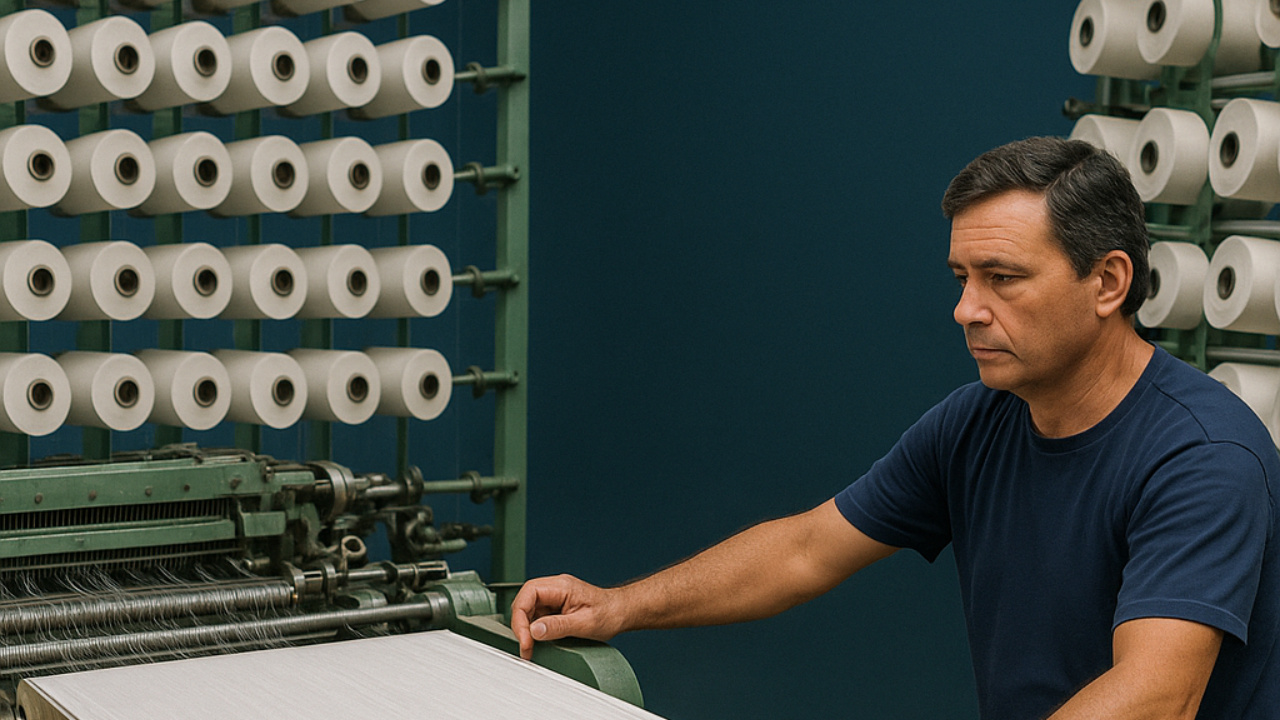

The Brazilian Textile Industry Is Threatened by Chinese Competition and Requires Measures to Tackle Imports and Avoid Losses in the Sector.
The Brazilian textile industry is threatened by Chinese competition, according to industry leaders who claim that Brazil is at a turning point.
Representatives from the Brazilian Textile Industry Association (Abit) argue that the government should take immediate measures to curb the influx of imported products from Asia while also boosting productivity and innovation in the country.
The warning was issued by Ricardo Steinbruch, president of Abit, and Fernando Pimentel, executive director and emeritus president of the institution, at a critical moment: the expectation of signing a free trade agreement between Mercosur and the European Union later this year.
-
Eni Acquires 25% Stake in Chilean Lithium Project, Plans to Invest Up to $225 Million in Eco-Friendly Extraction Method

-
French Brand Transforms 6 Million Brazilian PET Bottles into Sustainable Sneakers for Global Fashion Market
-
Abandoned Factory in Rio’s North Zone Becomes Urban Hazard with Standing Water and Debris

-
The U.S. Navy Conducts Submarine Tests in Idaho Lake to Detect Underwater Noises Hidden by the Ocean



The executives state that the sector becomes more vulnerable as global trade flows quickly reorganize.
Therefore, they emphasize that Brazil needs to act “how and why” now to protect itself from unfair competition and to ensure minimum conditions of competitiveness in the new international scenario.
Asian Pressure Grows and Affects the Entire Textile Chain
Steinbruch and Pimentel reinforce that the Brazilian textile industry is threatened by Chinese competition due to the intensification of imports of international productive surpluses.
According to them, this sudden increase in Asian products has been causing distortions that are already affecting various links in the chain from fibers to retail.
They remind us that the global scenario is marked by volatility. As they wrote:
“International trade is experiencing a period of severe turbulence.
Sudden changes in tariffs, supply disruptions, and non-tariff barriers have become the new normal in a world competing for markets and economic influence.”
Textile Industry Demands Action on Two Fronts
To face the challenge, the leaders advocate for simultaneous government action. They explain that the Brazilian textile industry is threatened by Chinese competition and, therefore, needs an “offensive” agenda and another “defensive” agenda.
In their view:
“The first is the offensive agenda: increasing competitiveness, entering new markets, innovation, and productivity.
The second, equally important, is the defensive agenda: the assertive and legitimate use of trade defense instruments, such as antidumping processes, safeguards, and quotas, to combat unfair competition and restore equitable competitive conditions.”
Thus, the sector requests the government to fully use the defense tools provided in international norms, measures that are already being applied by various developed countries.
Risk of Domino Effect in the Production Chain
One of the most urgent points highlighted by experts is the risk of complete disorganization of the textile chain. Because it is a long and integrated sector, any isolated measure can generate an undesirable collateral effect.
They state that:
“If one stage of production implements a measure, imports migrate to the next link, of higher added value.
Ultimately, this could result in a dramatic scenario, with the closure of industries throughout the entire chain.”
Systemic Vision and Integrated Trade Defense
To avoid this collapse, the authors advocate for a coordinated strategy between the government and the private sector.
They emphasize that the Brazilian textile industry is threatened by Chinese competition but has advantages that can be preserved if there is a consistent industrial policy.
According to the text:
“Responsible trade defense is not protectionism, but rather economic security, competitive fairness, and productive sovereignty.”
In this sense, Brazil has the opportunity to strengthen one of the world’s textile chains from field to final product as long as the rules are balanced.







