Portuguese
  Spanish


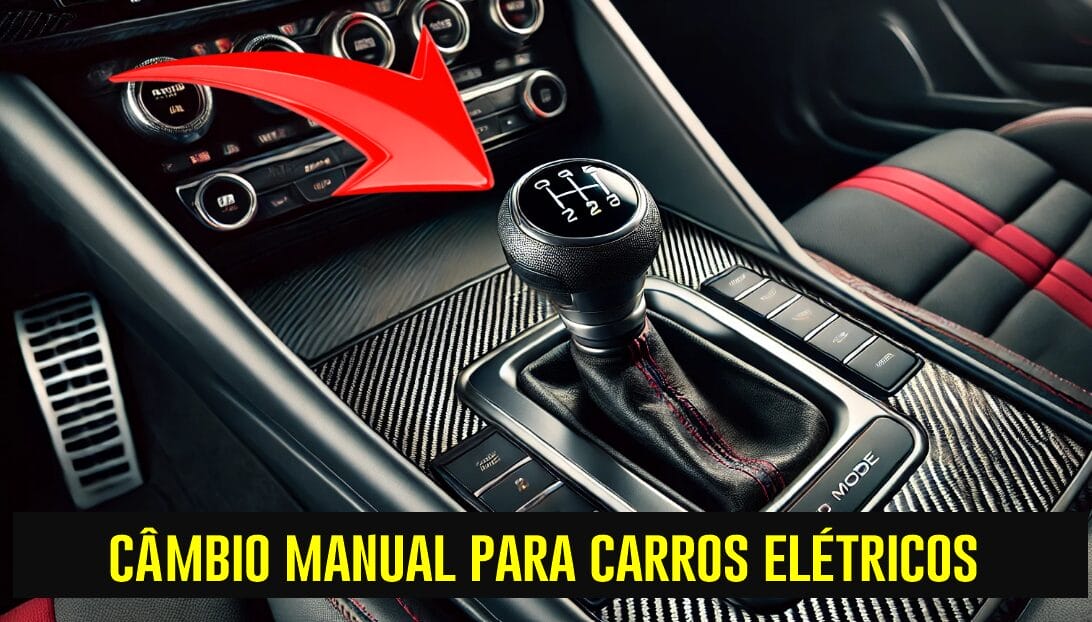

Honda Surprises by Testing a Manual Transmission for Electric Vehicles, Bringing the Traditional Gear-Shifting Experience to the World of Electric Cars. Understand How This Innovation Could Impact the Market!
Honda, known among vehicle enthusiasts for its tradition in high-quality manual transmissions, surprised many by announcing an innovative technology aimed at its future electric cars. At a recent event in Japan, the company presented a concept that combines the best of both worlds: the sustainability of electric cars and the nostalgic driving experience of a manual transmission.
This technology, dubbed “synthetic manual transmission“, features a clutch pedal and simulates gear shifts, reviving a classic experience for those who appreciate this type of driving.
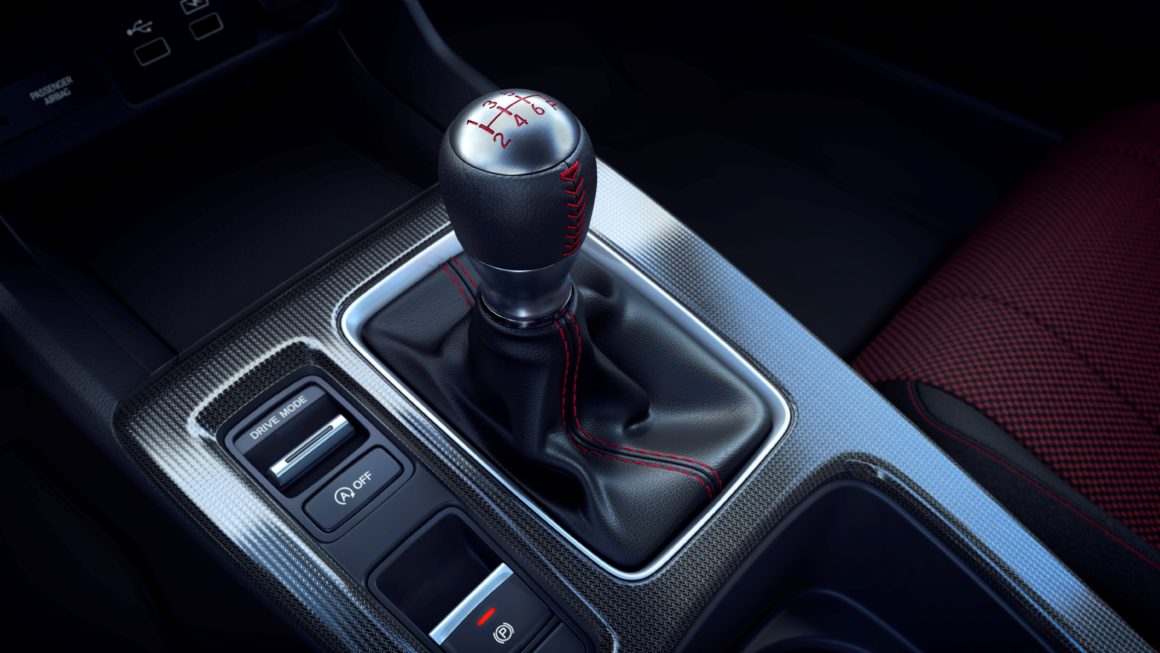
What Is the Synthetic Manual Transmission?
The synthetic manual transmission from Honda is a system developed to simulate the experience of driving a car with a manual gearbox, even in electric vehicles that do not require this type of transmission by nature.
-
Fiat Cronos Precision 2018: Affordable Sedan with Spacious Trunk and Reliable Maintenance

-
Volkswagen to Cut Production by 1 Million Cars by 2030, Reducing Jobs and Platforms, Focusing on More Profitable Models

-
Toyota Launches First 100% Electric Car in Brazil: bZ4X with 343 HP, All-Wheel Drive, 361 km Range, Priced at $419,990 BRL, Limited to 99 Units

-
Chinese SUV Achieves 24.4 km/l, Outperforms Toyota Yaris Cross in Real-World Tests with 224 hp Hybrid System, Offers 51-Liter Tank for Greater Range, and Costs Up to R$ 5,000 Less.


The proposal includes a functional clutch pedal and the simulation of gear shifts, making driving more immersive for the driver.
The engineer responsible for the innovation shared that the system is capable of emulating specific sensations from iconic Honda models, such as the S2000 and the Civic Type R, creating a sense of nostalgia for the brand’s enthusiasts.
How Does the Manual Transmission Work?
Although the technical details are still being developed, Honda has revealed that the system uses engine sounds and artificial gear ratios to simulate the experience of a manual transmission.
The operation of the synthetic gearbox works through a set of electronic sensors and actuators that interpret the driver’s pressure on the clutch pedal and the movement of the gear lever, generating the desired response in the vehicle.
The auditory experience is also enhanced to increase the sense of authenticity, using technology similar to active sound control. In other words, the driver can hear sounds reminiscent of engine roar, despite the typical silence of EVs.
At the event, journalists had the opportunity to experience the concept in a Honda e Digital UX, a prototype programmed to simulate different vehicle profiles, including the sporty NSX and even the sound of the HondaJet, in a unique combination that caters to the tastes of brand fans.
Challenges and Expectations for the Future
The creation of the synthetic manual transmission was not simple. According to Shinji Aoyama, head of electrification at Honda, the technology faced both mechanical and technological barriers. “Artificially, we can do this.
Mechanically, it’s not easy,” Aoyama stated. The challenge lies in the fact that electric vehicles operate differently from internal combustion vehicles, with a more direct and quick response to the accelerator, without the need for a clutch or gear shifts. Creating a system that emulates this experience required a high level of innovation to ensure driver safety and satisfaction.
However, Honda has not yet confirmed if this technology will be commercially available in any production model. The decision to bring this experience to market may depend on consumer interest and the economic feasibility of large-scale implementation.
The brand wants to ensure that this technology, if it reaches the market, offers a convincing and pleasant experience, even in heavy traffic situations where constant clutch use could become tiresome.
The Implications for the EV Market
The introduction of Honda’s synthetic manual transmission raises questions about the future of electric vehicles and their customization capabilities for different driving profiles. The EV audience is generally geared towards innovation and sustainability, but there is still a niche of consumers looking for the driving experience of internal combustion vehicles.
Thus, Honda sees an opportunity to cater to this specific group by offering a technology that recaptures the pleasure of gear shifting, adapted to a more modern environmental context.
This approach from Honda also follows a trend in the automotive sector, where companies have been trying to integrate traditional elements into innovative technologies to provide a more complete driving experience.
Brands like Hyundai, for example, have already tested artificial noise systems in models like the Ioniq 5 N, which simulate the sound of an internal combustion engine. However, Honda takes this idea to another level with a simulated manual transmission, which could open a new market for performance-oriented EVs.
And What Do Consumers Think?
Opinions among consumers are still divided. While some enthusiasts celebrate Honda’s initiative to keep the tradition of manual transmissions alive, others question the need for an artificial transmission in an electric car, whose technology eliminates the need for gear shifts.
However, Honda believes that this innovation could generate a competitive edge, attracting a nostalgic audience that values the unique experience of more interactive and mechanical driving.
For now, Honda’s synthetic manual transmission is just a concept. Whether it will be implemented in a production model is still uncertain. But with the growing changes and adaptations in the EV market, this could be a bold bet for the brand, trying to reconcile modernity with tradition while attracting new audiences for its electric models.