Portuguese
  Spanish


Increase in Bull Semen for Beef Cattle Marks the Resumption of Cattle Genetics and Reinforces the Recovery of the Livestock Market.
Cattle genetics, bull semen, and artificial insemination returned to the center of decisions in the Brazilian livestock market in 2025.
After two years of retraction, the sector showed a consistent recovery, driven mainly by the appreciation of calves, as well as the productive reorganization of farms and the consolidation of technology as a management tool in beef cattle.
In this context, the most recent data shows that the recovery is not temporary, but structural.
-
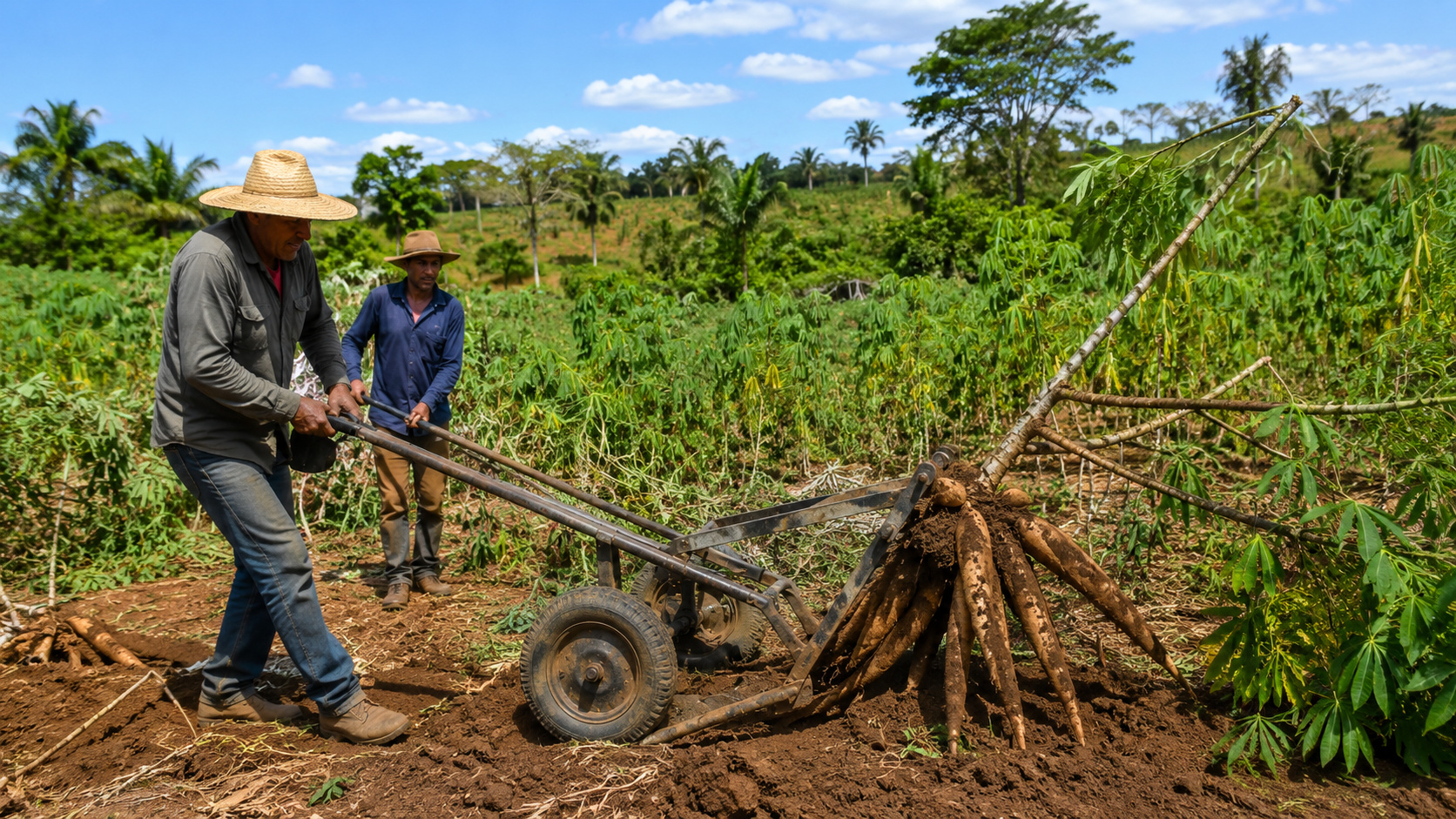
Brazilian Farmers Develop Wheeled Metal Lever to Ease Cassava Harvesting Without Heavy Machinery

-
Study of Brazil’s Tietê River Finds 25 Pesticides in Water, Including Cancer-Linked Substance Near Source
-
Young Entrepreneur Expands from 50 to 1,400 Chickens, Proving “Happy Hens” Can Be a Viable Business
-
Small Farm in Brazil’s Minas Gerais Produces 403 Liters of Milk Daily, Sets Benchmark for Rural Producers


This movement gained confirmation in the numbers from the Brazilian Association of Artificial Insemination.
According to the entity, between January and October, the country sold 15.6 million doses of bull semen.
At the same time, the projection indicates that the annual volume reached about 19 million doses, surpassing the results of the previous year.
This advance occurs precisely at a turning point in the livestock cycle.
With the appreciation of calves, producers resumed investments in cattle genetics and reproductive efficiency, which reinforces the perception of a sustainable recovery of the market.
Bull Semen Drives Recovery in Beef Cattle
Beef cattle led the recovery.
Throughout 2025, sales of bull semen for this segment grew close to 10%.
Additionally, beef breeds such as Angus and Brangus recorded an expansion of over 20%.
This performance reflects a clear shift in the demand profile of livestock farming.
More than seeking genetic gain, producers began to prioritize productive predictability and cost control.
Thus, artificial insemination ceased to be a temporary decision and began to integrate the management strategy of farms.
Although the consolidated numbers will be officially released in February, in practice, growth is already widespread in different regions of the country.
Artificial Insemination Becomes Routine on Farms
According to Fernando Velloso, co-owner of CRIO Central Genética Bovina in Cachoeira do Sul (RS), and director of Asbia, the recovery accompanies the end of the most intense phase of the livestock cycle downturn.
“That period in which insemination had a reduction and then stabilized coincided with the drop in cattle and calf prices.
So now, with the resumption of the high phase, the growth of insemination has resumed,” he explains.
In addition, artificial insemination underwent a process of popularization.
If before, producers viewed the technique only as a tool for genetic improvement, today they use it regularly in reproductive management.
Timed Artificial Insemination Reduces Costs and Increases Reproductive Efficiency
One of the main factors in this transformation was the spread of timed artificial insemination (TAI).
With this technique, producers can synchronize cows’ estrus, reduce individual observation, and optimize management.
“With the popularization of TAI protocols, the producer can achieve a lower cost of pregnancy with artificial insemination than with natural mating,” summarizes Velloso.
In practice, the continuous adoption of the technique raises reproductive efficiency by 5% to 10%.
Furthermore, the total operational costs can drop by 20% to 25%, reinforcing the strategic role of cattle genetics in the economic sustainability of livestock farming.
Calf Prices Reinforce Stimulus for Breeding
The price scenario also supports market optimism.
In Rio Grande do Sul, cattle prices are around R$ 11.50 per kilogram live weight. Meanwhile, calves reach values between R$ 14 and R$ 15 per kilogram.
This premium, close to 20%, tends to persist in the short term.
Moreover, the expectation of a reduction in female culling, after elevated levels in 2025, strengthens the stimulus for breeding and the adoption of reproductive technologies.
“We believe that, in the next three years, calf prices will remain strong. When this happens, the stimulus for breeding increases,” analyzes Velloso.
Production Structure Explains Growth of Collection Centers
Thus, the resumption of cattle genetics also appears in the performance of collection and processing centers.
At Seleon Biotecnologia, in Itatinga (SP), growth reached 17% in 2025, according to CEO Bruno Grubisich.
For him, the advance goes beyond the price cycle.
In the executive’s view, a productive restructuring initiated after the pandemic boosted demand.
“Cattle prices rose sharply, and this led producers to seek genetics and technologies to improve production,” he explains.
In this scenario, the company recorded a 105% increase in the sale of Angus breed semen.
Meanwhile, in dairy cattle, the Holstein breed showed a 55% growth.
Bull Imports Redefine Bull Semen Supply
In recent years, the importation of bulls for semen collection in Brazil has consolidated a new trend.
Currently, Seleon maintains over 100 American bulls, which represent more than 20% of its herd.
“Increasingly, cattle ranchers seek high-end genetics. As a result, a corridor of American genetics has been created in Brazil,” notes Grubisich.
Thus, this model allows for continuous production of bull semen on national soil.
Therefore, the sector reduces logistical bottlenecks and expands supply to the market. On average, each bull produces between 400 and 500 doses per collection, conducted twice a week.
Thus, throughout the year, this volume can result in tens of thousands of doses available to cattle producers.
See more at: After a period of retraction, the cattle genetics market is experiencing a moment of recovery in the country