





 Portuguese
  English
  Spanish
 5 min of reading
  0 comments


Discover How the Installation of Solar Energy at the UPA Central in Araraquara Can Reduce Costs and Promote Sustainability in Healthcare.
The search for sustainable and efficient solutions to reduce public costs while also promoting environmental responsibility has intensified in Brazil in recent decades.
Indeed, a recent example of this concern arises with the suggestion from councilman Cristiano da Silva (PL) to install a solar energy system at the UPA Central in Araraquara, presented through Indication No. 4651/2025.
Thus, the proposal seeks to combine resource savings, modernization of public management, and commitment to sustainability, demonstrating how local policies align with global trends in renewable energy.
-
Solar panels at sea can generate up to 12% more energy than land-based plants, study finds: Researchers from Taiwan discovered that offshore solar panels take advantage of the natural cooling of water to increase electrical efficiency, reduce heat losses, and expand renewable energy production in regions with limited available land space.

-
The era of solar panels attached to roofs is beginning to change with transparent glass that generates energy while keeping the view unobstructed, and perovskite photovoltaic windows already tested in offices in Japan promise to transform entire facades into invisible power plants without blocking light or altering the appearance of buildings.

-
The era of silicon alone in solar energy comes to an end with the arrival of perovskite, a material that captures a broader light spectrum, is applied as a thin film, and, together with silicon, reaches a theoretical limit of 45% efficiency in tandem modules.

-
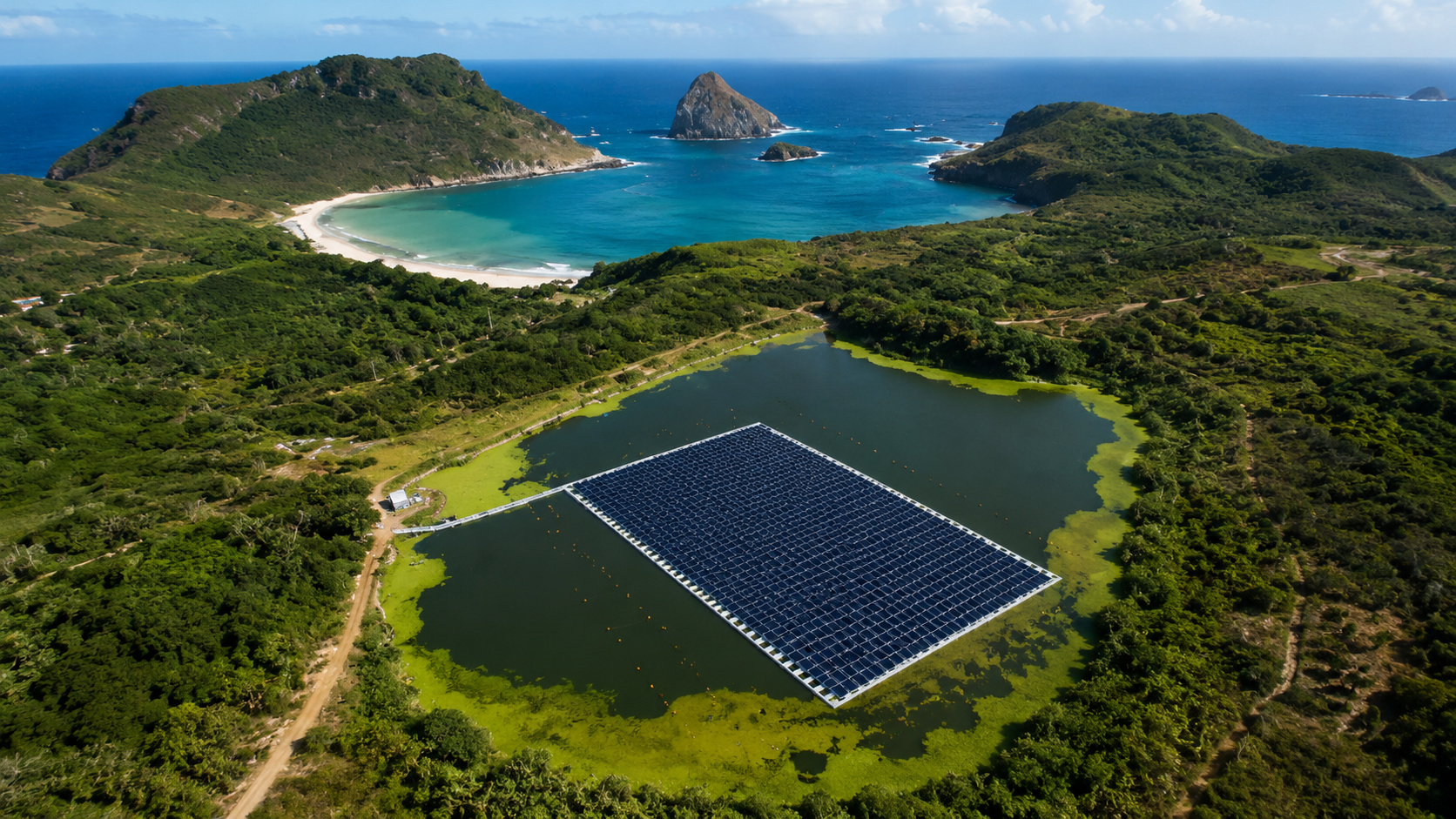
Fernando de Noronha begins unprecedented energy transformation with a R$ 350 million solar plant that promises to replace diesel generation and change the island’s sustainable future by 2027.


Historically, Brazil has always had great potential to generate energy from renewable sources, primarily due to its privileged geographical location.
Since the 2000s, the country has been increasingly investing in solar photovoltaic energy, especially as the technology has evolved and energy efficiency has improved.
Therefore, installing photovoltaic systems in public properties, such as hospitals and urgent care units, represents a natural extension of this movement, reinforcing the idea that innovation and environmental responsibility can go hand in hand.
In the case of the UPA Central in Araraquara, the need for a sustainable solution becomes even more evident.
This is because the urgent care unit operates continuously, 24 hours a day, seven days a week, consuming a large amount of electricity.
Additionally, councilman Cristiano da Silva emphasizes that the implementation of solar energy at the UPA will significantly reduce monthly electricity costs, freeing up resources that the city can direct towards improvements in healthcare, acquisition of medical equipment, and essential supplies.
Thus, this focus reinforces the importance of public policies that promote efficiency and innovation in resource use.
Economic and Environmental Benefits of Solar Energy at the UPA
In addition to the economic aspect, the proposal reinforces environmental responsibility.
Indeed, adopting solar energy systems helps to reduce greenhouse gas emissions and mitigate the environmental impact of public activities.
According to data from the Brazilian Association of Solar Photovoltaic Energy (ABSolar), over 15,000 public properties in Brazil already use solar energy, generating savings of up to 95% on electricity bills.
Thus, this record shows that investing in renewable energy in public institutions is not only feasible but also highly efficient over the long term.
Diverse successful experiences in other municipalities reinforce the argument in favor of solar energy at the UPA.
For example, in São Miguel do Iguaçu (PR), the installation of two solar plants in partnership with Itaipu Binacional provided an estimated monthly savings of R$ 24,000 to the municipality.
Moreover, cities like Piracicaba and Ilhabela (SP) have also adopted photovoltaic systems in public buildings, experiencing significant financial benefits and strengthening the image of a modern and sustainable public administration.
Thus, these examples show that the adoption of solar energy in health units is a well-established and replicable practice in different contexts.
Another relevant benefit is the positive impact on the community and environmental awareness.
That is, by using solar energy at the UPA, the city not only reduces costs but also creates an example of sustainability that inspires businesses, schools, and residences to invest in similar solutions.
Therefore, this educational action contributes to forming a culture of environmental responsibility, encouraging practices of energy conservation and reducing ecological impacts throughout the city.
The historical context of solar energy in Brazil shows that the expansion of photovoltaics results from decades of investment in research, technology, and incentive policies.
Long-Term Strategy and Energy Autonomy
The implementation of solar energy at the UPA represents a long-term strategy.
In addition to immediate savings on electricity bills, investing in photovoltaic systems ensures energy autonomy and protection against future increases in electricity costs.
This is particularly relevant for health units, which require continuous operation and cannot experience interruptions due to power supply failures.
Thus, the proposal from Araraquara fits into a vision of planned and modern public management, prioritizing efficiency, innovation, and sustainability.
Another important point is the educational and symbolic dimension of the initiative.
That is, by adopting solar energy at the UPA, the city of Araraquara demonstrates its commitment to sustainable practices, encouraging the population and other institutions to consider renewable solutions.
In this way, this multiplier effect builds a culture of environmental responsibility, showing that public policies positively influence social and business behavior, creating a virtuous cycle of sustainability.
The proposal by Cristiano da Silva also integrates administrative modernization.
Indeed, photovoltaic systems reduce costs and enable monitoring and managing energy consumption more efficiently.
Moreover, modern solar energy technologies record real-time data, help to identify waste, and adjust operations to optimize resource use.
Therefore, investing in solar energy at the UPA Central combines financial savings, administrative efficiency, and environmental commitment, solidifying an integrated and innovative public management strategy.
Additionally, the adoption of solar energy at the UPA reinforces the importance of sustainable public health.
With energy savings, the city can redirect financial resources towards prevention programs, expanding medical teams, and modernizing hospital equipment.
Thus, the impact goes beyond the electricity bill, contributing to directly improving the quality of care for the population.
Araraquara as a Regional Reference in Energy Sustainability
Regionally, Araraquara has the opportunity to become a reference in energy sustainability.
Consequently, the implementation of solar energy at the UPA puts the municipality in the spotlight, aligning it with national and international trends in the use of clean and renewable energy.
Moreover, this visibility reinforces the image of a government committed to smart solutions, balancing economic development, quality of public services, and environmental preservation.
In this way, successful experiences can serve as a model for other municipalities of similar size, stimulating the adoption of sustainable policies on a regional scale.
Finally, the proposal to install solar energy at the UPA Central highlights how local actions can create lasting and positive impacts.
That is, the combination of cost reduction, operational efficiency, and environmental responsibility demonstrates that investing in renewable energy is strategic and socially relevant.
Thus, the initiative from Araraquara is part of a growing movement in Brazil where municipalities and public institutions recognize that solar energy offers opportunities for innovation, savings, and environmental preservation.
In summary, the suggestion to install solar energy at the UPA Central in Araraquara brings together economic, environmental, and administrative benefits.
Therefore, by reducing electricity costs, freeing up resources for health improvements, diminishing environmental impacts, and modernizing management, the proposal shows how public policies can align with global sustainability trends.
Additionally, the experience reinforces the importance of planning strategic long-term actions, making Araraquara a regional example of energy efficiency and environmental responsibility.
Thus, the adoption of solar energy in health units demonstrates that innovation and sustainability are complementary paths capable of generating positive outcomes for public administration and society at large.





Be the first to react!