Portuguese
  Spanish


As the cost per square meter rises and the housing deficit remains in the millions, interest in self-construction grows. The case of a Spanish woman who built four cabins for less than 5,000 euros helps to discuss the limits and potential of low-cost housing built without financing.
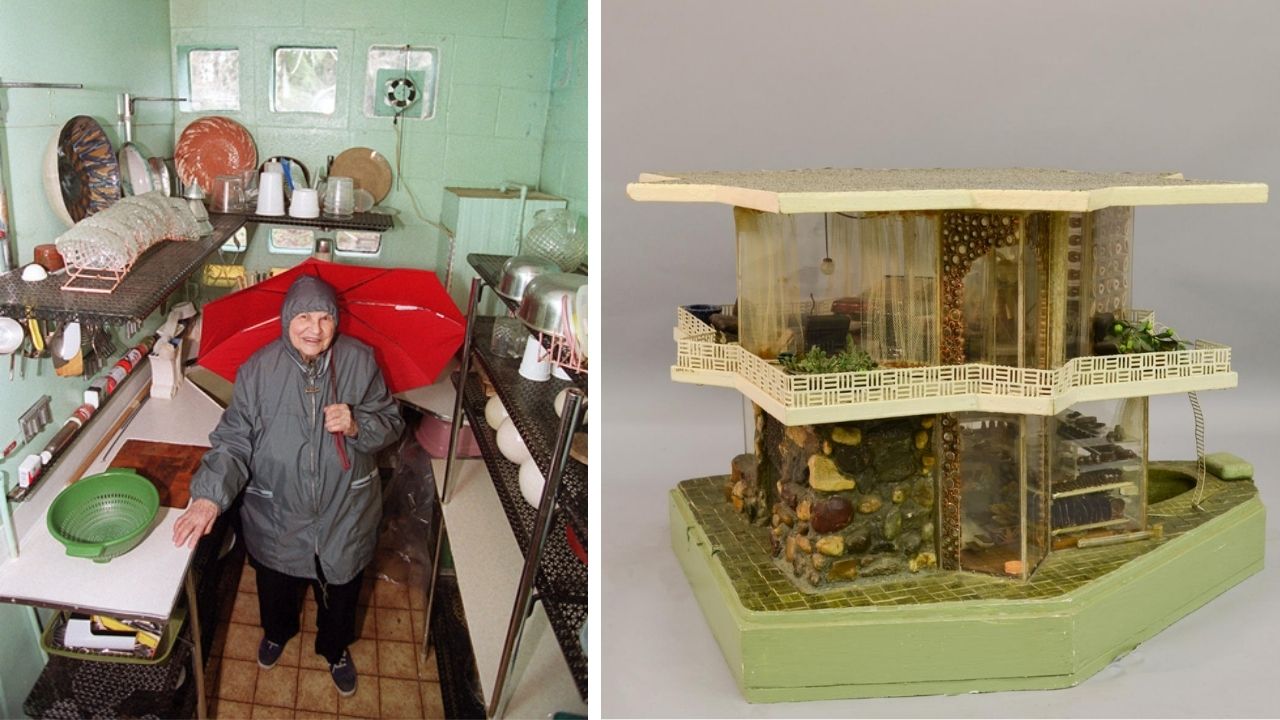
Building one’s own home at a low cost is no longer a niche topic. According to the Spanish outlet COPE, a retiree from the province of Girona, Spain, built four cabins with her own hands for less than 5,000 euros in total, learning the techniques from YouTube videos — an extreme example of low-cost housing that reignites the debate on self-construction and the cost of living.
The case resonates with a well-known scenario in Brazil. According to the Ministry of Cities, the housing deficit reached 5.77 million homes in 2024, and self-construction has historically been the main way to access homeownership in the country. It was through this path — without a construction company and without financing — that the Spanish woman stopped paying rent.
Self-Construction: How Brazil Really Builds
A large portion of Brazilian homes do not come from a developer, but from the hands of the resident themselves. Self-construction is historically the main way to access homeownership in the country, while formal mortgage credit, such as the housing financing offered by banks, reaches only a fraction of families. It is in this gap that low-cost housing, built gradually and without loans, establishes itself as a strategy.
-
Engineers covered a nuclear project in India with a 75-meter structure, produced 510 tons of ice per day, and poured 7,250 cubic meters of concrete without interruption to create the foundation for the new Kaiga reactors amidst monsoon rains in the Western Ghats.

-
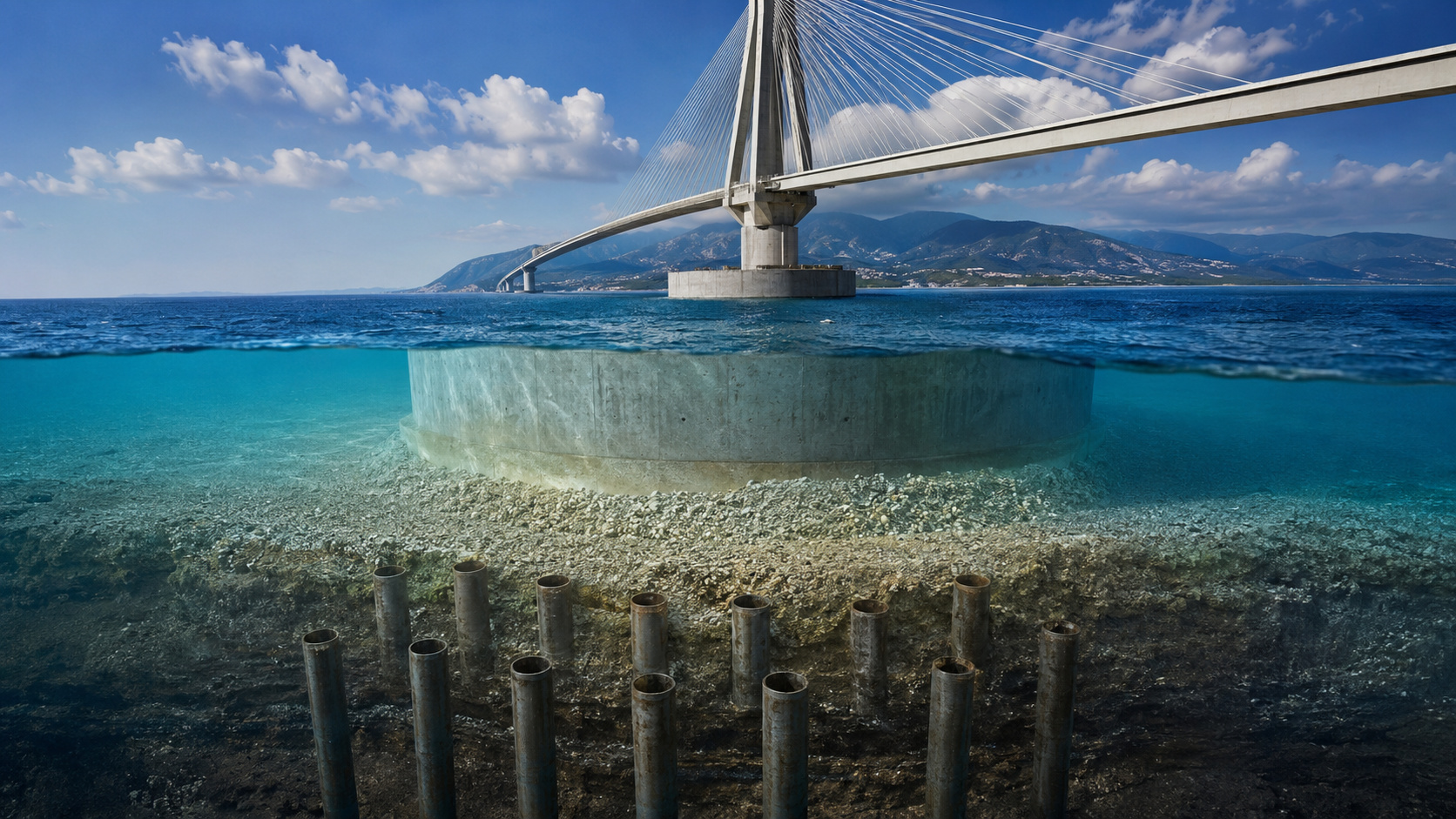
Without finding rock up to 100 meters deep, engineers reinforced the seabed with steel tubes and supported an entire bridge on giant concrete bases.

-
Couple bought a 1920 farmhouse for $12,000, transported the entire structure 6 km to an abandoned lot in Iowa, and spent about $80,000 to transform the century-old property into a permanent home, preserving original wood, history, and old charm.
-
The largest stadium in the world is being built in Morocco with a capacity for 115,000 spectators and a cost of $500 million, while the country invests $6 billion in projects to try to host the 2030 World Cup final and establish itself as an African tourism powerhouse.



The case of the Spanish woman is the radical version of this logic. Without prior experience, she began building around the age of 68 and improved her technique with each new cabin — four in total, each serving as a learning experience for the next. The knowledge, once restricted to bricklayers and engineers, came from free videos on the internet.
How Much It Costs to Build a Home — and Why the Bill is Frightening
To gauge the achievement, it’s worth looking at the numbers of formal construction. According to SINAPI, calculated by IBGE, the national average construction cost reached about R$ 1,925 per square meter at the beginning of 2026, including materials and labor, with significant variations between states. Building a small house within this standard therefore costs tens of thousands of reais.
This is where the case impresses from the economic angle. The less than 5,000 euros spent on the four cabins amount to about R$ 29,000 — an amount that, in the Brazilian formal square meter, would barely cover a construction of 15 square meters. The math only works because self-construction cuts three of the biggest costs of a project: hired labor, financing interest, and the standard of finishing.
Bioconstruction and simple materials: engineering outside the catalog
Reducing costs to this point requires method. Low-budget projects often resort to bioconstruction and local and reused materials — wood, stone, earth — that replace more expensive industrialized inputs. The cabin ceases to be synonymous with improvisation and becomes a technical choice for cost efficiency.
The democratization of knowledge is the other key piece. Video tutorials detail foundations, wooden structures, and seals, allowing laypeople to execute stages previously outsourced. It was this combination — accessible technique and cheap material — that transformed self-construction into a movement observed worldwide, from the interior of Spain to Brazilian outskirts.
Deficit and inadequacy: the backdrop of “do it yourself”
The data explains why so many people roll up their sleeves. Besides the deficit of 5.77 million homes, the Ministry of Cities, based on the João Pinheiro Foundation, points out that 27.6 million urban households have some type of inadequacy — indicating that the problem is not just the lack of houses, but also the quality of what already exists.
On the domestic front, the math is straightforward. By eliminating rent, the Spaniard — who lives on a pension of about 800 euros — began directing almost all income to essential expenses. Exchanging a permanent monthly installment for a one-time investment is, in the end, a family budget decision, the same calculation that drives millions of self-builders.
What self-construction solves — and where it hits a snag
The model has potential, but it’s not a magic solution. Building on your own can drastically reduce costs, but it hits snags in structural safety, land regularization, and construction quality — points where the absence of a professional takes its toll in the medium term. Low cost cannot become synonymous with risk.
Even so, the economic message is hard to ignore. In a country where self-construction supports most of the housing stock, cases like the Spaniard’s function less as a curiosity and more as a market snapshot: there is pent-up demand for affordable housing, and the low-cost house — well executed — remains one of the most concrete responses to this problem.
And you, would you build your own house to escape rent?
Expensive square meter, endless rent, and a deficit of almost 6 million homes: the case of cabins for less than 5,000 euros touches a nerve for many people. Would you consider self-building to reduce housing costs, or do you think the risk of a project without a professional isn’t worth it? And how much do you think you can save by building a low-cost house? Leave your opinion in the comments.