Portuguese
  Spanish


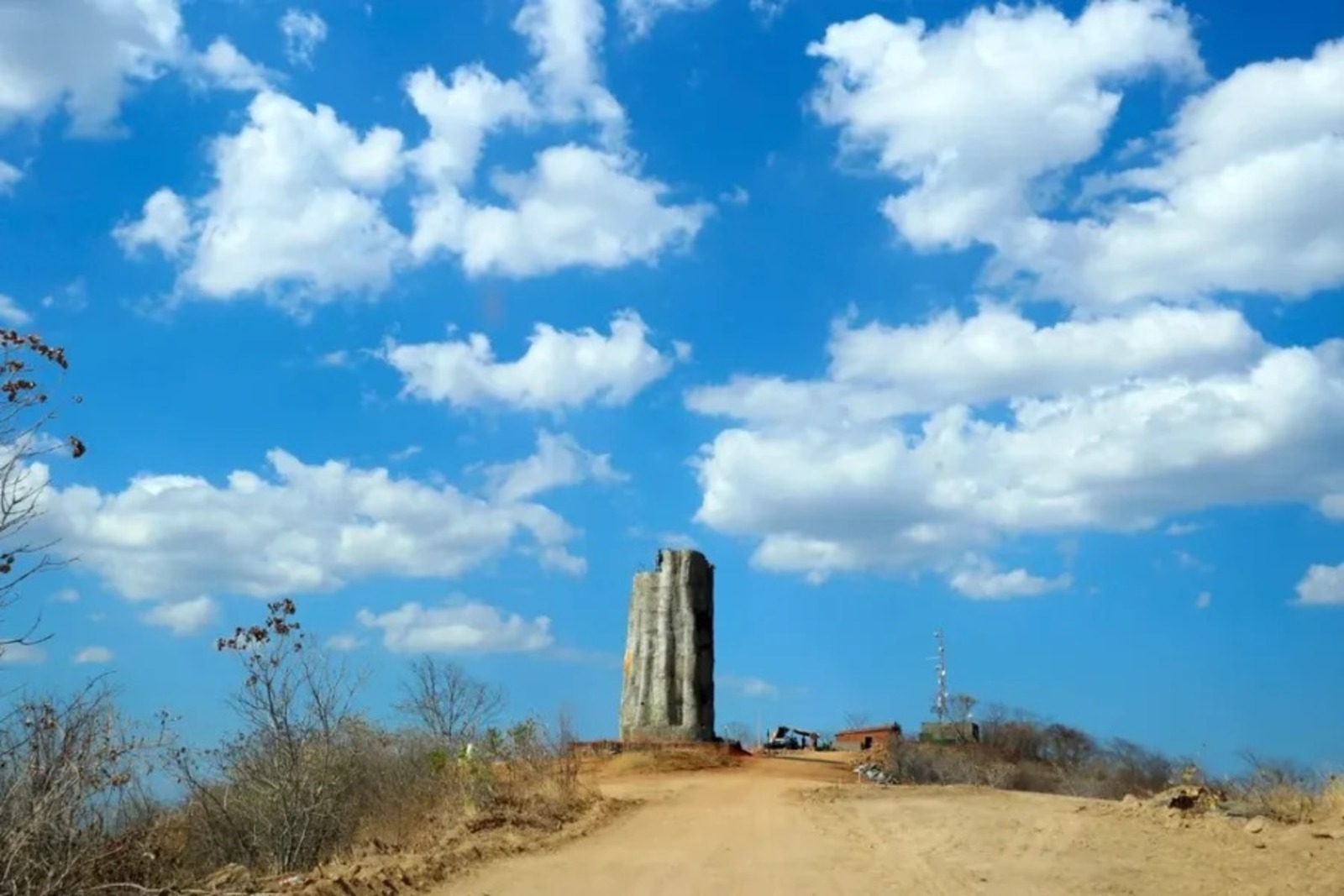


The Body of the Statue Has Occupied the Top of the Serrote Hill Since 1984, While the Separate Head Remains Exposed in a Nearby House, Attracting Curious Onlookers and Devotees
At the top of the Serrote Hill in Caridade, in the interior of Ceará, an unfinished statue of Santo Antônio defies time and the curiosity of visitors. Since the 1980s, the image has remained divided: the body was erected at the top of the hill, while the head rests about 3 kilometers away, in the backyard of a residence. This unusual scene has transformed the monument into a symbol of faith, neglect, and popular resistance.
The story began in 1984, when then-mayor Raul Linhares envisioned building the giant Santo Antônio to boost religious tourism in the city.
However, two years later, the project was halted due to a lack of funding. Thus, the body of the statue was abandoned in the landscape, and the separated head ended up integrated into the wall of a house, where it remains today.
-
Roraima Security Secretary Poses as Doctor to Expose Technician Charging $600 for Free Public Health MRI in Brazil; Technician Confessed

-
To Protect Its Beaches, the Netherlands Deposits 21.5 Million Cubic Meters of Sand into the Ocean, Letting Nature Reinforce Dunes and Shoreline

-
Swedish Mall Focuses on Sustainability by Repairing and Reselling Discarded Items
-
Mother Leaves Stable Job to Support Gamer Son’s Dream, Sees Channel Surpass 10 Million Subscribers, Now Helps Run a Million-Dollar Online Empire: The Story of Angie Baker




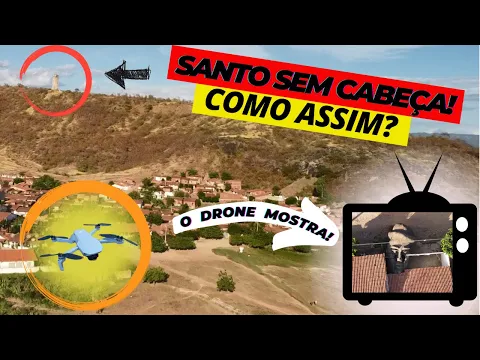

The “Headless Saint” That Became a Legend
The incomplete monument became part of the popular imagination and, over time, gained regional fame. Locals and visitors nicknamed it the “Headless Saint.”
The contrast between the faith of the devotees and the broken image attracted onlookers, photographers, researchers, and artists.
The figure became a symbol of an unfulfilled promise, but also of persistence and devotion.
The statue became the subject of books, reports, and documentaries. Its story blends religiosity, politics, and local culture, showing how the unfinished can also become an icon.
Attempts to Resume and New Project
In 2021, the Caridade City Hall and the Government of Ceará announced the resumption of the dream interrupted nearly four decades ago.
The plan proposed to erect a new religious complex dedicated to Santo Antônio, featuring a fully completed 36-meter high statue.
The project also included a viewpoint, chapel, museum, shops, staircases, adapted access, and urbanization of the surroundings.
The initial forecast was to deliver the sanctuary by 2022, but construction stopped again in mid-2024.
According to local information, the current progress is between 40% and 50%. In the construction site, it is possible to see only molds of the new head covered with tarpaulin, signaling that the dream is still on paper.
From Literature to Film: The Saint That Inspired Art
The story of the Headless Saint has exceeded the limits of Caridade and made its way into the pages of literature. Cearense writer Socorro Acioli was inspired by the real case to create the novel The Head of the Saint, released in 2014.
The work tells the story of a young man who takes refuge inside the head of the statue and starts to hear the prayers of the women in the city.
The book has won readers in Brazil and abroad, being translated into English and French. Additionally, the story will be adapted for film, with recordings scheduled after fundraising.
The script will require the construction of a scenic replica of the head, reinforcing the connection between reality and fiction.
Hope and Frustration in Caridade
The residents of the city live between faith and distrust. The local priest, Father Felipe Calisto Martins, claims that the new sanctuary has the potential to put Caridade on the route of religious tourism, especially due to its proximity to Canindé, one of the largest pilgrimage centers in the country.
Meanwhile, the original head remains in a private backyard, surrounded by curious onlookers.
Resident Antônia Cilda, who lives next to the fragment, reports coexisting with the monument with respect and devotion, welcoming visitors who come to register the unusual “Headless Saint.”
A Symbol of Faith and Waiting
The case of Caridade encapsulates decades of promises and interruptions. The statue of Santo Antônio, initiated in 1984 and halted in 1986, remains a symbol of a project interrupted but never forgotten.
Today, the body and head of the Saint remain separated, representing more than an unfinished work: they are the portrait of hope of a community that still awaits to see its patron saint complete at the top of the hill.
As time passes and the new construction remains stalled, Caridade continues “waiting for the head” — an expression that has become part of the local identity.
With information from Portal NE9.