Portuguese
  Spanish


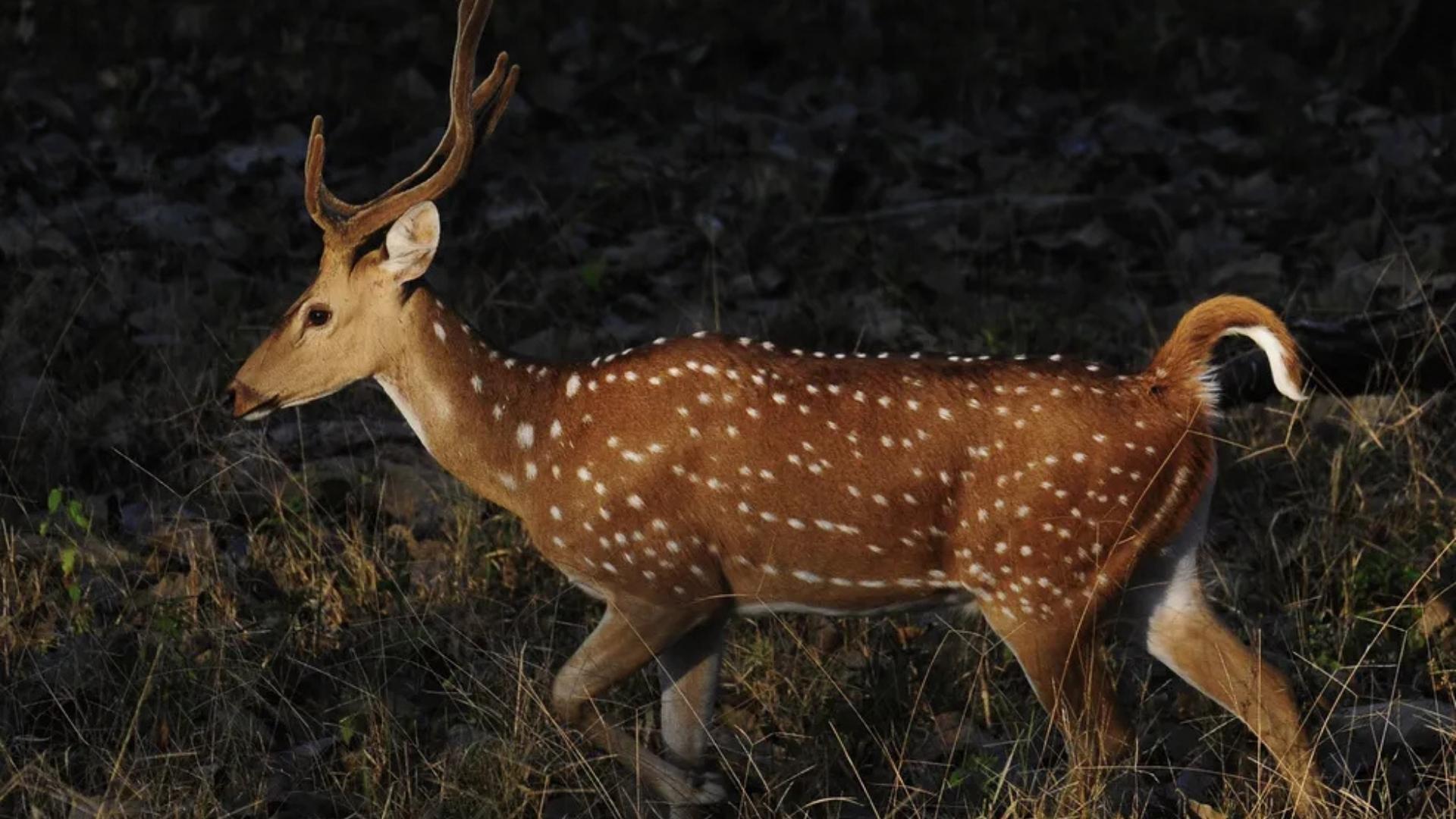


Presence of Asian Deer in Southern Brazil Raises Environmental Alert After Sightings in Urban Areas, Conservation Units, and Highways, with Control Norms Already Published and Gaps in Scientific Data on Population, Ecological Impacts, and Health Risks.
The chital deer, also known as axis deer and identified scientifically as Axis axis, has been recorded in areas of Southern Brazil and has begun to mobilize environmental bodies and researchers due to its status as an exotic species with invasive potential.
The case that drew the most public attention occurred on December 8, 2023, when an animal was rescued after entering the yard of a municipal school in Passo Fundo (RS).
The scene, unusual in an urban environment, heightened concerns about the deer’s expansion beyond natural and rural areas.
-
Magnet Weighing Over 360 Kilograms, Designed for Cardiac Surgery Machine and Valued at $100,000, Retrieves Sawed-Off Shotgun with Scratched Serial Number from Sea During Magnetic Fishing

-
Largest Mechanical Dredger in the Western Hemisphere Removes Nearly 80 Cubic Meters of Mud Per Cycle, Measures 77 Meters, and Operates Day and Night to Prevent Giant Ships from Getting Stuck in the Houston Ship Channel

-
California Opens Floodgates to Restore Wetlands and Create Natural Flood Protection in the Central Valley
-
US Mayor Goes Undercover as Homeless for a Week to Understand Rising Homelessness, Sparking Debate in His City


Although its presence is still described as localized and with sporadic sightings, Rio Grande do Sul has already formalized rules for population control in state conservation units.
The initiative was formalized in SEMA Ordinance No. 109/2022, which establishes norms and procedures for controlling Axis axis in these areas, subject to authorization and registration in a state program, among other requirements.
Asian Origin and Characteristics of the Chital Deer
The chital is native to South Asia and is known for its brown coat with white spots, a feature that makes it easier to identify compared to native deer in Brazil.
In its native environment, the species coexists with predators and ecological pressures that tend to limit population growth.
Outside of Asia, however, the scenario may be different.
When an exotic animal encounters available food, absence of equivalent predators, and favorable landscapes, the chance of expansion increases.


This is the central concern in the South: it is not just about the appearance of an isolated individual, but rather the possibility of forming and growing populations in the wild.
Introduction in South America and Advancement to Brazil
The introduction of chital in South America is associated, in various reports and studies, with the importation for properties and areas aimed at hunting and managing exotic animals in neighboring countries.
The most cited history links the established presence in Argentina and Uruguay to the gradual expansion of the deer to regions near the borders, which makes the possibility of natural dispersal plausible.
In Brazil, the first widely cited scientific record for the far south occurred in the Espinilho State Park, an area of the Pampa biome in the border strip of Rio Grande do Sul.
An article published in the journal Biota Neotropica described the record of Axis axis in that location, pointing to its proximity to areas where the species was already established in neighboring countries.
From there, public reports and records in regional media began to indicate the deer in other areas of Rio Grande do Sul.
Additionally, notifications emerged in nearby states, such as Santa Catarina, where a case gained attention after the animal was found in a municipality in Alto Vale do Itajaí.
Case of the School in Passo Fundo and Urban Expansion
In Passo Fundo, the deer reportedly roamed the streets of the neighborhood before being cornered by dogs and entering the yard of the Municipal School Francisco Luiz Bianchini.
At the location, the animal was surrounded in the playground area until the arrival of the responsible rescue teams.

The deer was removed with technical support and taken for veterinary care, according to local reports published at the time.
This type of occurrence draws attention for two reasons.
First, because the presence in an urban area increases the risk of accidents, animal stress, and conflicts with dogs.
Moreover, a sighting in a city suggests that the movement is no longer limited to very isolated points, which may hinder monitoring and prompt response.
Environmental Impacts of Invasive Exotic Species
An invasive species does not need to be aggressive to cause an impact.
In many cases, the pressure occurs through competition for food and space, alteration of vegetation due to grazing, and indirect effects on ecological chains.
In Southern Brazil, the concern is compounded by the existence of native deer with sensitive populations, especially in grassland environments and mosaics of fields and forests.
Another point noted by experts in biological invasions is the health risk.
Exotic animals can introduce parasites or pathogens, or serve as hosts for already-present agents, creating new transmission routes among wildlife, livestock, and domestic animals.
Nevertheless, there is still no consolidated public synthesis detailing which agents, specifically, would be associated with chital in Brazil.
There is also no widely published official data on the current size of potential wild populations.
Reproduction, Displacement, and Gaps in Scientific Data
In studies conducted outside Brazil, there are records of reproduction throughout the year, often with seasonal peaks.

This pattern is cited as a biological advantage in environments where food is not restricted by seasons.
In practice, this may favor population growth when suitable environmental conditions are present.
However, extrapolating numbers or rates to the Brazilian context requires caution.
There is still no widely consolidated public sources that provide a picture with official counts, growth trends, and accurately occupied areas on a regional scale.
Without this diagnosis, management actions risk being reactive, based solely on sightings and sparse records.
Control Rules in Rio Grande do Sul
Rio Grande do Sul has adopted a specific regulatory framework for Axis axis in state conservation units.
The ordinance establishes that population control depends on authorization and provides requirements such as registration, procedures, and rules for action.
The focus is on preventing the deer’s advance within protected areas and reducing risks to native species.
The existence of a framework, in itself, does not resolve execution.
Effective measures usually require monitoring, prioritization of areas, recording protocols, and integration among environmental bodies, property owners, and research institutions.
When this type of coordination fails, the interval between detection and response may allow the species to spread.

NASA and What Can Be Confirmed
Content circulates on social media and videos linking the story of chital in Brazil to “NASA scientists.”
So far, however, there has been no reliable, traceable public record of any direct involvement of the US space agency with this specific topic in the country.
There is also no confirmation of an official alert attributed to its researchers regarding the species.
What is concrete is the local and regional environmental concern expressed by state bodies.
In addition, there are scientific publications documenting the species’ record and reports of recent occurrences, such as the one in Passo Fundo and the accounts in Santa Catarina.
With sporadic records accumulating and the debate on management gaining traction, the question becomes how to transform isolated sightings into consistent data to guide public policies and reduce risks to native fauna.
Will the South be able to act quickly enough to prevent chital deer from establishing itself as yet another invasive species that is difficult to control?