Portuguese
  Spanish


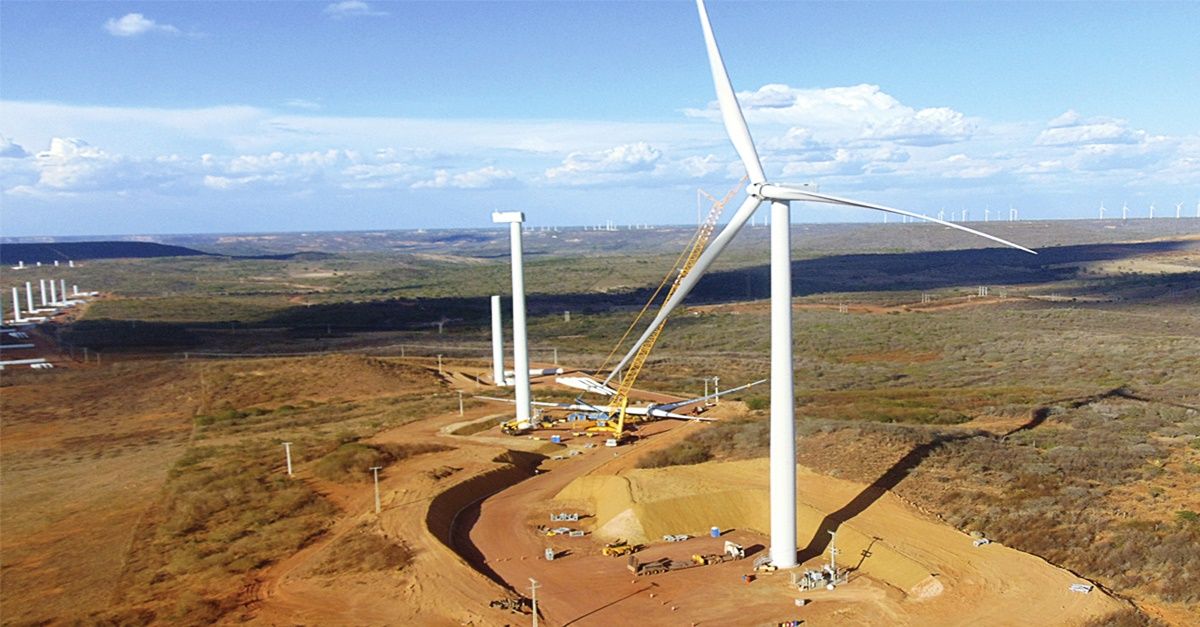

Billion-Dollar Venture in Bahia Expected to Be Completed in 2023 and Should Double the Installed Renewable Energy Capacity of the Norwegian Company in Brazil
The Norwegian company Statkraft will begin construction of the Ventos de Santa Eugênia wind farm in Bahia in January 2021. The billion-dollar project will have an installed renewable energy capacity of 519 MW. Americana Johnson & Johnson inaugurates its first solar power plant in SP in South America
Read Also
- Solar Power Reaches 3.6 GW in Brazil, According to ABSOLAR
- EDP, the Largest Portuguese Investor in Brazil, Will Triple Its Resources in Solar Energy in the Country
- Itaipu Hydroelectric Power Plant, the Largest Generator of Clean and Renewable Energy on the Planet, Breaks Historic Productivity Record
After the construction of the project in Bahia, the company will more than double its installed capacity in Brazil, reaching 967 MW. The wind farm, which will receive investments of approximately R$ 2.5 billion, is scheduled to be completed in 2023. The first wind turbines are expected to start operating in 2022.
Serra de Mangabeira and Ventos de Santa Eugênia represent the first phase of the Ibipeba wind farm implementation with approximately 1.1 GW. The projects for the wind complex were acquired in 2019 with approximately 660 MW. Assisted by the technological evolution of wind turbines, incorporation of new areas, and layout adjustments, Statkraft expanded the projected capacity of the complex by approximately 450 MW.
-
World’s Largest Engie Solar Plant in Brazil Highlights Billion-Dollar Energy Waste Issue: Company Considers Batteries and Bitcoin Mining to Avoid Wasting Production

-
Air Products Cancels $2.9 Billion Clean Hydrogen Megaproject in Louisiana, Shuts Down Arizona Unit, Highlighting High Costs of U.S. Energy Transition
-
Over 60 Tractors Take to the Streets in Lopera as Solar Parks Compete with Olive Groves, Affecting 13,000 to 100,000 Trees According to Conflicting Reports

-
Green Hydrogen Projects in Northeastern Brazil Stalled for 18 Months Awaiting Government Decree, Delaying Billions in Investments


The first phase of implementation will consist of 14 wind farms where 91 turbines of 5.7 MW will be installed, produced by Nordex at its factory in the state of Bahia. The Ibipeba complex is located near Statkraft’s wind farms in Bahia: Macaúbas, Novo Horizonte, and Seabra, which together have 95 MW.
Statkraft Also Aims for Solar Energy in Brazil
The Norwegian energy group Statkraft intends to continue expanding its business in Brazil, and the next step in this regard should involve some investment in solar generation, the company’s main executive in the country, Fernando De Lapuerta, told Reuters yesterday (09/28).
The indication of appetite for solar assets occurs alongside the company’s announcement of a billion-dollar investment for the construction of a wind complex in Bahia.
“We want to start advancing in solar technology in Brazil as well, and we have projects for that,” he added, mentioning that the company has a photovoltaic project in Bahia with a potential capacity of 500 megawatts.
“Today the company has a main focus on the development, construction, and operation of wind and solar energy in Brazil. We continue to participate in M&A (mergers and acquisitions), but with a stronger focus, the growth engine, on ‘greenfield’ projects,” Lapuerta pointed out, referring to projects built from scratch.
To bring its projects to fruition, the Norwegian company will be on the lookout for all opportunities – from government auctions for new energy projects to negotiating future production contracts in the free electricity market, where large consumers like industries buy their supply directly from generators and traders.