Portuguese
  Spanish


Taxes In Brazil Increase The Final Price Of Products And Also Generate New Taxes On Already Inflated Values, Such As In The Case Of IPVA.
In Brazil, the weight of taxes on products and services is a topic that constantly outrages consumers.
In many cases, the tax burden is not only hidden in the prices in an invisible way — it distorts the perception of what is actually being paid and affects other derived taxes, such as IPVA.
A practical example helps to understand the seriousness of the situation.
-
A fossil kept for years in a small museum in Montreal concealed 450-million-year-old soft tissue, a discovery that has only happened once before in history.

-
At 14 years old, she worked in a factory in Hong Kong, studied economics abroad, and then entered the Chinese real estate market, which helped change the landscape of Beijing.

-
Engineers spend a decade building a $2.3 million bridge, but the project features a surreal curve, becomes a joke, and ends with seven suspended.

-
7-year-old boy acts without hesitation and saves his 1-year-old brother from drowning in the family pool in Texas: the boy’s courage impressed the sheriff and he may now receive an official police commendation.




Makeup Priced At R$ 200 And The Bill That Does Not Add Up
Imagine buying makeup in Brazil for R$ 200. The receipt states that 50% of this amount is tax.
In other words, R$ 100 would be taxes. This is the most common calculation, but it does not reveal the whole truth.
In practice, the makeup could cost R$ 100 without taxes, and the other R$ 100 represents the amount that the State adds to the product.
Now think of similar makeup sold in the United States for R$ 10. At the checkout, the consumer pays R$ 15.
This means that the taxes there represent R$ 5 on a product that originally cost R$ 10. The burden is indeed 50%.
In the Brazilian case, if the product, without tax, would cost R$ 100 and, with tax, goes to R$ 200, the tax represents 100% of the original value.
This is because the consumer is paying double due to taxation.
In other words, what seems like a 50% tax can, in practice, be a 100% burden on the original value of the product. Thiago Nigro, known as Primo Rico, provided a simple explanation.


The Problem With Direct Comparison
Often, simple comparisons with other countries are made to try to justify or criticize the Brazilian tax burden.
However, these comparisons often omit the fact that, in addition to the final amount being higher in Brazil, taxes accumulate at each stage of the production and commercialization chain.
The result is that the consumer pays not only the tax embedded in the product but also taxes on taxes.
This causes confusion and opens the door for distortions in the discourse. Some say that makeup costs R$ 200 and has 50% tax.
But if that amount is made up of a R$ 100 product and an additional R$ 100 in taxes, then the actual tax is 100% on the base value.
Such details are often ignored in debates about tax policy.
When Tax Generates Another Tax
The situation worsens when considering that these taxes influence other taxes that the consumer also has to pay.
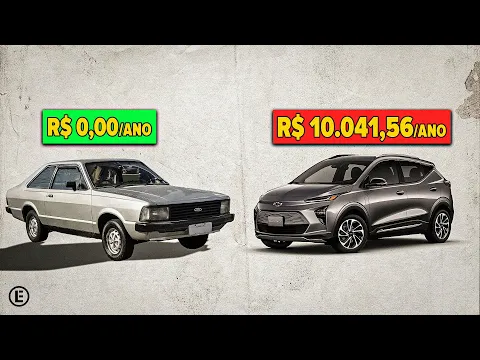
A good example of this is in the purchase of automobiles. Suppose a car has a table value of R$ 100,000.
This amount is actually inflated by taxes levied during the manufacturing and sale of the vehicle.
Now comes the IPVA, the Tax on the Ownership of Motor Vehicles.
It is calculated based on the value of the car, according to the Fipe table. If the rate is 4%, then the IPVA for a car worth R$ 100,000 will be R$ 4,000.
However, if the car only costs R$ 100,000 because of embedded taxes, it means that the consumer is also paying IPVA on an artificially inflated value.
In other words, they are paying tax on tax.
Hidden Tax, Evident Indignation
This reasoning leads to an uncomfortable conclusion: many Brazilians do not even know how much they pay in taxes on each purchase or service.
The amounts are embedded in the final prices, and few have access to or understanding of the details that make up these amounts.
The R$ 200 makeup that, in practice, has 100% tax on the original value is just a symbol. The same applies to clothing, appliances, food, cars, and even electricity bills.
Outrage grows when it becomes clear that the consumer is paying taxes not only on the product itself but also at indirect stages.
The current system allows taxes to accumulate, creating value distortions.
In cases like IPVA, the consequence is even more visible: the annual tax on the car is based on a value that only exists because of previous taxes.
A System That Charges Double
The tax burden in Brazil sometimes seems invisible, but it weighs double.
The consumer not only pays a high price for the product but also bears other taxes calculated on amounts already inflated by previous taxes.
The example of makeup and IPVA reveals a structure that penalizes the consumer at every stage.
More than high percentages, the problem is how taxes are applied in a cascading manner, distorting the real value of products and services.
The impact goes beyond the shelf price — it also lies in the derived taxes, which continue to charge even after the purchase.