Portuguese
  Spanish


New Analysis Indicates That Israel May Have Up to 300 Nuclear Warheads, Tripling Previous Estimates and Increasing the Risk of an Arms Race in the Middle East.
As the Middle East plunges into a military escalation between Israel and Iran, one fact stands out: Israel may have up to 300 nuclear weapons — three times more than the widely accepted number so far.
Number of Warheads Is Much Higher Than Thought
The most accepted number by analysts and governments was around 90 nuclear warheads.
However, a new analysis based on open-source data indicates that Israel may possess between 200 and 300 warheads.
-
European Parliament Approves Digital Euro, Aiming to Challenge Visa and Mastercard’s Dominance and Transform Payments Across Europe by 2029

-
Israel finds Hezbollah militarized tunnel over 200 meters long under village, with 4 missile launch shafts, 12 chambers, anti-tank missiles, drones, and weapons depots at a depth of 25 meters.

-
Ukraine launches largest drone attack on Moscow since 2022, Russia claims to have intercepted nearly 200 aircraft near the capital, Kapotnya refinery targeted again, and offensive reignites alert about war reaching the Russian energy heart just a few kilometers from the Kremlin.

-
Truck drivers, freight, and fines from 2022 take center stage in politics: Chamber approves MP with amnesty, mandatory tracking by CIOT, million-dollar penalties, and new minimum wage for those who spend more than 24 hours on the road.

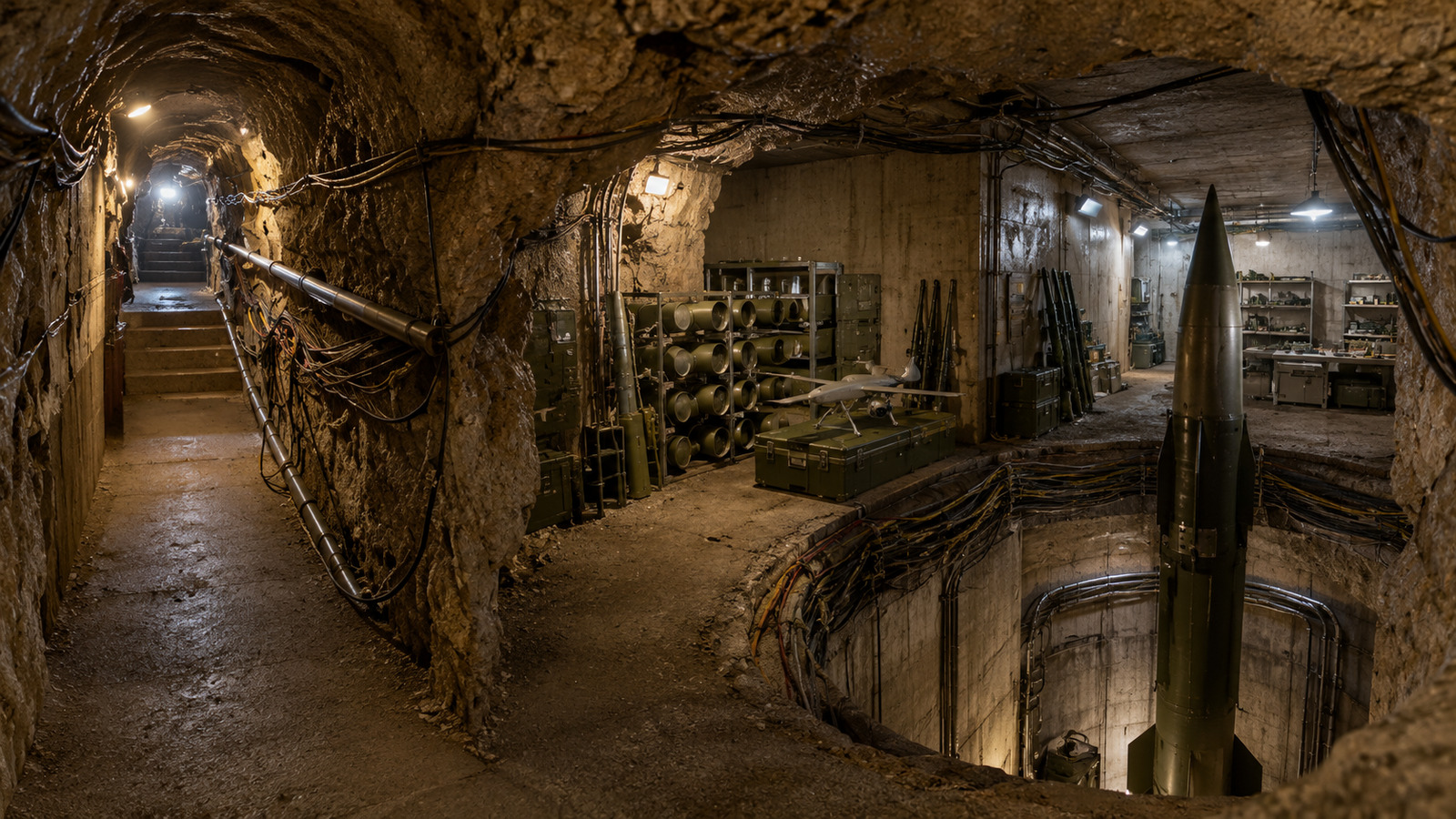


This estimate comes from analyzing Israel’s plutonium stockpile, satellite images of the Dimona nuclear facility, and the country’s production capacity.
Since the late 1960s, Israel may have accumulated between 750 and 1,110 kilograms of separated plutonium.
With this amount, it would be possible to build between 187 and 277 nuclear warheads, depending on the type and size of the weapon. Experts point out that the actual number may be closer to the upper limit of the estimate.
Nuclear Ambiguity and Preventive Strikes
Israel has never officially acknowledged having nuclear weapons. It has also not signed the Nuclear Non-Proliferation Treaty (NPT). Instead, it maintains its policy of “nuclear ambiguity,” refusing to confirm or deny.
Even so, Israel maintains a pattern of preventive actions against possible nuclear threats in the region.
This was the case with the attack on the reactor in Iraq in 1981, in Syria in 2007, and more recently, with Iran.
On June 13, 2025, Israel launched Operation Ascendant Lion, an air and missile attack against Iranian nuclear facilities.
The declared objective was to prevent the advancement of Iran’s nuclear program.
U.S. Support and Escalating Tension
Israeli Prime Minister Benjamin Netanyahu justified the operation as necessary to prevent “a second Holocaust.” Former U.S. President Donald Trump openly supported the action.
Trump stated that Iran is only “weeks” away from producing a nuclear bomb. He also warned that the region is at risk of a nuclear war if Iran is not stopped.
According to the International Atomic Energy Agency (IAEA), Iran already has enough enriched uranium to build up to nine nuclear weapons in a month.
The Iranian government denies seeking atomic weapons, but international confidence in its peaceful intentions has been declining.
Iranian Response and Beginning of Direct Confrontation
After the Israeli bombings, Iran responded with a series of missiles and drones against Tel Aviv and Haifa.
Many were intercepted by Israel’s defense systems, but some hit civilian and military targets, further escalating the tension.
This scenario makes Israel’s nuclear arsenal even more relevant, especially in light of the possibility of new confrontations.
Nuclear Triad: Land, Air, and Sea
Analysts state that Israel now possesses a complete nuclear triad — that is, the ability to launch warheads from land, air, and sea. This significantly enhances the country’s deterrent power.
In the air, F-15, F-16, and F-35 aircraft have been adapted to carry nuclear bombs. These planes allow for rapid and flexible strikes against regional and distant targets.
On land, Jericho III ballistic missiles form the backbone of the arsenal. They have a range of up to 6,500 km, sufficient to reach targets in various parts of the world.
At sea, Dolphin-class submarines operate armed with cruise missiles with nuclear warheads. Manufactured in Germany, these submarines patrol the Mediterranean and, reportedly, can also operate in the Arabian Sea.
Samson Option and Second Strike Capability
The existence of the triad ensures that Israel maintains the so-called “second strike capability.” This means that even if the country suffers a nuclear attack and loses some of its bases, it could still retaliate with full force.
This policy is known as the “Samson Option” and is based on the logic that if Israel is destroyed, it will retaliate devastatingly. The goal is to deter any attempt at a nuclear attack against the country.
Secret History of the Nuclear Program
The Israeli nuclear program began in the 1950s with help from France.
The Dimona reactor began operating in the late 1960s. The U.S. discovered the project in the 1960s but did not prevent its advancement.
In 1969, a secret agreement between President Richard Nixon and then-Prime Minister Golda Meir sealed the understanding: Israel would keep its arsenal hidden as long as it did not conduct tests or announce its existence.
The first public revelation came in 1986, when technician Mordechai Vanunu disclosed photos and information to the press. He stated that Israel could produce up to 12 bombs a year. The current estimate aligns with that number.
Concerns About New Arms Race
Today, according to the Stockholm International Peace Research Institute (SIPRI), there are over 12,000 nuclear weapons in the world.
The majority are in the hands of major powers. In the Middle East, only Israel has a functional arsenal.
The advancement of Iran could lead other countries in the region, such as Saudi Arabia, Turkey, and Egypt, to seek their own bombs. This would pave the way for a regional arms race, with unpredictable effects.
Diplomacy or Confrontation
Some experts and international leaders warn that attacks will not solve the problem.
The British newspaper The Guardian wrote in an editorial: “You cannot escape the nuclear danger by bombing.”
The appeal is for urgent diplomacy, with firm negotiations and independent verification. But for now, the reality on the military front speaks louder. Israel and Iran are preparing for new clashes.
Based on information from interestingengineering.