





 Portuguese
  English
  Spanish
 2 min of reading


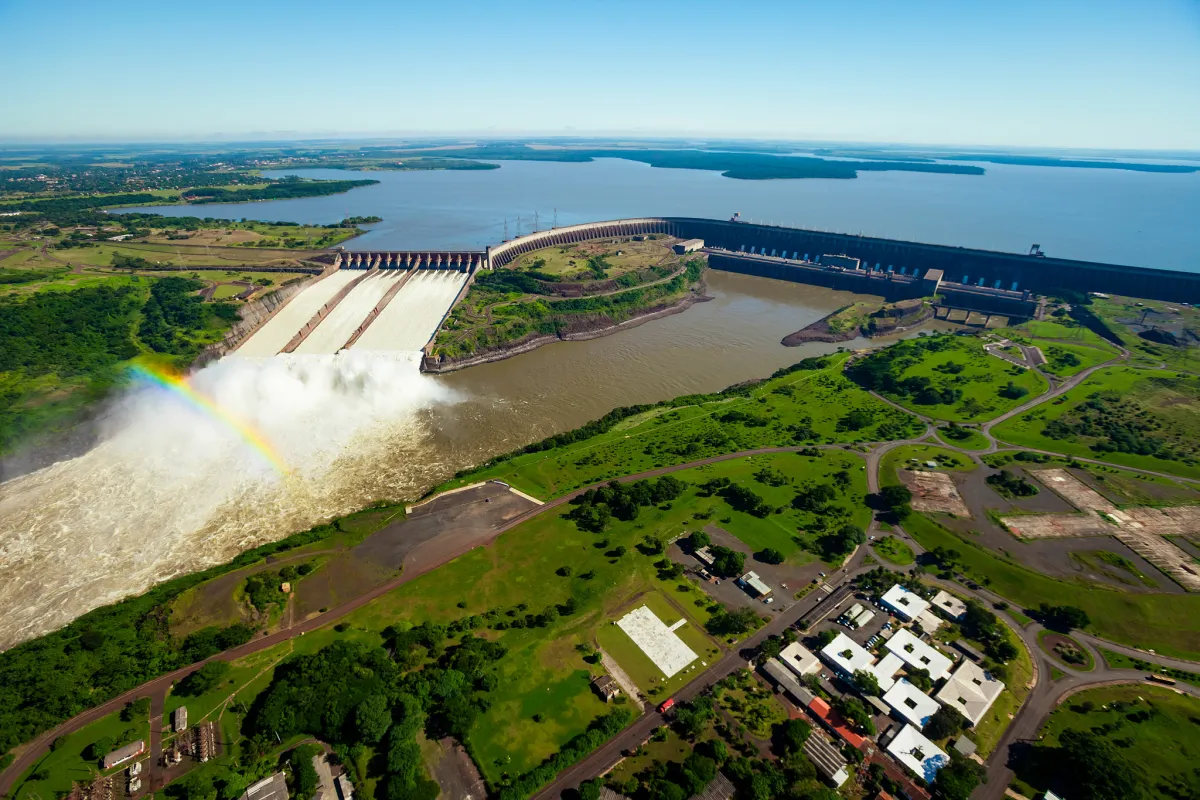
The Itaipu Hydroelectric Power Plant, built in 1970 with funding from the Brazilian Government, has finally seen the full repayment of its loan. On February 28 of this year, Itaipu disbursed 115 million dollars to pay off the initial financing.
As a result, it was possible to reduce the price of the energy generated by the plant – which was US$ 2260/kg – down to US$ 12.67 in January of this year. The loan repayment represented about 2/3 of the plant’s annual budget, which is US$ 3.3 billion per year. This news came as a relief to all those involved in the national energy production.
What Is the Importance of the Brazil-Paraguay Partnership for the Rate Decrease at Itaipu?


The price of energy will change with the end of the debt, as the rates will no longer be linked to the dollar. Brazil and Paraguay still need to negotiate the new agreements. Furthermore, it will also be necessary to review the Itaipu treaty, primarily discussing Annex C, which contains the commercial clauses.
According to André Pepitone, Executive Financial Director of Itaipu, it is necessary to negotiate the tariff issue to reflect the reduction in debt payments, as well as renegotiate the use of energy so that Paraguay can sell its share (50%) and sell that energy in other markets. The Itaipu agreement is being awaited with great expectation, as it will define the conditions under which Brazil will purchase the excess energy produced by the Paraguayan side.
-
Researchers discover that a rare galaxy 100 million light-years away is undergoing a never-before-seen cosmic transition, and Hubble photographs the phenomenon.

-
Law that tightens nationality in Portugal takes effect today and changes rules that may delay citizenship for Brazilians
-
Texas converts offshore oil platforms into rocket recovery stations for Space Force and transforms abandoned industry.

-
Milky Way: researchers discover that our galaxy’s disk was reset 11 billion years ago by a collision




Additionally, the new General Director of the hydroelectric plant, Enio Verri, informed the press that the treaty renegotiation will begin in August of this year and may last an entire year. Besides determining how much Brazil will pay for Itaipu’s services, the distribution of the resources generated by the plant among nearby municipalities, such as Foz do Iguaçu, will also be discussed.
However, the binational agreement between Brazil and Paraguay represents 8.5% of the country’s energy production and is responsible for supplying 110 million Brazilians. According to Enio Verri, this new negotiation will allow the municipalities near the plant to benefit from resources for local development, as well as define a fixed price for purchasing the excess energy produced.
This agreement also stipulates that Paraguay will not use all its energy until 2032, when the new agreement would end. This initiative will allow cities to benefit economically and ensure a better future for their inhabitants.





Be the first to react!