Portuguese
  Spanish


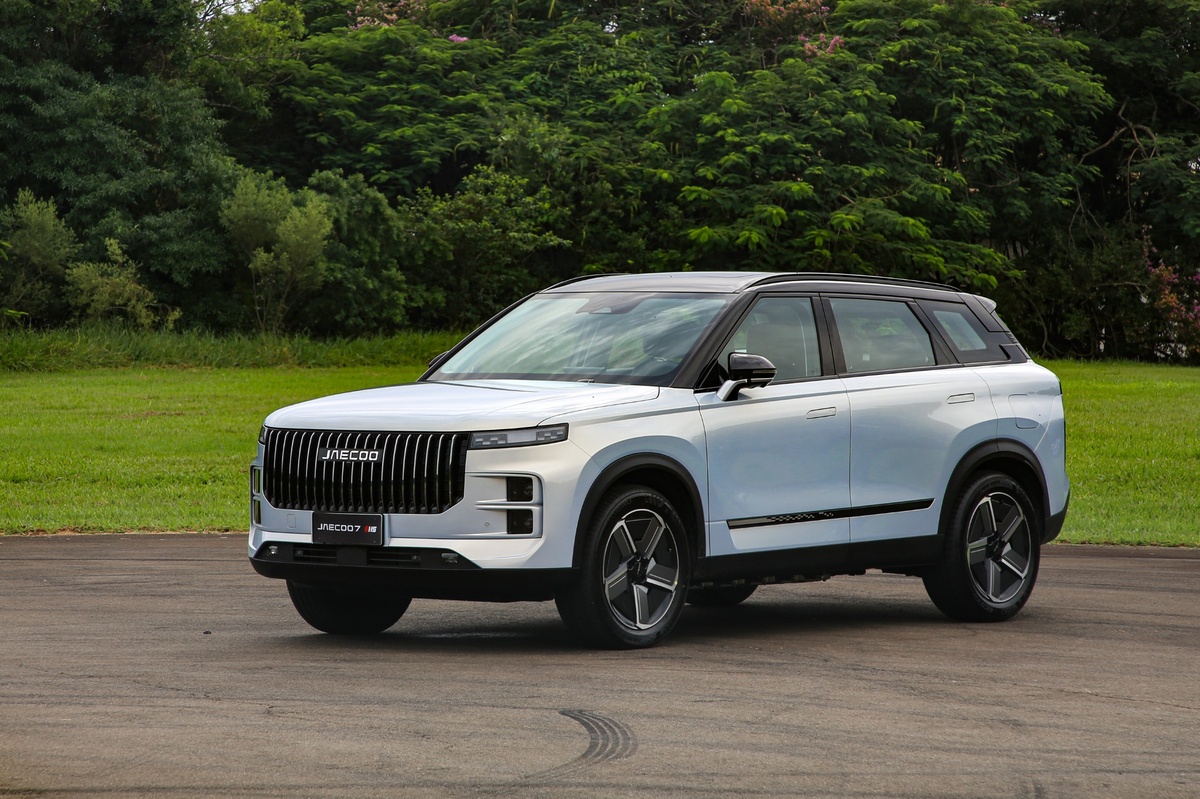


Hybrid Plug-In Technology of OMODA & JAECOO Bets on Battery Thermal Control, Energy Efficiency, and Consistent Performance in Extreme Temperatures, from Intense Cold to High Heat.
As technologies for new energy vehicles have rapidly evolved in recent years, plug-in hybrids have begun to establish themselves as more adaptable solutions on a global scale. Still, a central question arises: how do these vehicles maintain stability, efficiency, and reliability when facing extreme thermal variations, from severe cold to intense heat?
In this context, the Jaecoo 7 SHS, a plug-in hybrid from OMODA & JAECOO, has been designed to operate with a battery in locked mode across a wide thermal range, from -30 °C to 60 °C. Thus, the model delivers operational resilience, in addition to providing driving confidence and high energy efficiency, regardless of climatic conditions.
While in low-temperature environments, the electrochemical activity of the battery tends to decrease, high-heat scenarios present challenges related to thermal safety and system stability. Therefore, for a vehicle with global appeal, consistent performance at these extremes becomes essential. Hence, the comprehensive thermal control capability of the Jaecoo 7’s battery has been designed specifically for real-world usage scenarios.
-
End of an era in Brazil: beloved sedan by Brazilians is discontinued despite having a 2.0 engine with 151 hp, CVT transmission, 466-liter trunk, and up to 650 km of range.

-
New Law Proposal in Brazil Could Heavily Penalize Drivers: Dangerous Overtaking May Become a Serious Offense with Fines Increased Tenfold and a 12-Month License Suspension; Update on 2026 Progress

-
Electric Revolution: Watts W125 Motorcycle Offers 160 km Range, 90 km/h Speed, and Affordable Price Starting at $3,000
-
General Motors Replaces Over a Thousand Workers with 50 Cobots at Electric Vehicle Plant, UAW Union Criticizes Move Amid Industry’s Automation Push


Unlike traditional hybrid systems, which often alternate modes or experience fluctuations in extreme environments, the Jaecoo 7 maintains stable battery operation throughout the specified thermal range. This result is primarily due to the synergy between the battery, control electronics, and energy management, developed to sustain continuous operation.
As a result, the model delivers clear and consistent benefits:
• No power loss in the cold, as even under freezing conditions, the battery and powertrain preserve quick response and stable delivery.
• No attenuation in the heat, as even under prolonged exposure to high temperatures, the system maintains operational efficiency and safety.
• Consistency in different scenarios, whether in urban use, long trips, or high energy demand situations.
Moreover, the model’s high performance is directly linked to the Super Hybrid System (SHS), the technological foundation of the Jaecoo 7. This system was developed to simultaneously optimize performance, range, and efficiency, redefining the operation of plug-in hybrids in the segment.
In practice, the advances of the SHS become evident in various operational aspects.
• Super power, as acceleration remains linear and smooth, regardless of battery charge or ambient temperature.
• Extended super combined range, which can exceed 1,200 km, reducing reliance on charging points on long trips.
• Super energy efficiency, as fuel consumption remains controlled in both cold and hot climates.
This technological set positions the Jaecoo 7 SHS as a reliable, versatile, and globally applicable solution in the new energy segment. According to technical information released by OMODA & JAECOO in 2024, the design of the hybrid system prioritized thermal stability, safety, and performance predictability. In addition, concepts widely discussed by the International Energy Agency (IEA) throughout 2023 and 2024 reinforce that efficient thermal control is one of the pillars for the global expansion of plug-in hybrids.
Thus, by combining battery thermal control, advanced energy management, and consistent performance, the Jaecoo 7 SHS consolidates the proposal for hybrid technology designed to operate, with efficiency and safety, in practically any climatic condition.