






 Portuguese
  Spanish


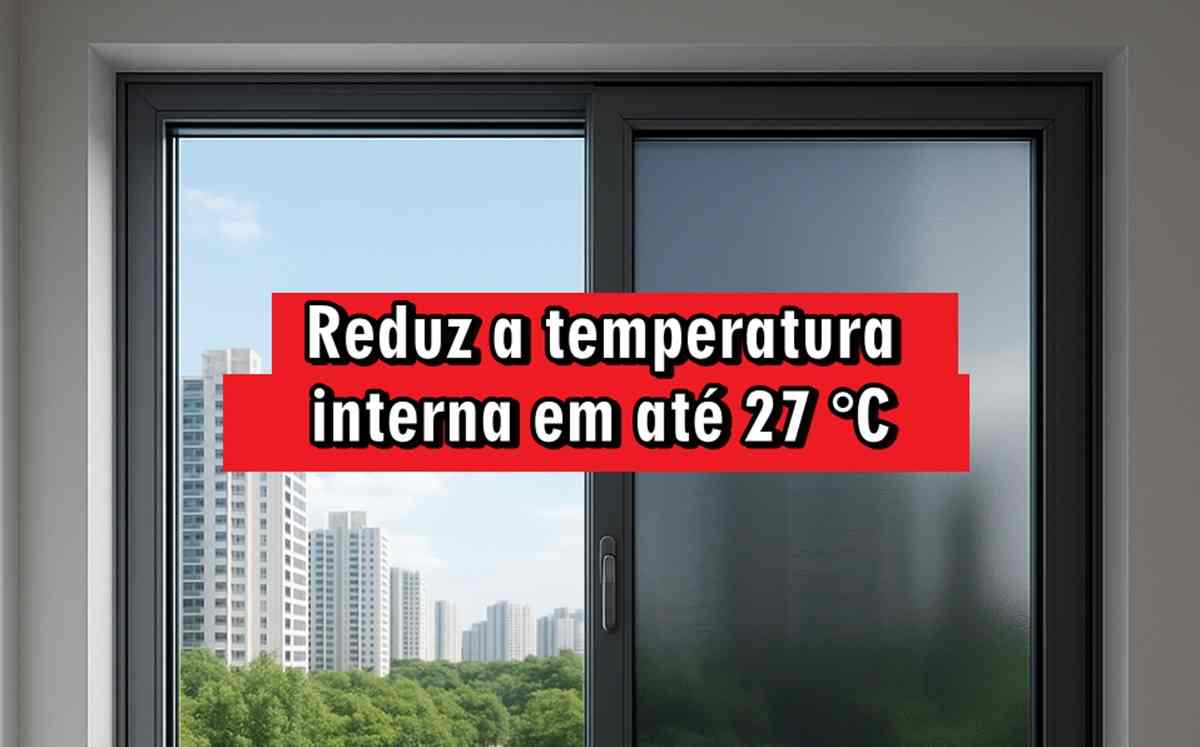


New Smart Window Created by South Korean Researchers Reduces Internal Heat by Up to 27 °C and Eliminates Urban Glare with Three-Mode Electric Technology.
A new technology developed in South Korea promises to transform how windows interact with the environment.
Researchers at KAIST created a smart model that electrically controls light, heat, and reflections without compromising visibility.
The system, called RECM, is capable of reducing internal temperature by up to 27 °C and eliminating urban glare, providing an efficient and comfortable solution for buildings and vehicles.
-
The Trap of Modern Technology: How Screen Overload and Digital Connections Can Impact Your Mental Health and Well-being

-
Wyoming Couple Grows Tropical Fruits Year-Round in -40°C Using Geothermal Greenhouse, Demonstrating Earth’s Heat Can Produce Oranges and Lemons in Snow Without Traditional Heating

-
Ship Returns from Brazilian Coast with Thirty Newly Discovered Life Forms
-
Nigerian Professor Invents Electricity-Free Refrigerator Using Clay Pots and Wet Sand, Extending Shelf Life of Vegetables to 27 Days; 7,000 Units Distributed in Energy-Deprived Villages



Three Modes, Multiple Functions
The RECM smart window operates in three distinct modes, adjustable by electric command.
In transparent mode, it allows light and heat to enter, making it useful in cold climates.
In the second mode, it takes on a bluish hue and reduces the passage of light and heat, increasing privacy.
In reflective mode, it uses a silver deposit to block heat and eliminate external brightness, ideal for cities with high solar incidence.
This versatility allows the window to adapt to the needs of the environment and the user throughout the day, without the use of curtains or blinds.
The control is done with low electrical voltage, between -1.6 V and -2.0 V, without mechanical components.
Impressive Practical Results
Laboratory tests showed the real benefits of the new window. A room with a regular window reached 58.7 °C after 45 minutes under direct sunlight.
With the RECM window in reflective mode, the temperature was only 31.5 °C in the same time. The difference of 27.2 °C shows the potential of the technology to reduce internal heat without the use of air conditioning.
Additionally, the intensity of reflected external brightness was reduced by 33%, improving the experience for pedestrians and drivers, especially in urban areas. The elimination of glare also contributes to visual comfort and safety.
Urban and Automotive Applications
The RECM window can be used in various contexts. Commercial buildings, residential homes, trains, cars, and even mobile homes can benefit from the solution.
As the system is fully electric and does not require mechanical maintenance, its large-scale application is feasible.
The unique structure facilitates mass production, reduces costs, and accelerates market entry.
The technology meets the demands of modern cities looking to reduce energy consumption, improve quality of life, and integrate sustainable solutions into architecture.
Comfort, Savings, and Sustainability
Besides providing thermal comfort, the smart window reduces the use of electricity in climate control systems.
It is estimated that energy savings in buildings can reach up to 40%, depending on the intensity of use of the new window.
It also eliminates the need for solar films, curtains, or blinds, which wear out over time.
Another strong point is the reduction of visual pollution caused by intense reflections, common in large glass facades.
Thus, the RECM window offers a more environmentally friendly alternative for urban settings.
Real-Time Adaptive Architecture
The innovation also reinforces the idea of bioclimatic architecture, which aims to integrate the design of buildings with climate and environment.
With this window, the building’s own structure actively participates in thermal and light control, automatically and accurately.
This type of adaptation makes buildings more efficient and better prepared to face the challenges of temperature, insolation, and accelerated urbanization.
The possibility of dynamic response makes the RECM a strategic ally for greener cities.
The RECM window, created by researchers at KAIST, represents a significant advance in how we deal with heat and comfort in urban environments.
With energy efficiency, visual control, and real-time adaptation, it offers a practical and scalable solution for modern cities.





Fantástico!
Há de tornar nossa residência mais agradável de se viver nesse novo normal de temperaturas cada vez mais escaldantes bem com esse frio congelante.
Aguardo a disponibilidade para usufruir.