






 Portuguese
  Spanish


The Cerrado Coffee Growers Cooperative (Expocacer) sends a batch of special decaffeinated coffee to Japan for the first time: 8.4 tons (140 bags of 60 kg) of yellow bourbon beans with a score of 84 by the SCA (Specialty Coffee Association), produced at Fazenda Dona Neném in Presidente Olegário (MG). According to CNN Brasil, the volume exceeds by more than 900% everything Brazil exported in non-roasted decaffeinated coffee in 2025, when the entire country shipped only 832 kg. The roaster and coffee shop Cerrad Coffee & Company, from Tokyo, is the recipient.
Japan asked for a coffee that almost no one makes, and Cerrado Mineiro delivered. Expocacer is sending from the Port of Santos towards Tokyo the first batch of special decaffeinated coffee ever commercialized by Brazil in this category, and the volume of 8.4 tons is so significant compared to the country’s history that the cooperative itself did the math: it is more than 900% higher than everything Brazil exported in non-roasted decaffeinated coffee throughout all of 2025, when the national total was only 832 kg, according to Comex Stat data.
The bean crossing the ocean is a yellow bourbon with a score of 84 by the SCA, produced on a single farm in Cerrado Mineiro. The score of 84 points on the Specialty Coffee Association’s 0 to 100 scale classifies the product as specialty coffee, evaluated by protocols that measure aroma, flavor, body, acidity, and balance. Sandra Moraes, commercial manager of specialty coffees at Expocacer, described the shipment as “a historic achievement for Brazil, which already exports a small quantity of commodity-type decaffeinated coffees, but now sends a special caffeine-free coffee“.
The farm, the producer, and the bean that won over the Japanese
The coffee going to Japan comes from the plots of Fazenda Dona Neném, in Presidente Olegário (MG), owned by Eduardo Pinheiro Campos, with 1,400 hectares dedicated to cultivating high-quality coffees and environmental preservation. The bean is an Arabica of the yellow bourbon variety, described by the producer himself as having floral, molasses, honey, tangerine, orange, and cherry flavors, citrus acidity, velvety body, and a refreshing, prolonged aftertaste.
-
Low-Demand Brazilian Beef Offal Gains Popularity Abroad: Indonesia Purchases $19.5 Million, Boosting Revenue and Reducing Waste

-
Soy Expansion in Former Brazilian Savanna Sparks Water and Land Conflicts in Major Agricultural Frontier
-
Mexican Pest Threatens U.S. Cattle Herds at Historic Lows, Potentially Boosting Brazilian Beef Exports as Burger Prices Soar

-
Avocado Boom for European and U.S. Markets Fuels Water Crisis in Drought-Stricken Chilean Region


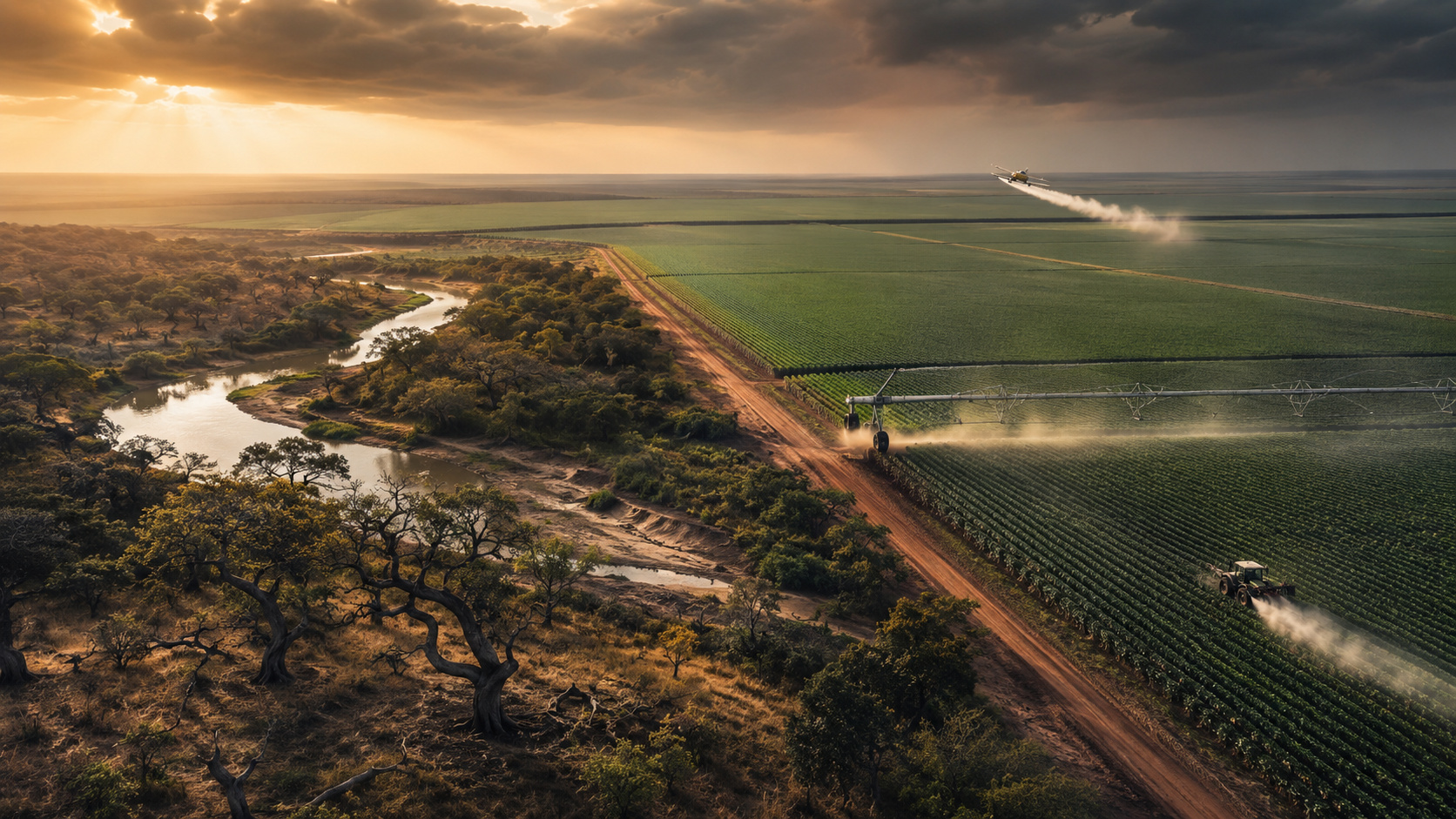


Fazenda Dona Neném is a benchmark in Cerrado Mineiro and functions as a research laboratory in partnership with Embrapa and Rehagro. The property was a pioneer in the production of specialty coffees in the region and holds international certifications such as Rainforest Alliance, Nespresso, and Denominação de Origem Região do Cerrado Mineiro (Cerrado Mineiro Region Denomination of Origin), seals that attest to sustainable practices and traceability, which the Japanese market requires as a prerequisite.
How to remove caffeine from specialty coffee without spoiling the flavor

The decaffeination of Expocacer’s special bean was carried out in Sooretama (ES) by DM Descafeinadores do Brasil, a joint venture between Eisa Interagrícola (a branch of the Swiss ECOM Agroindustrial) and the Mexican Descamex. The method used was Mountain Water, considered premium for dispensing with chemical solvents: the technique uses only water and soluble solids extracted from the coffee itself to remove caffeine without compromising aroma and flavor.
In practice, the process begins with pre-cleaning and hydration of the beans. Caffeine is extracted under controlled conditions of flow, temperature, pressure, and vacuum, using a solution saturated with compounds from the coffee itself, a step that preserves the product’s original characteristics. The procedure is finalized with triple drying, polishing, and packaging, and takes about 15 days until the beans return to the cooperative for separation and shipment. It is this care that allows the score of 84 to be maintained even after caffeine removal.
The numbers that show the scale of the achievement
The volume of 8.4 tons sent to Japan needs to be read against Brazil’s historical data to gauge what Expocacer is doing. In 2025, the entire country exported 832 kg of unroasted decaffeinated coffee. In 2024, it was 698 kg. Expocacer’s batch is, respectively, 910% and 1,100% higher than the total shipped by Brazil in those two years, according to the cooperative’s own calculations based on Comex Stat data from the Ministry of Development (MDIC).
The disparity reveals that Brazil, despite being the world’s largest producer and exporter of coffee, practically did not participate in the specialty decaffeinated market. Demand existed, but there was a lack of those who combined high-quality beans, a premium decaffeination process, and logistical export capacity. Expocacer brought together the three ends — certified producer, industrial decaffeination plant, and sales channel in Japan — and opened a niche that until then was dominated by countries like Colombia and Mexico.
Why Japan is a VIP client for Brazilian coffee
Japan is not just any buyer of Brazilian coffee: it is one of the most demanding and fastest-growing. In 2025, according to the Council of Brazilian Coffee Exporters (Cecafé), the Japanese acquired 2.647 million 60 kg bags, an increase of 19.4% over 2024, a volume that placed the country in fourth place in the ranking of largest importers of Brazilian coffee that year. Quality standards range from cultivation methods to care in harvesting and post-harvest.
Cerrad Coffee & Company, a roastery and coffee shop based in Tokyo that will receive the batch, works exclusively with Brazilian beans to compose its blends. Carlos Akio Yamaguchi, responsible for the company’s import quality control, explained that the demand for special decaffeinated coffee is new in the Japanese market and that the yellow bourbon from Cerrado Mineiro perfectly matches the profile the house was looking for: single-origin coffee, with complete traceability and a decaffeination process that preserves sensory attributes.
The decaffeinated coffee market that grows up to 7% per year
Decaffeinated is no longer a marginal niche: it is a strategic and expanding category. The segment grows between 6% and 7% annually globally, driven by consumers seeking to reduce caffeine intake without giving up the habit of enjoying coffee. This trend is especially strong in Japan, South Korea, Europe, and the United States, markets where health and well-being increasingly dictate consumption choices.
Ítalo Henrique, commercial director of Expocacer, explained that “the export of specialty decaf coffee to Japan is more focused on market building than on immediate scale,” describing the shipment as a commercial validation that could open recurring demand. Expocacer brings together 760 cooperative members in 55 municipalities in Cerrado Mineiro, a productive base that allows for scaling volume if the Japanese market’s response confirms what the initial orders indicate.
Would you pay more for a specialty decaffeinated coffee with a score of 84, or do you think coffee without caffeine loses its meaning? Tell us in the comments if you have tried quality decaffeinated coffee and what you think about Japan valuing Brazilian beans more than Brazil itself.





Be the first to react!